My shopping cart
Your cart is currently empty.
Continue ShoppingMost guitarists spend their entire lives chasing a specific, piano-like resonance without realizing that the answer has been sitting in the forests of India for centuries. The most iconic recordings in acoustic history share a common tonal foundation found within the luscious, dark grain of Indian Rosewood. While exotic alternatives come and go, this timber remains the undisputed benchmark for harmonic complexity and structural stability. You likely recognize that a rosewood back and sides set promises deep lows and sparkling trebles, yet finding the right balance between aesthetic beauty and actual tonal performance is rarely a straightforward journey.
It's natural to feel a bit of hesitation when you're caught between a factory-standard model and an expensive boutique upgrade. You want to ensure your investment translates into a "forever" guitar that grows with your playing. This guide demystifies the rosewood experience by breaking down how different builders harness its natural resonance. We'll explore the aging process, compare the voicing of world-class brands like Martin and Taylor, and give you the tools to select an instrument that offers both visual allure and unmatched sonic depth.
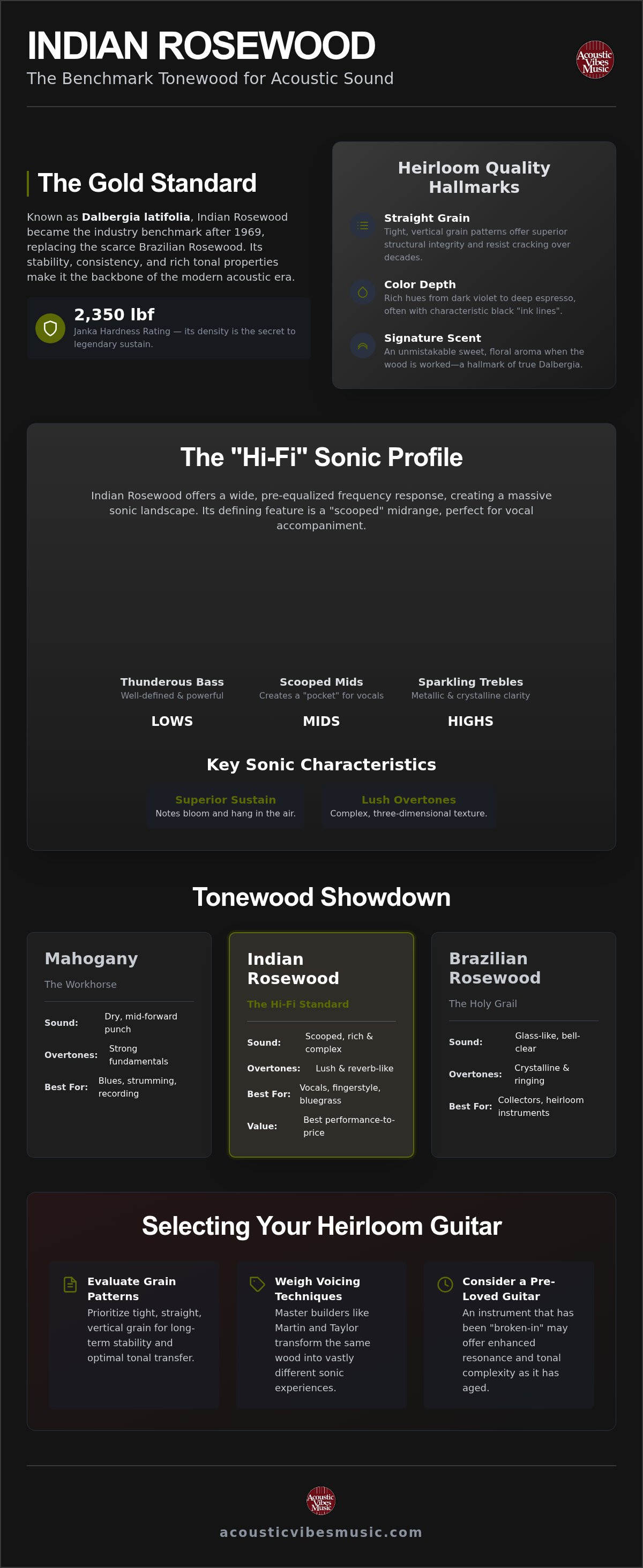
Indian rosewood isn't just a material choice. It's the backbone of the modern acoustic era. Scientifically known as Dalbergia latifolia, this timber became the industry benchmark following a seismic shift in 1969. Before this date, Brazilian rosewood ruled the workshops of the world's premier builders. When trade restrictions made Brazilian wood scarce and difficult to source, the industry turned to India. They discovered a wood that was not only more stable but arguably more consistent in its tonal delivery. Today, its deep chocolate browns and regal purple streaks define the aesthetic of a "serious" guitar. It's also a practical choice for the modern touring musician. Because it's more sustainably managed than many of its exotic cousins, it generally avoids the heavy CITES paperwork that can haunt vintage owners during international travel.
Density is the secret to that legendary sustain. With a Janka hardness rating of 2,350 lbf, indian rosewood is incredibly dense and heavy. This physical weight translates to a "reverb-like" quality that rings out long after you pluck a string. As curators of fine instruments, we look for specific visual and structural hallmarks:
The debate between Indian and Brazilian varieties is legendary among collectors. Brazilian rosewood is often praised for a glass-like, bell-clear high end. However, modern indian rosewood offers a reliable warmth and a "scooped" midrange that many players actually prefer for vocal accompaniment. It's often better to own a premium, hand-selected set of Indian timber than a stump-wood or knotty set of Brazilian. For most players, it represents the smartest performance-to-price investment available. You get 95% of that legendary boutique tone at a fraction of the cost. You can hear this balance perfectly in our latest arrivals of Martin Guitars and Taylor Guitars, where the masters of the craft have spent decades perfecting the voicing of this incredible wood.
While mahogany is celebrated for its dry, mid-forward punch, indian rosewood is the king of the "Hi-Fi" acoustic experience. It offers a wide frequency response that feels almost pre-equalized. You'll notice a distinct "scoop" in the midrange frequencies, paired with metallic, sparkling trebles and a thunderous, well-defined bass. This dynamic range creates a massive sonic landscape, allowing each note to stand out with crystalline clarity rather than blurring into a singular wall of sound. Because East Indian Rosewood is so dense, it acts as a highly reflective backboard, projecting energy back through the soundhole with incredible velocity. This results in superior sustain, where notes seem to bloom and hang in the air long after the initial attack.
Singer-songwriters often gravitate toward this wood for a very specific reason: the "pocket." By naturally attenuating the middle frequencies where the human voice typically resides, the guitar provides a lush harmonic frame without competing for space. It creates a professional, "recorded" sound even in a live setting. The overtone series in rosewood refers to the complex array of sympathetic frequencies that ring out alongside the fundamental note, creating a lush, three-dimensional harmonic texture. These properties make it a top choice for bluegrass flatpickers who need to cut through a mix, as well as modern fingerstyle players who rely on nuance and resonance. If you're looking for that signature shimmer, exploring our collection of hand-selected acoustic guitars is the best way to hear the difference firsthand.
The marriage of timber and geometry is where the magic truly happens. An indian rosewood dreadnought is often described as a "cannon," delivering a massive low-end thump that can drive an entire ensemble. In contrast, a Grand Auditorium body shape tames those wild overtones, offering a more balanced and focused output that shines in the studio. Choosing between these shapes depends entirely on your attack and performance environment. For a deeper dive into how these silhouettes affect your playing, check out our guide on Dreadnought vs Grand Auditorium for Strumming. Whether you prefer the raw power of a large-body instrument or the refined precision of a smaller build, the rosewood foundation remains a constant source of inspiration.
Selecting the right tonewood is a deeply personal decision that shapes your entire musical identity. While we've explored the lush, reverb-like qualities of indian rosewood, it's helpful to see how it stands against other industry staples. Mahogany, for instance, offers a completely different experience. Where rosewood provides a complex harmonic landscape, mahogany delivers a "fundamental" sound. This means you hear more of the actual note and less of the ringing overtones. For a detailed breakdown of these two titans, explore our guide on Rosewood vs. Mahogany Back and Sides. If you find yourself wanting even more "fire" and brilliance than rosewood provides, you might look toward Cocobolo. Conversely, Maple offers a transparent, dry tone that doesn't color the sound of the strings at all, making it a favorite for those who want absolute clarity without the bass-heavy "thump" of rosewood.
To find your perfect match, we evaluate four primary criteria: sustain, brightness, bass response, and complexity. Rosewood consistently scores high in sustain and complexity, making it the ideal choice for solo performers who need the guitar to fill the entire room. It's the versatile player's best friend. If your style leans toward Delta blues or you play in a dense ensemble where you need to "cut through" without muddying the low end, the mid-forward punch of mahogany might actually serve you better. We often suggest rosewood for fingerstyle players who want every nuance of their touch to be amplified by a rich harmonic halo.
The timber under your fingertips matters just as much as the wood on the back. An indian rosewood fretboard offers a distinct tactile advantage because of its naturally high oil content. It feels "fast" and smooth, providing a warm, slightly softened attack compared to the snappy, bright response of Ebony. Many players find that a rosewood board is more forgiving on the fingers during long sessions. Beyond the feel, it provides a beautiful visual harmony when paired with a matching headstock overlay. This consistency in material creates a cohesive look that signals a high level of artisanal skill and thoughtful design. Whether you're eyeing a custom build or a classic model, these small details in wood selection define the instrument's ultimate character.
The same set of indian rosewood can sound like a thunderous cannon in one workshop and a delicate harp in another. It all comes down to "voicing." This is the meticulous process where a master luthier carves the braces and thicknesses the top to interact with the back and sides. While the wood provides the raw ingredients of deep bass and sparkling trebles, the brand's philosophy determines the final flavor of the instrument. Understanding these distinct "house sounds" is the secret to finding a guitar that truly resonates with your playing style.
For those seeking the quintessential American sound, the search begins and ends with the 28-series legacy. The Martin D-28 and HD-28 are perhaps the most recorded guitars in history. They define the "thump" that anchors bluegrass and folk music. These instruments utilize rosewood to create a massive, room-filling resonance that feels both vintage and authoritative. You can explore our current inventory of these legendary builds in our Martin Guitars Collection. Gibson also offers a unique take with the Advanced Jumbo and the rare rosewood J-45. These models provide a slightly drier, more balanced bark that still retains the wood's signature depth and complexity.
If you prefer a modern, hi-fi shimmer, Taylor Guitars has revolutionized the use of this timber through their 800 and 900 series. The Taylor 814ce is often called the world's most versatile workhorse. It offers a refined clarity that records beautifully and sits perfectly in a modern mix. For the player who demands surgical precision, Collings Guitars achieves a "piano-like" separation between notes that is simply unmatched in the industry. Every string rings with its own distinct identity without getting lost in the overtone series.
Boucher Guitars takes an innovative approach by pairing premium indian rosewood with torrefied Adirondack spruce tops. This combination creates a "new vintage" sound with incredible headroom and immediate response. Meanwhile, builders like Lowden offer an airy, ethereal, and harmonically dense "Celtic" voicing. These guitars are perfect for alternate tunings and complex fingerstyle arrangements where sustain is paramount. Whether you're a traditionalist or a modern seeker, the right builder can unlock the specific magic you're looking for. Ready to find your "forever" instrument? Browse our curated selection of indian rosewood guitars to hear these differences for yourself.
Finding a "forever" guitar requires more than just reading a spec sheet. At Acoustic Vibes Music, we operate as a curated gallery for the world's finest lutherie. We currently have 90+ indian rosewood guitars in stock, and every single one has been hand-selected for its specific grain orientation and tap-tone. This meticulous curation ensures that whether you're looking for a brand-new heirloom or a pre-loved consignment piece, the instrument has been vetted by experts for its sonic potential. Used instruments offer the unique advantage of being "broken-in," where the resins within the wood have crystallized over years of playing, often resulting in a more open and resonant voice.
If you're beginning your search, certain models serve as the definitive benchmarks for this tonewood. The Martin D-28 remains the essential baseline for all rosewood tone, offering that classic, authoritative resonance that has defined acoustic music for decades. For players who prioritize fingerstyle brilliance and surgical note separation, the Collings OM2H is a boutique masterpiece of clarity. Modern performers often gravitate toward the Taylor 814ce, which utilizes V-Class bracing to maximize the wood's natural sustain and intonation. Beyond these standards, our inventory frequently includes Custom Shop gems featuring rare, tight-grained patterns that are as visually arresting as they are sonically superior.
Owning a high-end, solid-wood instrument comes with a professional responsibility to maintain its structural integrity. Solid indian rosewood is particularly sensitive to fluctuations in environmental moisture. In dry conditions, the wood can shrink, leading to fret sprout, bridge lifting, or even structural cracks in the back and sides. We recommend consistent humidification for all solid-wood instruments to keep the timber at its optimal 45 to 50 percent relative humidity. To ensure your instrument arrives in peak condition, every guitar we sell receives a professional luthier setup tailored to your specific playing style.
The best way to truly understand these nuances is to hear them in person. We invite you to book a consultation with our expert team to compare these world-class instruments side-by-side in a relaxed, no-pressure environment. Browse our full Indian Rosewood collection here to see our latest arrivals and find the guitar that finally matches the sound in your head.
Choosing an instrument crafted from premium indian rosewood is more than a purchase; it's a commitment to a lifetime of sonic discovery. You've seen how this legendary tonewood offers a versatile canvas for every style, from the traditional bluegrass thump of a Martin to the crystalline precision of a Collings. Its signature scooped midrange and rich overtones provide the perfect harmonic pocket for your voice to shine. Whether you're a recording professional or a dedicated hobbyist, the right rosewood guitar elevates every note you play.
At Acoustic Vibes Music, we act as a gateway to this level of craftsmanship. As authorized dealers for Martin, Taylor, and Collings, we hand-select our inventory to ensure every set of grain meets our rigorous standards for tone and beauty. Every instrument also receives a professional luthier setup on-site to ensure it plays perfectly the moment it arrives. Don't settle for a generic sound when you can own a piece of acoustic history. Explore our curated collection of 90+ Indian Rosewood guitars and find the instrument that speaks back to you. Your next musical masterpiece is only a few clicks away.
"Better" is subjective; it depends on your specific sonic goals. While mahogany provides a dry, fundamental punch, indian rosewood delivers a lush, harmonically complex experience with deep bass and sparkling trebles. This wood is often preferred by solo performers who want a "reverb-like" quality that fills a room. Mahogany is better suited for ensemble players who need to cut through a dense mix without adding too much low-end resonance.
You can verify solid construction by examining the grain through the soundhole. The internal grain pattern should perfectly mirror the dark streaks and purple hues seen on the exterior of the back and sides. Always check the manufacturer's specifications for the word "solid." Layered or laminate woods will show a different timber or a neutral core when viewed from the side of the soundhole cutout.
Yes, rosewood guitars definitely improve as they age. Over time, the natural resins within the wood fibers crystallize and the moisture content stabilizes. This process, often called "opening up," results in a more resonant, responsive instrument with increased sustain. This is why many collectors seek out used or consignment instruments that have been played for years, as the tone becomes noticeably more complex and harmonically rich.
Indian rosewood is perfectly legal to own and transport across borders in finished musical instruments. While it is listed under CITES Appendix II to manage sustainable harvesting, current regulations allow musicians to travel with their personal guitars without complex permits. It is a responsibly managed species compared to the highly restricted Brazilian variety, making it the most reliable choice for professional touring artists who need a high-performance tonewood.
Madagascar rosewood is often considered closer to the legendary Brazilian sound, offering a crisper attack and more "glassy" highs. In contrast, East Indian varieties provide a warmer, more consistent response across the entire frequency range. While Madagascar is increasingly rare and expensive, indian rosewood remains the gold standard for its incredible stability and predictable tonal excellence, making it the backbone of many premium acoustic guitar lineups today.
Proper maintenance involves light cleaning and occasional conditioning to prevent the wood from drying out. Use a specialized fretboard oil once or twice a year to maintain the wood’s natural moisture and dark luster. Simply apply a small amount, let it sit for a few minutes, and buff away the excess. Always wipe down your strings and the fretboard with a clean microfiber cloth after every session to remove corrosive oils.
The higher cost reflects the wood's slow growth cycle and the logistical challenges of ethical harvesting. Rosewood trees take decades to reach a size suitable for guitar sets, and the density of the timber requires specialized tools for milling. Because it is a premium material that offers superior sustain and harmonic depth, builders reserve it for their higher-end models, such as the 28-series from Martin or the 800-series from Taylor.
It is almost never used for the soundboard because its high density prevents it from vibrating as freely as softwoods. A guitar top needs to be lightweight and flexible to project sound, which is why spruce or cedar are the industry standards. Using rosewood for the top would result in a very quiet, overly dark instrument with almost no projection. Its true strength lies in its ability to reflect sound from the back and sides.