My shopping cart
Your cart is currently empty.
Continue ShoppingThe warmest-sounding strings aren’t automatically the best choice for a guitar that already sounds dark. Finding the best guitar strings for warm tone means balancing your instrument’s natural voice with the sound and feel you want, not simply choosing the heaviest set available. A string that adds richness to one guitar may make another feel too mellow or demanding to play.
If string descriptions leave you unsure, you’re not alone. Terms like phosphor bronze, Monel, and coated can offer clues about sound and feel, but they don’t guarantee the same result on every instrument. Heavier gauges may offer a fuller response, yet they also require more finger pressure and may not suit your comfort or guitar.
This guide explains how material, winding, coating, and gauge can influence perceived warmth, then shows you how to compare options without relying on a one-size-fits-all recommendation. You’ll also learn how to test a set on your own acoustic guitar, listen for changes that matter, and consider playability and instrument requirements before choosing a new sound.
A warm tone is a listening impression, not a measurement of volume or sustain. Players often use “warm” to describe a rounded, mellow sound with less emphasis on sharp, bright overtones. That sound can still be clear and expressive.
A warm guitar tone is a perceived balance of rounded, mellow qualities and less prominent brightness, shaped by the strings, instrument, player, and listening conditions.
“Full” and “rounded” often suggest warmth, while “muddy” points to a lack of definition. They aren’t the same thing. A warm note can retain clear pitch and articulation; muddiness makes notes harder to distinguish. A quieter sound isn’t necessarily warmer, either. Volume describes loudness, while sustain describes how long a note rings.
Technique shifts the impression, too. A firm pick attack can bring out sharper initial brightness, while a gentler touch or fingerstyle playing may sound softer. Try the same passage at different dynamics before deciding that the strings alone are responsible.
Yes. A new set can change how a guitar responds under your hands and how its notes sound. String material and construction offer useful tonal clues: phosphor bronze is commonly associated with a warm, rich balance, while 80/20 bronze is often described as brighter and crisper. These are tendencies, not guarantees. The guitar’s body, top, and existing voice all shape the result.
Strings vibrate and transfer energy to the instrument. Their material, winding, mass, and tension affect that behavior. For a foundational overview of the physics of how strings produce sound, see Wikipedia’s discussion of string properties and vibration. In practical terms, changing strings can shift tonal balance and feel, but it can’t guarantee a particular sound or transform every guitar in the same way.
The instrument matters. Body size and tonewoods contribute to a guitar’s response, so strings that add welcome roundness to one instrument may make another sound too subdued. For broader context on how back and side woods can influence an instrument’s voice, explore this rosewood and mahogany tonewood guide.
That’s why choosing the best guitar strings for warm tone starts with listening to your own guitar. Compare familiar passages, and notice both the tonal change and how comfortably the strings respond to your touch.
String labels offer useful clues, not promises. Material, winding, core design, coating, and condition can all affect how strings feel and respond. The result depends on the guitar and player, so compare similar sets on your own instrument to hear which qualities stand out.
Phosphor bronze is commonly described as warm, rich, and balanced. 80/20 bronze, an alloy of copper and zinc, is typically associated with a brighter, crisper sound. Those descriptions reflect broad tonal tendencies, not fixed outcomes. A guitar’s design and condition, along with your touch and listening environment, can change how the difference comes across.
Listen for the qualities you want: more rounded richness, or extra sparkle and attack. Neither material is a universal winner, and the same set may sound different on another guitar.
| Material or construction | Commonly reported tonal tendency | Feel | Caveat |
|---|---|---|---|
| Phosphor bronze | Warm, rich, balanced | Varies by gauge and winding | Warmth is a tendency, not a guarantee. |
| 80/20 bronze | Bright, crisp, sparkling | Varies by gauge and winding | Its initial brightness can mellow as strings age. |
| Roundwound construction | Often more textured and bright | Winding ridges may feel more noticeable | String material and condition also affect response. |
| Coated strings | No single reliable warmth profile | Some coatings feel smoother than uncoated strings | Coating type and player preference matter. |
Winding describes the wire wrapped around a string’s core. Roundwound strings are common and have a textured surface; flatwound strings have a smoother surface and are often associated with a mellower response. Core shape and construction can also affect flexibility and feel, so compare the full string design rather than judging by alloy alone. Older strings may lose brightness or feel less responsive as they wear.
Coated strings have a thin protective layer intended to slow corrosion and help preserve their usable feel. Players may prefer them for longevity, but a coating isn’t a dependable tone fix. Perceived warmth or brightness varies by coating and string design. Some players also notice a smoother feel than with uncoated strings.
For a fair comparison, try fresh strings of similar gauge and construction, changing one variable at a time. If you’re weighing the best guitar strings for warm tone, consider your guitar and the strings you plan to use together so your choice stays grounded in the instrument you play.
Heavier acoustic strings are often associated with a fuller response, but gauge isn’t a warmth control you can set on its own. A heavier set may feel firmer under the fingers and respond differently to your attack. Whether that sounds warmer depends on the guitar, tuning, and how you play. A lighter set can be easier to fret and may feel more responsive to a gentle touch.
Gauge is a feel-and-response choice, not a standalone warmth setting.
They can contribute to a fuller impression, but they won’t reliably make every guitar warmer. Your picking strength, fingerstyle approach, and preferred tuning all affect the result. If you play gently, a heavier set may feel less responsive; with a firm attack, it may suit your playing better. Treat tone claims as possibilities, then listen to the set on your own instrument.
Before moving substantially heavier, check the guitar maker’s guidance. Tuning and scale length affect string tension, and the guitar’s condition matters too. Don’t assume a set that works on one acoustic will suit another.
| Gauge choice | Potential advantages | Potential trade-offs |
|---|---|---|
| Lighter | Typically easier to fret and may feel more flexible under the fingers. | May feel less firm or produce a response you find less full. |
| Heavier | Can feel firmer and may offer a fuller response for some players and guitars. | Generally requires more finger pressure and may not suit every instrument or playing style. |
Pay attention to how your fretting hand feels during the passages you actually play. If a heavier set makes chords tiring, bends uncomfortable, or clean fretting harder, that discomfort isn’t a necessary price for a warmer sound. A comfortable set can help you play with more control, which also influences the tone you hear.
Body shape affects the playing context, too. A guitar that feels comfortable for broad strumming may respond differently from one you prefer for lighter, more delicate work. This dreadnought and grand auditorium strumming guide offers broader context for comparing those body styles.
For the best guitar strings for warm tone, start with a gauge your guitar maker recommends and your hands can comfortably manage. If playability remains troublesome after a string change, consider having the instrument assessed rather than moving to a heavier set in pursuit of tone alone.
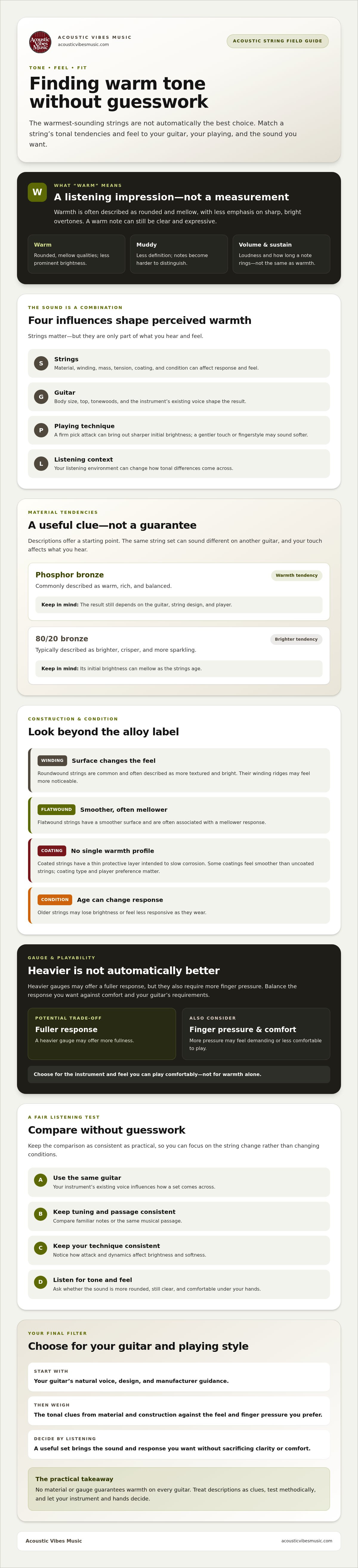
String comparisons are most useful when you control what you can. Your memory of a sound can shift between sessions, so keep a simple record and use the same guitar, tuning, passage, and playing approach for each set. Change one factor at a time, then judge warmth alongside clarity, sustain, comfort, and tuning stability.
You can’t compare two string sets on the same guitar at precisely the same moment, but a consistent routine makes the comparison more meaningful. Use a familiar short passage, keep your pick or fingerstyle approach steady, and listen at a similar volume. Write down your impressions before deciding which set you prefer.
A bright impression may come from more than the strings. Guitar construction and body shape, pick material and thickness, playing dynamics, and setup can all affect the sound or response. Before assuming something needs repair, check whether the strings are worn or simply unsuitable for the tone you want. Then compare a fresh set using the same routine.
If a new set brings persistent buzzing, unusually difficult fretting, or other playability concerns, don’t assume heavier strings will solve it. A qualified instrument technician can assess whether setup or another issue may be involved.
Looking for a guitar whose natural voice suits your preferences? Explore acoustic guitar options and consider how each instrument responds to your playing. A careful comparison will help you identify the best guitar strings for warm tone on the guitar you actually play.
There’s no single set that makes every acoustic guitar sound warmer. Start with the sound you want, then weigh your playing approach, hand comfort, and the guitar maker’s guidance. Material and gauge can point you toward useful options, but your instrument’s own response is the deciding factor.
For fingerstyle, listen for clear note separation and a comfortable response to a lighter touch. Flatpickers may prioritize a defined attack, while strummers might want a balanced chord sound that stays pleasing under a firmer stroke. These are listening priorities, not genre rules: a fingerstyle player may enjoy a crisp response, and a strummer may prefer a softer, rounder one.
Choose a short passage you regularly play, such as a chord progression with a few picked notes. Use it to judge how a string set handles articulation, overall balance, and comfort. Keep the material and gauge within the guitar maker’s recommendations, and don’t select a set based on style labels alone.
Use this simple decision framework:
Your guitar’s body and materials matter, too. A dreadnought may offer a different balance and projection from a smaller-bodied guitar, while tonewoods and overall construction also influence the instrument’s voice. That’s why a set that sounds rich and balanced on one guitar might seem too subdued or too bright on another. Explore the acoustic guitar collection to compare instruments and consider how their designs may shape your string choice.
A tonal preference is personal; persistent buzzing or poor playability after a string change may point to a setup concern. Check that the strings suit the guitar and follow its maker’s guidance. If the issue continues, have the instrument assessed by a qualified luthier. Acoustic Vibes Music offers luthier services by appointment, though an instrument needs to be assessed directly to identify a specific problem.
The best guitar strings for warm tone are the ones that complement your guitar and feel right under your fingers. Take your time comparing options, and let your own instrument guide the choice.
The best guitar strings for warm tone aren’t chosen by material or gauge alone. Materials can suggest a tonal direction, while gauge affects feel and response, but neither guarantees a particular sound. Your guitar, playing approach, and comfort matter just as much.
Make the choice personal: follow your instrument maker’s guidance, compare strings under consistent playing conditions, and listen for warmth alongside clarity, sustain, and ease of playing. A set that sounds rich on one guitar may respond differently on another, so let your own instrument be the final judge.
Acoustic Vibes Music focuses on acoustic instruments and accessories, including guitar strings, and offers professional instrument repair and maintenance by appointment if playability concerns persist. Explore Acoustic Vibes Music’s acoustic guitars and accessories to find options that suit your sound and playing.
Try thoughtfully, trust your ears, and enjoy discovering the voice your guitar can bring to the music.
The best guitar strings for warm tone depend on your guitar, playing style, and preferred feel. Phosphor bronze is commonly associated with a warm, rich balance, while other materials may suit a guitar that already sounds dark. Treat these descriptions as starting points, not guarantees. Compare suitable sets on your own instrument, and consider clarity, comfort, and the guitar maker’s guidance alongside warmth.
Phosphor bronze is commonly described as warmer and richer, while 80/20 bronze is often associated with a brighter, crisper sound. These are general tonal tendencies, not rules that apply identically to every acoustic guitar. Body design, string age, playing dynamics, and listening conditions can all affect what you hear. Compare fresh sets of similar gauge on your guitar to judge the difference fairly.
Coated strings don’t have one consistent warmth profile. Their protective layer is intended to help resist corrosion, and the coating may affect how the strings feel under your fingers. Perceived brightness or warmth depends on the string’s material and construction as well as the coating. If you want to compare sound, try fresh coated and uncoated sets with similar gauge and construction.
Lighter strings don’t automatically make an acoustic guitar sound warmer. They’re often easier to fret and may feel more flexible, but they can also sound brighter or less full to some players. Your guitar and technique shape the result. Choose a gauge that fits your comfort and the instrument maker’s guidance, then listen for warmth alongside clarity and response rather than relying on gauge alone.
There’s no single change schedule that suits every player. How quickly strings lose their preferred sound and feel depends on playing frequency, handling, and storage conditions. Replace them when they sound dull to you, feel rough, show signs of corrosion, or no longer hold tuning reliably. Keeping notes about string age and sound can help you recognize when a fresh set restores the response you prefer.
Changing strings can shift an acoustic guitar’s tonal balance, so a different material or construction may make its sound feel less bright. It won’t guarantee a particular tone or override the instrument’s natural voice. Pick choice, playing dynamics, guitar design, and setup can also contribute to brightness. Try a suitable fresh set first; if buzzing or poor playability persists, have the instrument assessed by a qualified technician.