Traditional vs Modern Banjo Tone: Which Sound Fits You
The traditional vs modern banjo tone isn’t simply old versus new: open-back banjos often sound softer and mellower, while resonator banjos tend to project a louder, more focused voice. Early-1900s recording equipment couldn’t capture an instrument’s full frequency range, which could make recorded banjos sound thin and compressed. The tone you hear, then, reflects both the banjo itself and how it was recorded.
It’s easy to associate a warm, plunky sound with tradition and a bright, ringing voice with modern playing. But construction, head material and tension, tone rings, and setup all shape a banjo’s sound, so age alone won’t tell you how it will sound. This guide explains how those details influence tone, why old recordings can color your impression, and how to choose a sound that fits your music, from clawhammer and folk to bluegrass. Listen for the qualities you want, then consider the instrument and recording together.
Key Takeaways
- Match the banjo’s construction to your playing style: an open-back often suits a softer old-time sound, while a resonator offers stronger projection.
- Use tone rings as a clue to volume and sustain, but consider the ring’s design rather than treating every tone ring as identical.
- Head surface and tension can shift a banjo’s character, helping you move toward a brighter, crisper voice or a warmer, mellower one.
- Listen beyond vintage recordings: early recording equipment could make banjos sound thinner and more compressed than they do in person.
- Choose by the sound that serves your music, weighing construction, setup, and recording together rather than relying on age alone.
Open-back banjos for old-time, folk, and Americana
There’s no single price for traditional or modern banjos; construction and components affect price, not tone category alone. Modern banjo tone generally describes a sound shaped for greater projection, brightness, or sustain, though design and setup matter more than age.
Open-Back and Resonator Projection
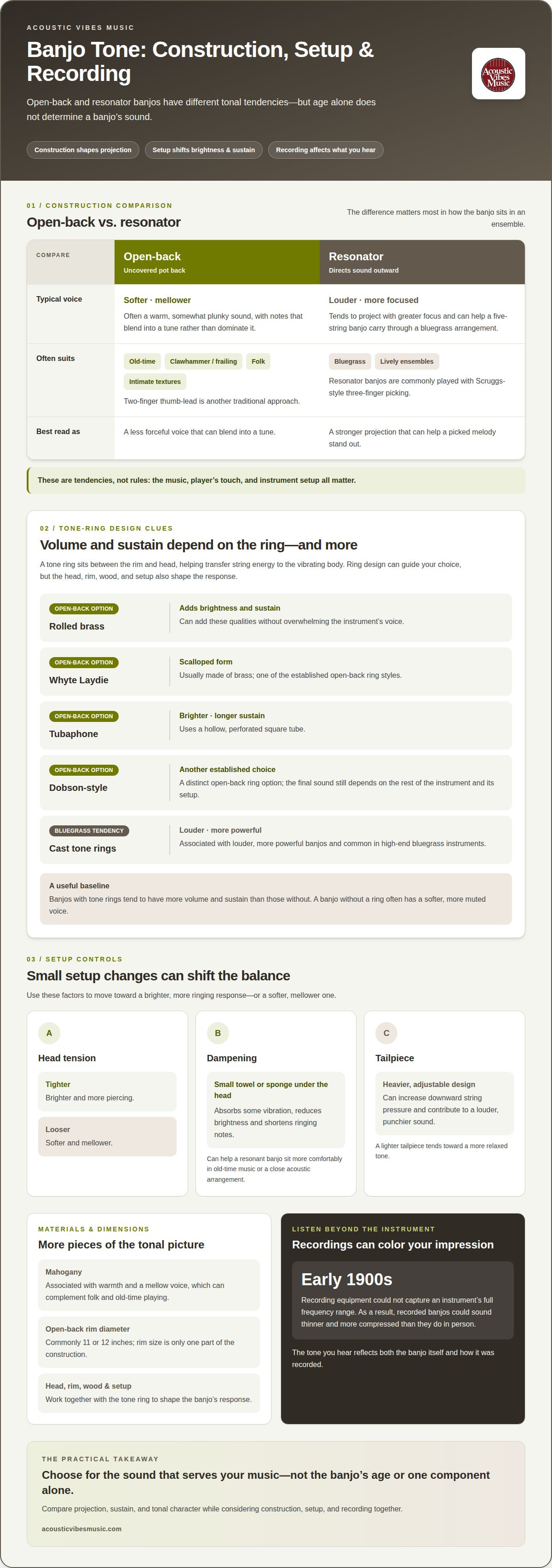
An open-back banjo has an uncovered pot back, while a resonator directs sound outward from the player. That difference matters when you’re choosing how the instrument should sit in an ensemble: open-backs tend to sound softer and mellower, while resonator banjos project more loudly and with greater focus. A resonator can help a five-string banjo carry through a bluegrass arrangement; an open-back can better suit an intimate folk texture.
For Old Time music, an open-back’s less forceful voice often pairs naturally with clawhammer, also called frailing. Players may prefer a warm, somewhat plunky sound, with notes that blend into a tune rather than dominate it. Two-finger thumb-lead is another traditional approach. The fit depends on the music and the player’s touch, not on a rule that every old-time banjo must sound alike.
Setup can refine that character. Head tension is one useful factor: a tighter head tends to sound brighter and more piercing, while a looser head can sound softer and mellower. Some old-time players place a small towel or sponge under the head to reduce brightness and sustain. These choices let players tailor an open-back’s response without treating its basic construction as the only factor shaping its sound.
Open-Back Tone Ring Varieties
A tone ring is typically a metal piece, often brass, set between the rim and head to shape the banjo’s response. Open-backs may use rolled brass, Whyte Laydie, Tubaphone, or Dobson-style rings. These designs offer distinct construction choices, so the ring can help guide a player toward a preferred balance of warmth, brightness, and sustain. The common Old Time ring styles were developed over 100 years ago.
Rolled brass adds brightness and sustain without overwhelming the instrument’s voice. A Whyte Laydie-style ring has a scalloped form, usually in brass; a Tubaphone uses a hollow, perforated square tube and tends to sound brighter and sustain longer. Dobson rings offer another established open-back option. The name alone doesn’t determine the final tone: the head, rim, wood, and setup also shape each banjo’s response.
Wood contributes another shade of color. Mahogany is associated with warmth and a mellow voice, qualities that can complement folk and old-time playing. Open-back rims commonly measure 11 or 12 inches in diameter, but rim size is only one part of the instrument’s construction. Listen for how the whole banjo responds to your picking style, then weigh projection, sustain, and tonal character together.
Tone rings and their effects on volume and sustain
A tone ring affects a banjo’s response, especially its volume and sustain. Its design matters, but the rim, head, and setup also shape the instrument’s voice.
Volume and Sustain Effects
A tone ring sits between the rim and head, helping transfer string energy to the banjo’s vibrating body. Banjos with tone rings tend to produce more volume and sustain than instruments without them. That added presence can help bluegrass players project through a lively ensemble, while a softer, shorter response may suit music where the banjo should blend in.
Ring construction affects the result. Rolled brass can add brightness and sustain without overpowering the instrument. Cast tone rings are associated with louder, more powerful banjos and are common in high-end bluegrass instruments. These are tonal tendencies, not guarantees: head tension and the instrument’s overall construction also contribute to its sound.
Dampening Brightness and Sustain
Players can reduce excess brightness or sustain by changing the setup rather than replacing the tone ring. A small towel or sponge placed under the banjo head absorbs some vibration, shortening ringing notes and softening the response. This can help an especially resonant banjo sit more comfortably in old-time music or a close acoustic arrangement.
Head tension offers another adjustment. A tighter head tends to sound brighter and more piercing; loosening it can produce a softer, mellower character. Make small changes and listen after each one. A banjo’s response comes from several interacting parts, so changing one element can shift its balance without transforming every aspect of its tone.
The useful question isn’t whether more sustain is always better, but whether the notes serve the music. In bluegrass, a louder, ringing banjo can help a picked melody stand out. In a quieter folk setting, lingering notes may blur a delicate arrangement, making a more restrained response preferable. Players can also consider the tailpiece: a heavier, adjustable design can increase downward string pressure and contribute to a louder, punchier sound, while a lighter tailpiece tends toward a more relaxed tone.
Treat the ring as one clue, not the whole verdict. A banjo without a tone ring often has a softer, more muted voice, while an instrument with a ring commonly offers greater volume and sustain. Yet the head, tailpiece, and setup still matter. Compare how clearly the notes speak, how long they ring, and how the instrument fits the music. Those qualities reveal whether its response supports your playing style.
Tone-ring types and their tonal effects
Playing style and picking technique shape how a banjo’s tone rings through the music. Clawhammer and two-finger thumb-lead often pair with a warmer, plunkier response, while Scruggs-style three-finger picking is usually played on a resonator banjo with a bluegrass-style pot assembly and neck.
Whyte Laydie and Bacon-Style Rings
The A.C. Fairbanks Company conceived the Whyte Laydie tone ring in the late 1800s. Its scalloped ring is usually made of brass, and its design offers an open-back option for players seeking more sustain than a banjo without a tone ring. The result still depends on the instrument around it, including its head and setup.
A Bacon-style tone ring is described as warm and rich, with sustain between that of Whyte Laydie and Tubaphone designs. It offers a useful point of comparison for players choosing between a more restrained plunk and a longer, brighter ring. These styles aren’t interchangeable labels for age; they describe different constructions and tonal tendencies.
Tubaphone Rings and a Ringing Voice
A Tubaphone ring is a hollow square tube with holes drilled through its side. Vega’s Tubaphone tone ring was invented in 1910. Compared with a Whyte Laydie ring, it tends to produce a brighter tone and more sustain, making it worth considering when individual notes should remain audible after the string is picked.
That extra ring can serve melodic playing, where note definition matters, but it won’t suit every arrangement. In a sparse old-time tune, long sustain may make notes overlap; in a fast, picked passage, added clarity can help the melody speak. The musical setting matters as much as the ring’s construction.
Plunk Versus Ring
“Plunk” describes a softer, more muted response, while “ring” suggests a brighter voice with more sustain. Banjos without tone rings commonly produce a softer, muted sound, which can work well for old-time styles. Tone rings tend to add volume and sustain, but the amount and character vary by design.
Use your technique as a guide. Clawhammer players seeking a warm, plunky sound may favor a less sustained response; a three-finger bluegrass player may value the ring and projection associated with a tone-ring instrument. These are tendencies, not strict rules. A player’s touch, head tension, and the rest of the banjo’s setup all influence its sound.
To compare ring styles, listen for three qualities: note brightness, how long each note sustains, and how clearly notes separate as you play. A Whyte Laydie, Bacon-style, and Tubaphone ring offer distinct starting points, not a universal ranking. The right balance is the one that supports your picking technique and the musical space you want the banjo to occupy.
Frosted versus smooth banjo heads
A frosted banjo head tends to produce a brighter, crisper sound, while a smooth or clear head often sounds warmer and less percussive. That contrast can change how the same instrument sits in a tune. Choose the character you want under your playing hand, then listen for how clearly each note speaks and how much attack you hear.
For a sharper, more defined voice, a frosted head may suit melodic picking or a part that needs to stand out. A smooth head can soften the attack, which may work better when you want a rounder tone in folk or old-time music. These are tendencies, not fixed genre rules. The best fit depends on the banjo, its setup, and how you play.
Head choice also involves balancing tonal preference with everyday use. Earl Scruggs liked the tone of a calfskin banjo head but preferred the practicality of plastic heads. That example captures an important distinction: a player can admire one head’s sound while choosing another for practical reasons. Material and surface are part of the decision, not the whole instrument’s identity.
- Frosted: Listen for a brighter, crisper attack and stronger percussive character.
- Smooth or clear: Notice the warmer tone and less pronounced percussion.
- Calfskin or plastic: Consider Scruggs’s preference for calfskin tone alongside plastic practicality.
Make a useful comparison by keeping the banjo and passage consistent. Play the same short phrase with each head, using the same picking pattern and similar force. Listen for the note’s initial attack, its warmth, and whether the sound feels percussive or rounded. Repeating a phrase makes the contrast easier to hear than switching tunes or changing your technique between tests.
Then consider the musical role. A crisp response can help individual notes cut through a busy arrangement, while a warmer, less percussive voice may blend more gently. A head that sounds appealing on its own can behave differently alongside other instruments, so imagine its place in the full ensemble. For example, compare a bright picked line with a softer accompaniment before settling on a tonal direction.
Head choice doesn’t divide banjos neatly into traditional and modern categories. A frosted head can be part of a personal setup, just as a smooth head can suit contemporary playing. Focus on the sound you want, then judge the head in the context of your technique and music. This makes surface and material useful clues, rather than shortcuts for deciding what a banjo should sound like.
How recording technology shaped classic banjo tone
Traditional banjo tone often means a warm, softer, somewhat plunky sound, especially in old-time playing. But recordings from the early 1900s add another factor: equipment couldn’t capture an instrument’s full frequency range. The result could sound thin and compressed, so historic recordings don’t always reveal how a banjo sounded in person.
That distinction matters when you use old recordings as a reference. A banjo with a calfskin head may sound different in the room than it does on an early recording. Limited frequency capture can narrow the sound’s apparent range and reduce the impression of body, warmth, or volume. What seems like an inherently thin vintage tone may partly reflect the recording process.
Think of a recording as part of the sound, not a transparent window onto the instrument. The banjo’s construction and setup shape its acoustic voice; recording equipment then affects which parts reach the listener. For listeners weighing traditional vs modern banjo tone, this matters: an early recording’s compressed sound may not represent the instrument’s full acoustic character.
A practical way to listen is to separate the instrument’s qualities from the recording’s character. Notice whether the notes seem bright or mellow, how long they ring, and whether the sound feels full or compressed. Then consider the recording era. An early-1900s recording may not preserve the detail you’d hear from a well-tuned banjo played directly.
This also explains why “traditional” isn’t one fixed sound. A warm, plunky open-back and a brighter banjo can both have traditional roots, while an early recording may make either seem thinner. Construction, head choice, setup, and recording all contribute. Age alone can’t tell you what you’ll hear from the instrument itself.
Use historic recordings for musical ideas, phrasing, and style, but treat their tone as an interpretation. For example, compression may soften the contrast between a banjo’s sharp attack and lingering sustain. Listen for the musical character, then assess the instrument’s tone separately whenever possible. That keeps recording limitations from becoming mistaken rules about vintage banjos.
The clearest takeaway is that classic recordings preserve a period’s sound, not a perfect acoustic portrait. Early equipment shaped the volume and tonal detail listeners hear today. So if an old track sounds thin, that quality may come from recording technology as much as from the banjo. Keep both factors in mind as you consider traditional vs modern banjo tone and choose a voice for your music.
Acoustic Vibes Music: Banjos
Acoustic Vibes Music offers banjos for players exploring the qualities discussed here, from a mellow old-time voice to brighter projection and sustain. Comparing construction, head character, and setup can help you focus on the sound that suits your music, rather than choosing by age alone.
If you’re weighing different banjo sounds, Acoustic Vibes Music can help you consider your instrument choice. Contact Acoustic Vibes Music to continue the conversation. Meanwhile, for music lovers whose appreciation for folk culture inspires journeys abroad, Funny Times Travel & Tours creates personalized itineraries and tour packages for travelers exploring vibrant destinations in South America.
Choose the Sound That Moves Your Music Forward
Let your next banjo choice begin with the music you want to make. The distinction between traditional and modern banjo tone is most useful as a starting point, not a label you have to follow. Focus on the character that inspires you to play, and leave room for your preferences to evolve as your repertoire grows. For acoustic bands and family groups heading out to festivals or community gatherings, coordinating your stage presence with themed apparel from Adorb Custom Tees can be a fun way to bring the whole ensemble together.
Acoustic Vibes Music offers banjos alongside acoustic guitars and classical and flamenco guitars, giving acoustic players instruments to explore across styles. If you’re ready to talk through your banjo search, contact Acoustic Vibes Music. Take the next step toward a sound that feels like yours.
Frequently Asked Questions
How do traditional and modern banjos differ in tone and sound characteristics?
Traditional and modern describe broad tonal preferences, not a strict division by age. A traditional old-time sound may favor a warm, plunky response, while players seeking a brighter, more projecting voice may choose a different construction and setup. Compare instruments by listening to the same phrase and picking pattern. That makes differences in attack, note separation, and sustain easier to hear than labels alone.
How do banjo head type and tension affect tone?
Head surface and tension influence both attack and tonal warmth. A frosted head tends to sound crisp and bright, while a smooth head often has a warmer, less percussive character. Tighter tension can make the voice more piercing; looser tension can soften it. For a useful comparison, keep your picking pattern consistent and listen to how the head responds to both single notes and chords.
How do tone rings and banjo construction affect traditional versus modern tone?
Tone rings and surrounding construction influence a banjo’s response, but a ring’s name alone can’t predict the whole sound. Rim, head, neck, and setup work together. For a fair comparison, listen to instruments with similar overall construction, such as two banjos with spunover rims. That helps you hear the ring’s contribution without mistaking differences elsewhere in the build for its effect.
How do strings, bridges, and setup change banjo tone?
Strings, bridges, and setup each shape the instrument’s response. The bridge transfers string vibration to the head; a maple bridge is associated with a sharp, clear sound, while softer woods such as walnut or mahogany can add warmth. Tailpiece design affects string tension and downward pressure. For Irish tenor playing, heavier-gauge strings are commonly used to support the tunings associated with that style.
What banjo setup produces a traditional old-time tone?
For a traditional old-time character, start with an open-back banjo and a warm, somewhat plunky response. Clawhammer, also called frailing, is a common playing approach; two-finger thumb-lead is another option. Head tension and damping can refine the sound. A small towel or sponge under the head can reduce brightness and sustain, helping the notes feel less sharp or lingering in a tune.
What banjo setup produces a modern bluegrass tone?
A resonator banjo with a tone ring is a common starting point for a bright, projecting bluegrass sound. Scruggs-style three-finger picking is typically played on this kind of bluegrass-style pot assembly and neck. Head tension and tailpiece setup also influence the result, so listen for clear note definition and a strong response as you play. The aim is a sound that carries through the arrangement.