My shopping cart
Your cart is currently empty.
Continue ShoppingA beautiful instrument can still feel stubborn under the hands. Stringed instrument repair isn’t only about fixing visible damage; a careful assessment can reveal whether playability or tone is affected by the setup, wear, or a need for custom work. The aim is to help the instrument respond more comfortably while respecting its construction and the player’s preferences.
If fretting feels uncomfortable, notes sound out of tune, or strings sit too high or too low, precise adjustments can make a real difference. This guide explains what professional stringed instrument repair can involve and how repair tools support assessment and careful workmanship. You’ll learn what adjustments to the truss rod, nut, saddle, action, and intonation address, and what information helps a repair professional understand your instrument and priorities. Follow the process from identifying an issue to defining the work, and learn when a focused setup may be the right place to start.
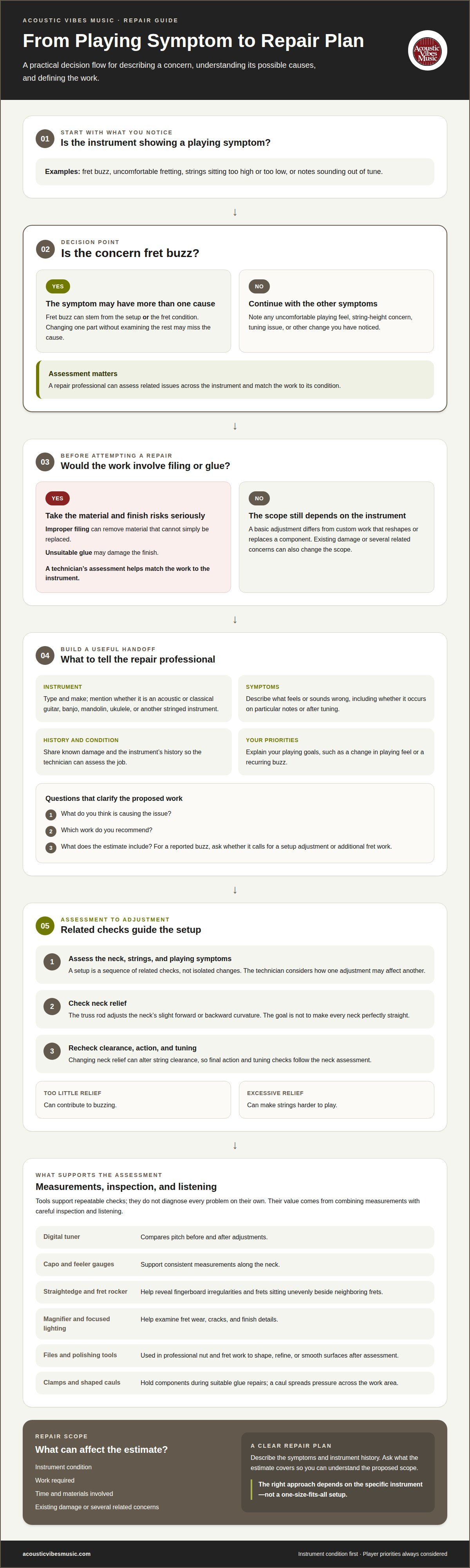
Custom repair begins with the instrument’s condition and the player’s goals. A technician assesses the specific concern, such as fret buzz or an uncomfortable playing feel, before recommending suitable work.
A repair professional can assess related issues across the instrument, while a DIY attempt may focus on one visible symptom. For example, fret buzz can stem from the setup or fret condition, so changing one part without examining the rest may miss the cause. Improper filing can remove material that cannot simply be replaced, and unsuitable glue may damage the finish. A technician’s assessment helps match the work to the instrument.
In the United States, repair charges depend on the instrument’s condition, the work required, and the time and materials involved. A basic adjustment differs from custom work that reshapes or replaces a component. Existing damage or several related concerns can also affect the scope. Describe the symptoms and the instrument’s history so the technician can assess the job and explain what the estimate covers.
Stringed instruments include acoustic and classical guitars, banjos, mandolins, and ukuleles. Their construction and playing systems differ, so a repair plan should suit the specific instrument rather than assume one approach fits all. When arranging service, mention the instrument type, make, and the problem you’ve noticed. For custom work, details such as a change in playing feel or recurring buzz help guide the assessment.
Transport the instrument in a fitted case, securing loose accessories separately. Tell the technician about known damage and when the issue occurs, such as on particular notes or after tuning.
To find a nearby technician, look for a repair professional whose work includes your instrument type and the kind of adjustment you need. Before hiring a luthier, ask what they think is causing the issue, which work they recommend, and what the estimate includes. For example, ask whether a reported buzz needs a setup adjustment or additional fret work. Clear answers help you understand the proposed scope and decide how to proceed.
A technician chooses tools based on the instrument, its construction, and the work being assessed. A digital tuner helps compare pitch before and after adjustments, while a capo and feeler gauges support consistent measurements along the neck. These tools don’t diagnose every problem on their own. Their value comes from combining measurements with careful inspection of the instrument’s response.
For neck and fret assessment, a straightedge reveals irregularities along the fingerboard, while a fret rocker helps identify frets that sit unevenly beside neighboring frets. A technician may use a magnifier and focused lighting to examine fret wear, cracks, or finish details. Together, these tools help distinguish a localized fret concern from a broader setup issue, guiding the repair choice beyond what appearance alone can show.
Nut and fret work calls for a controlled touch. A technician uses a nut file suited to the string slot, then checks how the string sits and moves. Fret files can level or reshape worn areas, while polishing tools smooth the finished surface. Each step depends on the instrument’s condition. Removing too much material can change the feel or require further corrective work.
For structural repairs, clamps and shaped cauls hold components in place while adhesive sets. A caul spreads pressure over a broader surface, which matters when working with a curved body or delicate wooden part. Protective pads help shield nearby finishes from contact. The technician selects a setup suited to the repair location, keeping pressure aligned with the joint rather than forcing pieces into position.
Measurement tools support repeatable checks, but they don’t replace listening and playing tests. A tuner can reveal pitch differences, while the technician also checks how notes sound across the instrument. In professional stringed instrument repair, gauges, files, clamps, and careful listening help connect physical measurements with the instrument’s performance.
If an instrument needs this level of assessment, consider professional luthier repair to address its condition with tools suited to the work.
A setup works best as a sequence of related checks, not isolated changes. The technician assesses the neck, strings, and playing symptoms, then considers how one adjustment may affect another. For example, changing neck relief can alter string clearance, so the final action and tuning checks follow the neck assessment.
The truss rod adjusts the neck’s relief, its slight forward or backward curvature. A technician checks the neck along its length and makes a controlled adjustment suited to the instrument’s response. The goal isn’t to make every neck perfectly straight. Too little relief can contribute to buzzing, while excessive relief can make strings harder to press, especially farther up the fingerboard.
At the nut, the technician evaluates the height and shape of each string slot. Slots that sit too high can make notes difficult to fret near the first position. Slots cut too low can cause open-string buzz. The technician considers string gauge and spacing, then refines the slots so strings rest securely and move cleanly during tuning. Nut work requires care because removing material is difficult to reverse.
The saddle affects string height and, on many acoustic instruments, provides the contact point that supports clear vibration. A technician may adjust its height to refine the action while checking that it remains properly seated. Action is the distance between the strings and frets. If it feels high, the cause may be neck relief, nut height, saddle height, or a combination. That’s why the technician assesses the whole setup before changing one component.
Intonation describes how well fretted notes stay in tune across the fingerboard. The technician compares open strings with notes played farther along the neck, then adjusts the bridge contact point when the instrument allows it. String condition, tuning, action, and fret condition can all affect the assessment. A note that sounds sharp higher up the neck may call for closer inspection, not an automatic bridge adjustment.
Good repair work depends on identifying the cause, choosing adjustments suited to the instrument, and rechecking the result through playing tests. The cost reflects the labor involved, the instrument’s condition, and whether the setup requires additional component work. A straightforward adjustment differs from work involving worn parts, damaged slots, or related corrections. Clear symptoms, such as buzz on particular notes or discomfort in first position, help the technician define the work and explain its scope.
A repair shop’s instrument range depends on its technicians’ experience and equipment. Acoustic, classical, and flamenco guitars, banjos, mandolins, and ukuleles each have distinct construction details. Experience with one category does not necessarily cover every repair on another. Match the instrument type and repair need when arranging professional service.
Acoustic guitars may need work on the neck, frets, bridge, or body. A technician assesses a loose bridge differently from a worn fret or setup concern. Classical and flamenco guitars use nylon strings and have construction features that call for an approach suited to those instruments. For instance, the technician considers the guitar’s strings and bridge design when investigating a buzzing note.
Banjos and mandolins have different hardware and playing layouts. Banjo repair may involve assessing the head, bridge, neck, and tuning components. A mandolin’s paired strings and compact fingerboard create distinct setup and fretwork considerations. The instrument’s make and model help a repair professional understand its construction, while a clear description of the symptom focuses the initial assessment.
Other stringed instruments may require separate specialties. Violins, violas, cellos, and double basses are bowed instruments, with construction and repair traditions different from those of fretted guitars. Electric guitars can involve pickups and wiring as well as the neck, frets, and bridge. These examples show why “stringed instrument” alone doesn’t define a technician’s full scope. Experience with the specific instrument and fault matters.
For an accurate assessment, share the instrument’s type, make, and model, along with the issue you notice. “My mandolin buzzes on open strings” gives a clearer starting point than “it sounds wrong.” Mention previous repairs or modifications, such as a replacement bridge or changed tuners. These details help the technician connect the symptom with relevant parts and plan an appropriate inspection.
A repair estimate depends on the work required, the instrument’s condition, and any parts needed. A simple adjustment and a structural repair involve different labor and materials, so one typical price cannot represent every job. Compare estimates for the same clearly described work, not unrelated repairs on different instruments.
Labor reflects the steps needed to diagnose and complete the repair. A technician may inspect a guitar, identify a loose component, remove it, prepare the surfaces, refit it, and assess the result. A setup adjustment has a different scope from replacing a damaged part or addressing several connected faults. The estimate should describe the work, rather than label everything simply as a “repair.”
Parts can affect the total when a component needs replacing. A worn nut, for example, may need a new part and fitting, while a minor adjustment may use the existing component. Material choice and the fit required for the instrument affect the work involved. If a bridge or another attached component needs repair, removing and refitting it can add steps beyond the replacement itself.
The instrument’s condition matters, too. One loose tuning component is different from several concerns that need investigation together. Previous repairs, visible damage, or modifications can affect how a technician approaches the job. For example, a symptom near an acoustic guitar’s bridge may require inspection of the surrounding area before the repair scope becomes clear.
To understand an estimate, look for these elements:
Before approving work, describe the symptoms with examples, such as a buzz on open strings or a tuning problem after fretting. Share the instrument type, known damage, and previous modifications. These details help the technician assess the job and explain the proposed work. Ask what the estimate includes and how additional work will be handled if inspection reveals another issue.
For a fair comparison, place estimates side by side only when they cover the same tasks and parts. A lower figure may describe less work, while a broader estimate may include fitting or related corrections. Focus on the stated repair scope and the instrument’s needs. That gives you a clearer basis for deciding how to proceed.
Acoustic Vibes Music provides luthier repair services for players who need professional attention for a stringed instrument. Use the repair service when a setup concern, worn component, or instrument damage calls for a technician’s assessment rather than a home adjustment. Sharing the instrument type and the issue you’ve noticed gives the repair conversation a clear starting point.
If you’re weighing repair against replacement, used and consignment instruments offer another option to consider. Acoustic Vibes Music also offers acoustic, classical, and flamenco guitars, so you can explore these categories alongside your repair needs. The right choice depends on the instrument’s condition and what you want from your playing experience.
For help with a repair or to discuss used and consignment instruments, contact Acoustic Vibes Music.
Let the way you play guide your next decision. If a change in feel or sound affects your confidence, professional stringed instrument repair can help determine what work suits the instrument and your playing goals. Consider the result you want, whether that’s more comfortable fretting, dependable tuning, or preserving an instrument you value.
When you reach out, describe the instrument and concern in plain terms. Mention the notes or playing situations where the issue appears, along with any recent changes. That gives the repair conversation a useful starting point. Acoustic Vibes Music provides repair services for players with acoustic guitars, classical and flamenco guitars, and banjos.
Contact Acoustic Vibes Music today to discuss the instrument and your next step. A thoughtful repair can help you return to the music with renewed confidence.
A professional setup begins with a discussion of the player’s concerns and an examination of the instrument’s condition. The technician identifies adjustments suited to its design, completes the agreed work, then checks the result through tuning and playing tests. The process varies: a guitar and a violin have different components and setup needs. For example, a guitar’s bridge adjustments don’t apply directly to a violin’s bridge or strings.