My shopping cart
Your cart is currently empty.
Continue ShoppingA repaired headstock isn’t automatically weak. The cost to repair a broken guitar headstock depends mainly on whether the break is clean or shattered, whether the headstock is still attached, and whether cosmetic finish work is needed. Structural repair can return a guitar to playing condition; making the break less visible requires additional finishing.
It’s understandable to wonder whether a repaired headstock will hold up and stay in tune. The method, alignment of the broken wood, and any reinforcement all affect the result, so the right approach depends on the damage. This guide explains how the break influences the work and cost, what professional repair may involve, and what to expect from the finished headstock, including its appearance and durability.
A headstock repair has two goals: restore a stable joint and improve its appearance. The damaged wood determines the structural work, while the finish affects how visible the repair remains.
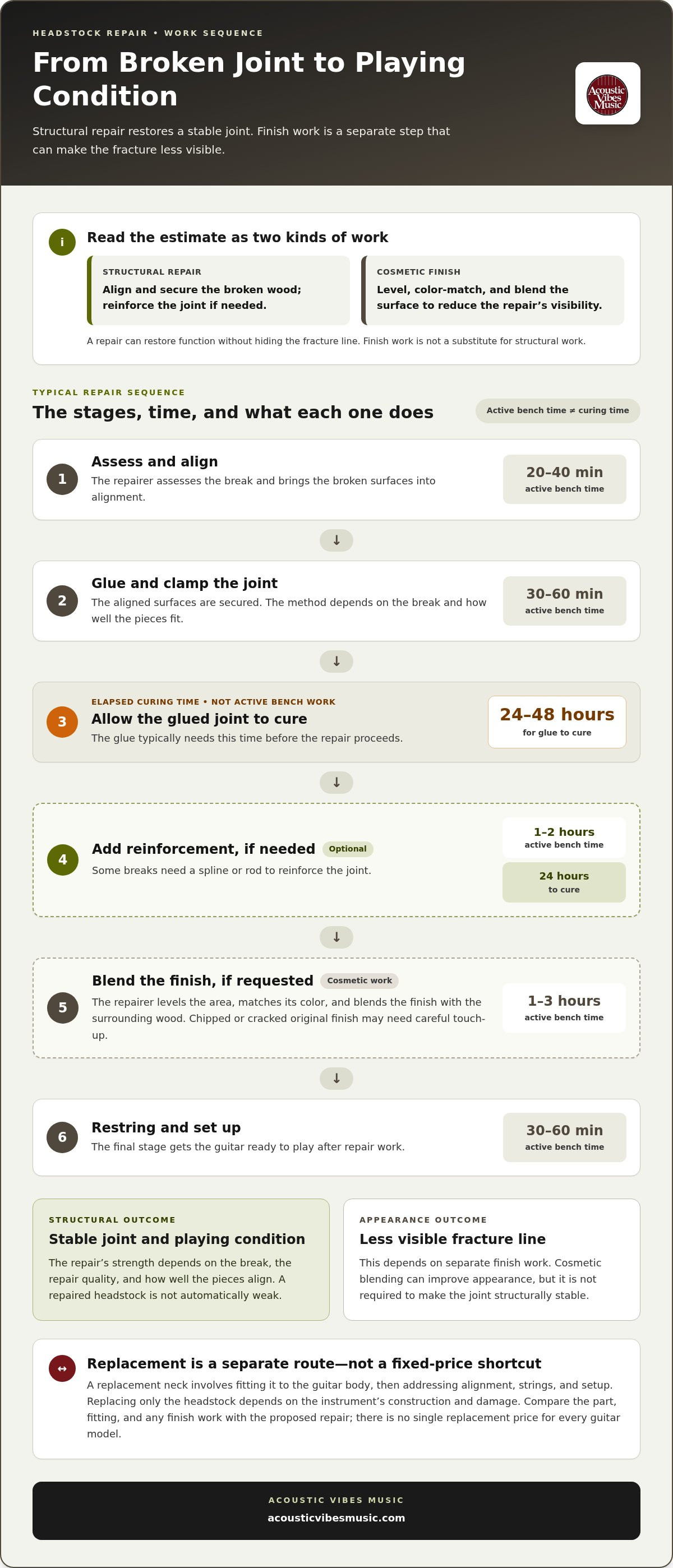
Structural work brings the broken surfaces together, aligns the headstock, and secures the joint with glue and clamping. Some breaks need reinforcement, such as a spline or rod. Finish work comes afterward: the repairer levels the area, matches its color, and blends the finish with the surrounding wood. These are separate stages, not interchangeable fixes.
Look closely at what the estimate includes. A repair can restore function without hiding the fracture line. An expert headstock finish touch-up adds careful color matching and surface blending, especially where the original finish chipped or cracked. Finishing and color matching typically take 1-3 hours of active bench time.
Work time and elapsed time differ. Assessment and alignment typically take 20-40 minutes of active bench time, followed by 30-60 minutes for gluing and clamping. Glue typically needs 24-48 hours to cure. Finish work may add active bench time, while a spline or rod reinforcement typically takes 1-2 hours and needs 24 hours to cure. Setup and restringing typically take another 30-60 minutes of active bench time.
Replacing a neck is different from repairing the original break. It involves fitting a replacement neck to the guitar body, then addressing alignment, strings, and setup. Replacing only the headstock depends on the instrument’s construction and the extent of the damage. The suitable option depends on the guitar’s design and the condition of the neck joint, truss rod channel, and surrounding wood.
There is no single replacement price that applies to every guitar model. Compare the replacement part and fitting work with the repair’s structural and finish stages. Ask for an estimate that spells out the proposed work and what it includes. This helps you compare repair and replacement without assuming cosmetic finishing is necessary for structural stability.
How long does professional repair take? Active bench work can span assessment, alignment, gluing, finishing, restringing, and setup. Curing adds 24-48 hours for a glued joint; a reinforcement spline or rod typically needs 24 hours to cure. Those curing periods are not active work time, and finish work may add 1-3 bench hours.
What does replacement cost? It depends on the guitar’s construction, the replacement part, fitting, and any finish work. Compare those details with the proposed repair rather than assuming replacement will cost less.
Does insurance or a warranty cover the repair? Coverage depends on the contract’s terms. Review the language on accidental damage, exclusions, deductibles, and claim steps. A warranty and an insurance policy may cover different situations.
How can you find a reputable repair shop and get an estimate? Look for a luthier who repairs headstocks, then provide clear photographs and the guitar’s make and model. A useful estimate describes the structural method, any reinforcement, finish touch-up, restringing, and setup. For shattered or missing sections, photographs help assess the damage.
A useful assessment starts with the damaged wood, not the finish. Note whether the headstock remains attached, whether pieces are missing, and where the fracture reaches the neck. These details help distinguish a localized break from damage involving the neck junction or truss rod channel.
Before moving the guitar, inspect the break without pulling the pieces apart. Check whether the headstock shifts, whether splinters are loose, and whether the fracture crosses several areas. A break reaching the neck junction may need more involved structural work than damage confined to the headstock. Don’t test it by tuning or stringing the instrument.
Record these details for an accurate description:
These observations help explain why similar-looking breaks may need different work. A single fracture with all pieces present gives the repairer different material to align than a shattered headstock. Damage extending into the truss rod channel can also change the repair plan because that area affects the neck’s adjustment system. Describe what you can see, but don’t try to diagnose hidden damage yourself.
Photographs are essential when the headstock is shattered or missing. Take clear views of the front, back, side, and neck junction, with the guitar resting securely. Place loose pieces beside the instrument rather than forcing them into place. Show any missing wood and the fracture’s path. These views give the repairer context for an estimate, though they can’t reveal every internal detail.
Keep your description factual. If you know, say whether the guitar fell, suffered an impact, or had an earlier repair. Mention prior glue or visible repair material, since old adhesive can affect how the break closes. Avoid scraping residue or applying household glue, which may complicate alignment and repair. Store detached pieces safely with their edges visible.
Severity isn’t simply a matter of how dramatic the damage looks. The break’s location, missing wood, previous repairs, and access to the damaged area all affect the work. A headstock that appears mostly intact, for example, may still have a fracture reaching the neck junction. Share your observations and photographs with a luthier to support a practical repair estimate.
A clean guitar headstock break follows the wood grain, with pieces that fit together without gaps and no missing wood, crushed fibers, or splinters.
A clean break follows the wood grain, and the pieces fit together without gaps. There’s no missing wood, crushed fiber, or splintering. This close fit gives the repairer a different starting point than fragmented damage.
Starting prices distinguish structural work from cosmetic finishing. Additional finish work can address visible damage and blend the repaired area with the surrounding surface, but the joint still needs to be aligned and secured first. Ask what the estimate includes, especially whether touch-up is included or priced separately.
Price also reflects complexity. Two breaks that look clean may differ in how well their surfaces meet or whether old adhesive is present. Structural repair prices vary widely, from relatively simple to very complex work. Compare the listed tasks, not just the starting figure.
A shattered headstock may have multiple fracture lines, missing wood, crushed fibers, or damage extending into the neck junction or truss rod channel. These conditions can require more involved structural work than a clean break, so the price may differ.
There isn’t one fixed charge for every shattered break. Structural repair prices vary widely, from straightforward to complex jobs. Missing material, damaged fibers, and fractures extending beyond the headstock all change the work involved.
For a shattered or missing headstock, photographs help with an estimate. Take clear views showing the entire damaged area and any separated pieces. Include the neck junction and truss rod channel if the damage reaches either location. Photos help communicate the break’s extent, but an estimate should also distinguish structural work from cosmetic finishing. Compare like with like: attached or detached, touch-up or no touch-up, and simple or complex damage.
A repaired headstock’s durability depends on the break, how well the wood fits, and the repair method. Accurately aligned surfaces give glue a better bond than crushed or missing wood. The repair must also account for string tension, which continually puts force on the neck and headstock.
Glue and clamping hold aligned pieces together while the joint cures. A glued repair typically needs 24-48 hours of curing time. For breaks needing added support, a spline or rod reinforcement can strengthen the repair. One described method uses a carbon-fiber spline set in epoxy; a wood overlay can provide a natural finish. Reinforcement typically needs 24 hours to cure.
These methods address different challenges. A spline crosses the break to support a fracture that needs reinforcement. An overlay can cover the repair while leaving a wood surface visible. Neither replaces accurate alignment. If the pieces shift during clamping, the finished neck may not track as intended. Proper fit, adhesive application, and stable clamping all matter.
One reported example involved a classical guitar headstock repaired with Elmer’s glue around 1970. The owner said the instrument remained playable and in tune afterward. That account illustrates one repair’s long-term result, not a durability test for every glue, guitar, or break. Individual construction and repair quality remain central.
After repair, assess the instrument by observable signs, not appearance alone. A clean finish can conceal a seam, while a visible line doesn’t by itself mean the joint is failing. Watch for changes over time, especially after restringing and setup.
A persistent change deserves attention. Don’t force a moving joint together or add household adhesive; either can complicate future repair. Keep the guitar’s repair history, including any earlier glue or reinforcement, so the luthier knows what materials are already present.
Long-term confidence comes from structural stability, not an invisible finish. Finish touch-up improves appearance; alignment and reinforcement address the joint. A professional assessment considers how the fracture meets, whether material is missing, and whether the repair needs extra support. Those details explain why one repaired headstock remains dependable while another needs more structural work.
Structural repair prices vary widely, depending on whether the job is relatively simple or very complex.
These estimates don’t set separate prices for acoustic and electric guitars. The deciding factors are the break, previous repairs, finish expectations, and additional work, rather than a stated acoustic-versus-electric price split. The instrument’s construction and damage still shape the repair plan.
Start with the break itself. The repairer assesses how the wood closes and whether the joint aligns. Gaps, crushed fibers, or missing material can add structural work. Multiple fracture lines or damage near the neck junction also complicate the repair. These details explain why two headstocks can require different labor, even when the visible damage seems similar.
Finish goals matter. One player may prioritize a stable joint and accept a visible seam. Another may want color matching and blending across the repaired area. Finishing and color matching typically take 1-3 hours of active bench time, separate from curing. Clarify whether the estimate includes that cosmetic work.
Reinforcement is another decision point. Adding a spline or rod typically takes 1-2 hours of active bench time. It isn’t required for every break; the fracture and repair plan determine whether added support is appropriate. Ask the repairer to distinguish reinforcement from gluing and finish touchup in the estimate.
Check what the quoted scope includes. Setup addresses the instrument’s playability after repair. A clear estimate identifies whether setup is included or added.
To compare estimates, match the work line by line: structural repair, reinforcement, finish work, restringing, and setup. To understand the cost to repair a broken guitar headstock, compare these inclusions alongside the proposed method and any rush timing. This prevents a starting figure from being mistaken for the full scope and separates cosmetic choices from work on the joint.
A repair estimate can vary with the repairer, previous repairs and adhesives, how well an earlier repair closes, the desired visibility of the repair, additional work, and rush service. Ask the repairer to explain how each factor applies and which items change the scope. Estimates are most useful to compare when they include the same repair goals and additional work.
Acoustic Vibes Music provides luthier repair services for damaged guitar headstocks. Turn to its repair team when a break needs professional assessment, structural work, or finish attention. Clear photographs of the damage and any detached pieces help show the break’s location and condition.
Discuss whether the headstock is attached, whether wood is missing, and whether an earlier repair was attempted. These details help frame the options, from securing the joint to addressing visible finish damage. Acoustic Vibes Music also serves players of acoustic, classical, and flamenco guitars, as well as banjos and mandolins.
For guidance on a damaged instrument or its repair options, contact Acoustic Vibes Music.
A damaged guitar can raise a bigger decision than repair alone: what do you want from the instrument next? With a well-loved guitar, preserving its original neck and familiar feel may matter most. Another player may prioritize returning to regular playing with a practical repair plan. Keep that goal in view as you discuss the work and the cost to repair a broken guitar headstock.
Acoustic Vibes Music brings that instrument-focused perspective to its work with acoustic, classical, and flamenco guitars, as well as banjos. If your instrument needs a closer look, share what happened and what matters most to you, whether that’s playability, appearance, or preserving its character.
Contact Acoustic Vibes Music to discuss your guitar and its repair options. A considered next step can help you return to the music with a clearer plan.
A properly aligned and bonded headstock repair can remain stable under normal playing tension. The original fracture doesn’t automatically make the guitar unusable. After the instrument returns, tune gradually and watch for a shifting seam, fresh cracking, or persistent tuning changes. Avoid carrying the guitar by its headstock. Support the neck when moving it, especially during its first outings after repair.
Use bright, angled light to inspect both sides without flexing the joint. A single traceable seam suggests a cleaner fracture; branching lines, crushed edges, or loose fragments point to more extensive damage. Photograph the front, back, and side from a consistent distance, then compare views for cracks hidden along an edge. Keep loose pieces together and leave the fracture untouched for assessment.
Repair cost reflects the damage, previous adhesive or repairs, alignment, reinforcement, finish expectations, and added work. Guitar value helps frame the decision, but doesn’t determine the repair method. For an instrument worth more than $2,000, repair experience with headstocks becomes an especially relevant consideration.
A professional repair involves examining the fracture, identifying earlier adhesive, and choosing a method suited to the joint. Afterward, the repairer can assess practical details such as tuner movement, the string path across the nut, and access to the truss rod. A correctly aligned and bonded joint can support normal playing. A visible repair line alone doesn’t indicate whether the structure is sound.