My shopping cart
Your cart is currently empty.
Continue ShoppingThe most expensive mistake you can make with a vintage Martin or a boutique Collings isn't playing it too much, but trusting its vital geometry to an unqualified hand. When your notes begin to choke and the once-buttery playability turns into a buzzy chore, the cost to refret a guitar becomes about much more than just a shop invoice. It's a calculated investment in the instrument's longevity, tone, and tactile soul. You likely feel a sense of hesitation, worrying that a major overhaul might strip away the original character or market value of your prized acoustic. It's a valid concern for any collector who understands that precision is non-negotiable.
This 2026 guide reveals the current market dynamics and the technical nuances that dictate the investment required for a professional restoration. We will explore the critical differences between a standard fret dress and a full refret, examine the rising preference for durable materials like stainless steel, and provide the insights you need to vet a luthier who treats your instrument with the reverence it deserves. Discover how a master-level refret can actually enhance the value and performance of your favorite guitar, ensuring it remains a joy to play for decades to come.
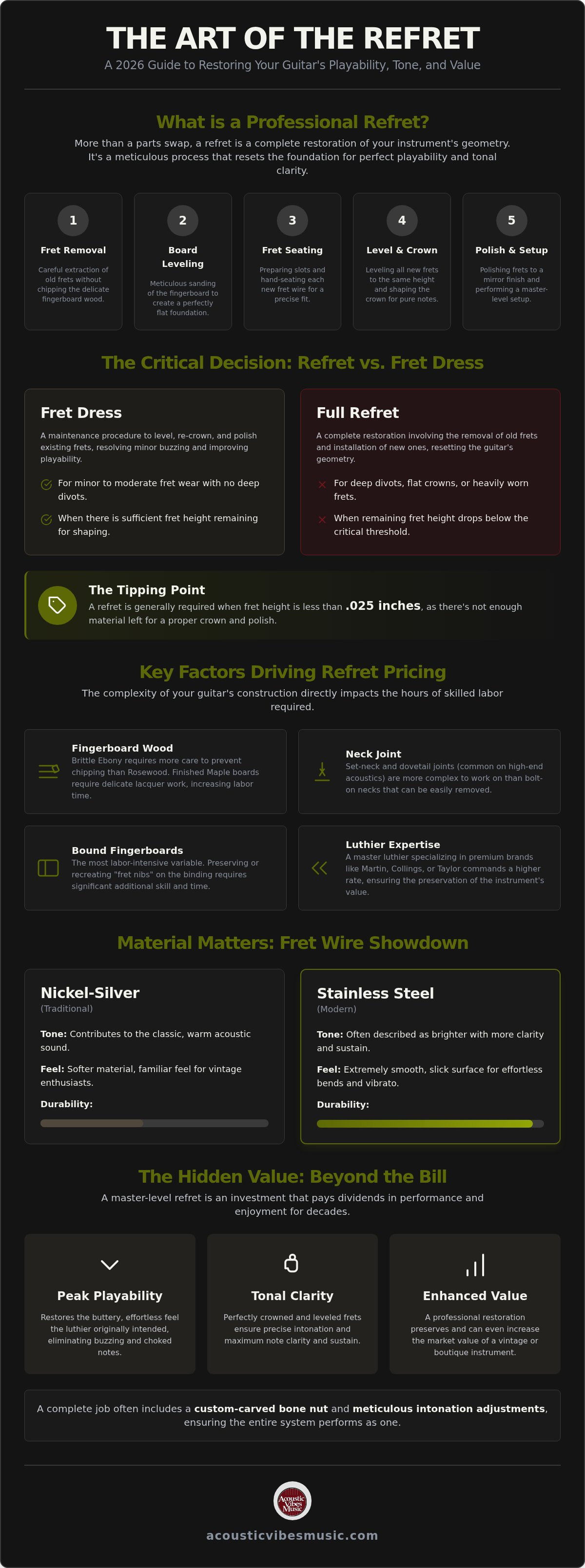
A professional refret is much more than a simple parts replacement. It's a precision restoration of your instrument's geometry. This process involves the complete removal of every existing fret wire, followed by a meticulous leveling of the fingerboard to ensure a perfectly flat foundation. For owners of high-end instruments like a Martin or a Collings, this procedure is a vital reset that restores the effortless playability and tonal clarity the builder originally intended. The cost to refret a guitar in 2026 reflects this artisanal complexity rather than the price of the materials themselves.
While the physical fret wire is relatively inexpensive, the investment is primarily driven by the hours of skilled labor required. A master luthier must carefully extract old frets without chipping the delicate tonewood, prepare the slots, and then hand-seat, level, crown, and polish the new wire. This sequence demands a level of focus and specialized tooling that separates a standard repair from a true restoration. While a partial refret might address wear on the first few positions, a full fingerboard restoration is often the superior choice for maintaining consistent tension and a uniform feel across the entire neck.
Economic shifts in 2026 have influenced luthier bench fees across the industry. As the demand for heirloom-quality acoustic maintenance grows, specialized shops have adjusted their rates to account for the rising costs of precision tools and climate-controlled workshop environments. Shop reputation plays a massive role in pricing. A boutique luthier who understands the specific bracing and bridge geometry of premium acoustics will naturally require a higher investment than a generalist. This premium ensures your instrument receives the specialized care its rare tonewoods demand, preserving both its voice and its market value.
Before committing to a full replacement, it is wise to determine if a fret dress can resolve your playability issues. Understanding Guitar Frets and their wear patterns helps you identify if there is enough material left for a level, crown, and polish. If your frets have deep divots from heavy vibrato or if the "crown" has become completely flat, you may be approaching the point of no return. A refret is generally required when the remaining fret height drops below .025 inches, as there is no longer enough material to allow for a proper crown and polish. Choosing a full refret at this stage prevents the "choked out" notes that occur when frets become too low to clear the fingerboard during bends.
Every instrument tells a unique story through its construction, and those architectural choices directly impact the cost to refret a guitar. While a basic replacement might seem straightforward, the specific materials and neck design of your instrument dictate the hours of meticulous bench time required. For instance, working with a brittle Ebony fingerboard requires a much lighter touch than Rosewood to prevent unsightly "chip-out" during fret extraction. If you own a premium Gibson Acoustic or a vintage instrument with a finished Maple board, the labor involves additional steps to preserve or restore the lacquer, which naturally increases the final quote.
The physical connection between the neck and body also plays a significant role in the complexity of the task. Most high-end acoustics feature a set-neck or dovetail joint, meaning the luthier must work around the guitar's body for the higher frets. This is a far more delicate operation than working on a bolt-on neck that can be easily removed and placed in a specialized neck jig. Experts associated with the Guild of American Luthiers often emphasize that this "on-body" work requires specialized mirrors and shortened tools to ensure the same level of precision across the entire scale length.
Fingerboard binding adds an undeniable touch of elegance, but it also introduces the most labor-intensive variable in the refretting process. Many premium instruments feature "fret nibs," where the plastic or wood binding extends upward to meet the ends of each fret. Preserving these nibs requires the luthier to hand-fit each fret wire between the existing binding, a task that demands extreme patience and microscopic accuracy. Because of this added difficulty, many professional shops apply a 20% to 30% surcharge for bound necks to account for the extra hours spent hand-filing and polishing every individual fret end to ensure a snag-free playing experience.
Before the first new wire is seated, the fingerboard itself often needs a complete restoration. Over years of play, the wood can develop deep divots or even slight warps that a simple fret dress cannot fix. A master luthier will "true" the board, removing just enough material to create a perfectly level surface. This is also the ideal moment to discuss a radius adjustment. If you find your vintage 7.25 inch radius is causing notes to "choke" during large bends, your luthier can subtly flatten the board to a more modern 9.5 or 12 inch radius. If you're considering such a precision upgrade for your Martin or other heirloom guitar, consulting with a repair specialist can help you weigh the benefits of these geometry changes against the total investment.
Choosing the right fret wire is a deeply personal decision that balances traditional aesthetics with modern performance. For many enthusiasts, the tactile sensation of the strings against the wire is as vital as the resonance of the tonewood. While nickel-silver remains the industry standard for its warm, familiar response, the introduction of hardened alloys has transformed how we view instrument maintenance. When calculating the total cost to refret a guitar, your choice of material serves as the primary variable in both the part's price and the luthier's labor bench fee.
Does the fret material truly alter the voice of a high-end acoustic? It's a subject of passionate debate among collectors. Some purists argue that stainless steel introduces a "pingy" or overly bright high-end resonance. In reality, while steel can offer a slightly quicker attack, the difference is often negligible once the instrument is properly set up. Many professional players prefer the consistent, articulate response of steel, though those seeking a strictly vintage-correct restoration often stick with nickel-silver to preserve the original sonic footprint of their heirloom instruments.
The hardness of the material significantly impacts the luthier's workflow. Stainless steel is significantly harder than traditional nickel-silver. According to industry data, stainless steel frets reach a Vickers hardness of approximately 300 HV, compared to the 180-200 HV found in nickel-silver. This means the job requires specialized diamond-coated files and heavy-duty cutters. Standard tools are quickly dulled by the resilient alloy. This increased resistance means a luthier spends significantly more time leveling, crowning, and polishing each individual fret to achieve a mirror-like finish.
Consequently, a stainless steel refret typically carries a labor surcharge of $100 to $200. While the upfront investment is higher, the long-term ROI is undeniable. A steel refret can easily last a lifetime for most players, effectively eliminating the need for future fret dresses and reducing the overall lifetime cost to refret a guitar for the active performer. It's a "one and done" solution for those who play their instruments daily.
A masterful refret is rarely a standalone procedure. It's the catalyst for a total instrument optimization. When you evaluate the cost to refret a guitar, it's essential to look past the installation of the wire itself and consider the synergistic adjustments required to harmonize the new geometry. Because new frets are almost always taller than the worn ones they replace, your existing nut and saddle will likely no longer provide the correct string height. This is the perfect moment to address other structural needs, such as an Acoustic Guitar Bridge Repair Cost evaluation, ensuring the entire mechanical system of the guitar functions as a single, resonant unit.
Professional luthiers often recommend a custom-carved bone nut during a full refret. If the old nut is kept, the strings will likely buzz against the new, higher frets. By crafting a new nut and adjusting the saddle height, the luthier can achieve a "factory plus" setup. This involves meticulous truss rod tweaks and precise intonation work. The result is an instrument that plays effortlessly from the first fret to the last. This holistic approach ensures that your investment translates into tangible playability rather than just new metal. It's about restoring the tactile soul of the instrument. Just as Cabinet refinishing Denver restores the finish and feel of luxury woodwork in the home, a master refret revitalizes the surface and performance of your most prized instrument.
Entrusting a Collings or a Boucher to a generalist is a risk that can devalue an heirloom. When vetting a specialist, ask specific technical questions. Do they glue their frets for maximum energy transfer? How do they protect the finish on a bound fingerboard? A suspiciously low quote is often a red flag for skipped steps, such as failing to level the board or leaving rough, unpolished fret ends. You should ensure the total cost to refret a guitar includes a comprehensive final setup to avoid hidden fees later. A quality refret maintains or even increases resale value by proving the guitar has been maintained to the highest standards. For those seeking the ultimate in precision, shipping your instrument to a national expert ensures it receives the specialized care that local shops often lack. If your instrument is ready for a professional restoration, consult with our expert team to discuss your guitar's unique needs.
At Acoustic Vibes Music, we view every instrument that crosses our bench as a piece of functional art. A high-end acoustic is more than just wood and wire; it's a vessel for personal expression and a testament to artisanal skill. When you're evaluating the cost to refret a guitar, the expertise of the luthier is the most critical variable in the equation. Our team specializes in the delicate nuances of premium tonewoods, ensuring that the structural integrity and tonal character of your instrument remain uncompromised throughout the restoration process. We treat your guitar with the same reverence we show the rare pieces in our curated gallery.
We are proud authorized dealers for some of the world's most prestigious makers. Our luthiers possess deep, technical knowledge of the specific construction methods used by Martin and Taylor. Whether it's navigating the unique geometry of Taylor’s bracing or preserving the historic fretboard details of a vintage Martin, we provide a level of specialized care that generalist shops simply cannot match. This precision ensures that your guitar returns to you with improved playability and its heirloom value fully intact.
Our focus remains squarely on investment grade acoustic guitars. We understand that custom shop models and vintage treasures require a conservative, highly skilled approach to repair. Our commitment to excellence means we don't just replace parts; we restore the seamless connection between the player and the instrument. Every refret is followed by a methodical setup that aligns with the builder's original specifications, creating a playing experience that feels brand new yet deeply familiar. We take pride in maintaining the soul of every custom model we service.
Distance shouldn't be a barrier to world-class craftsmanship. We serve a national community of collectors and performers through our secure, appointment-based system. Each instrument’s journey is carefully managed to ensure it is protected from environmental shifts and physical stress. By choosing a specialist who handles high-value inventory daily, you mitigate the risks associated with local trial and error. The true cost to refret a guitar is best measured by the peace of mind that comes from knowing your instrument is in the hands of a passionate curator. If your prized acoustic is showing signs of wear, book your luthier consultation today to begin its professional evaluation.
Investing in a professional refret is the ultimate commitment to your instrument's future. You now understand how material choices like stainless steel offer lasting durability, while the architectural complexity of bound fingerboards demands a specialist's touch. A successful restoration isn't just about new wire; it's about the precision setup that brings back the effortless response you remember. While the cost to refret a guitar represents a significant investment, it ensures your prized acoustic retains its voice and market value for decades. It's about the music.
As an authorized dealer for world-renowned brands, Acoustic Vibes Music provides specialized experience with premium instruments. Our detailed, appointment-based service is designed to protect your guitar throughout its repair journey, including for our national clients. Don't let worn frets stifle your creativity or dampen the resonance of your favorite tonewood. Schedule Your Professional Luthier Appointment and rediscover the joy of a perfectly playing guitar. Your instrument deserves nothing less than master-level care.
A professional refret usually requires 10 to 14 days of bench time, excluding shipping. This duration allows the luthier to meticulously level the fingerboard and seat each individual wire with precision. Crucially, the instrument needs time to settle under string tension before the final setup. High-end shops often have a waiting list, so scheduling an appointment in advance is the best way to ensure a predictable turnaround for your restoration.
Whether it's worth it depends entirely on the instrument's sentimental and functional role in your collection. If the labor exceeds the guitar's replacement value, it may not be financially logical for a budget model. However, for a beloved instrument that fits your hands perfectly, the cost to refret a guitar is an investment in your artistic output. For heirloom pieces like a Martin or Taylor, professional fretwork is essential for maintaining market liquidity.
You should expect a noticeable and positive change in the neck's tactile feel. Taller, freshly crowned frets reduce the friction between your fingertips and the fingerboard wood, facilitating much smoother bends and vibrato. If you opt for a different wire size, the physical profile of the neck will shift. Most enthusiasts find that the improved intonation and clarity make the guitar feel more responsive and sophisticated than it did with worn frets.
A partial refret is a practical solution when wear is concentrated on the lower positions of the neck. By replacing only the worn wires and leveling them to the height of the existing ones, a luthier can restore playability without a full overhaul. This approach is efficient but requires precise execution to ensure the strings don't buzz when moving across the transition point. It's a common maintenance step for heavy "cowboy chord" players.
For a dedicated player's instrument, a high-quality refret preserves its utility and market appeal. While a 100% original "closet classic" might see a slight dip in collector value, a guitar that cannot be played is worth far less to most enthusiasts. The goal is a transparent restoration. A specialist will use techniques that respect the original aesthetics, ensuring the instrument remains a viable tool for making music while honoring its unique heritage.
The distinction is found in the physical dimensions of the wire. Vintage wire is narrow and low, offering a traditional feel that requires more finger contact with the fingerboard. Jumbo wire is significantly wider and taller. This creates a "scalloped" sensation where your fingers barely touch the wood, making it ideal for technical playing and effortless vibrato. Selecting the right wire is a vital step in calculating the total cost to refret a guitar.
Most instruments need a refret every 10 to 20 years, though this depends entirely on your playing habits and string tension. Heavy vibrato and high-tension strings accelerate the wear on traditional nickel-silver. You can often extend this lifespan with periodic fret dressings. If you find yourself needing frequent work, upgrading to stainless steel frets during your next restoration can provide a virtually permanent surface that resists wear for a lifetime of performance.