My shopping cart
Your cart is currently empty.
Continue ShoppingYour heirloom acoustic isn't just a collection of aged spruce and mahogany; it's a high-performing financial asset that deserves a certified pedigree. Many collectors hesitate to seek professional help because they fear the unknown cost of vintage guitar appraisal or worry about the logistics of shipping a rare instrument. You've likely felt that nagging anxiety when a dealer offers a quick cash price that feels suspiciously low. It's frustrating to navigate the gap between what a guitar is worth on the open market and what an insurance company will actually pay if the unthinkable happens.
We're here to pull back the curtain on professional valuation services for 2026. This guide explores the transparent fees associated with expert evaluations and demonstrates how a certified document protects your investment and your family's legacy. You'll learn the critical differences between market value and insurance replacement costs. We also provide a clear path to securing the highest possible return through specialized consignment. Whether you own a rare pre-war Martin or a boutique custom shop masterpiece, understanding the appraisal process is the first step toward total confidence in your collection's true value.
Owning a vintage instrument is a stewardship of history. Whether it's a pre-war Martin or a rare Collings, these guitars are more than wood and wire. A professional vintage guitar appraisal is a formal, documented evaluation that verifies authenticity, assesses physical condition, and determines current value. It isn't just a number scribbled on a business card. It's a comprehensive report that stands up to scrutiny from insurance adjusters and estate lawyers alike. While the cost of vintage guitar appraisal varies based on the instrument's complexity, the protection it offers your investment is immeasurable.
You might be tempted to ask a local shop owner for a quick opinion. While helpful for a casual chat, a "verbal guesstimate" lacks legal weight. A professional appraiser acts as a forensic historian. They dive deep into provenance, verifying the instrument’s history through serial number sequences, period-correct hardware, and ownership records. This meticulous verification ensures that a refinished 1940s acoustic isn't being valued as an all-original museum piece.
A professional appraisal is a multi-point inspection that yields a legally defensible valuation.
Understanding how your instrument is valued depends entirely on your goals. Different scenarios require different valuation approaches:
The internet is full of unverified serial number databases and conflicting forum opinions. Relying on these sources is a gamble. A professional luthier goes beyond the surface. They identify hidden repairs, subtle overspray, or non-original internal components that a camera lens might miss. A real appraisal involves high-resolution photography and a physical inspection of internal bracing using mirrors and lights. This level of detail is the only way to justify the cost of vintage guitar appraisal and ensure your asset is truly secure.
Pricing for a professional valuation isn't a one-size-fits-all figure. Several variables determine the final cost of vintage guitar appraisal, primarily centered on the time and expertise required to verify the asset. A standard post-war instrument might be straightforward; however, highly rare models like pre-war Martin Guitars demand significantly more research time. The appraiser must cross-reference serial numbers against specific factory transition dates and material changes to ensure every component is period-correct. The market weight of the appraiser also plays a role. Valuations from nationally recognized experts command higher premiums because their signature carries more authority with collectors and auction houses.
The depth of documentation you require also shifts the price. A simple one-page letter for a basic insurance update is less labor-intensive than a ten-page historical report intended for a high-stakes auction. Structural complexity adds another layer of effort. Unlike solid-body instruments, acoustics are under immense physical tension. An appraiser must carefully evaluate neck angles, bridge lift, and potential internal humidity damage. If you're looking for an expert to handle these nuances, exploring a curated selection of investment-grade acoustics can give you a baseline for what top-tier condition looks like.
Acoustic instruments present unique diagnostic hurdles. An expert must assess tonewood health, distinguishing between the natural aging of Adirondack spruce tops versus Sitka spruce. They look for subtle signs of original versus replaced bridge pins, nuts, and saddles. These small parts significantly impact the instrument's purity and value. Internal inspections are equally critical. Using mirrors and endoscopes, the appraiser searches for loose braces or historical "cleat" repairs that might be hidden from the naked eye. These structural details are the foundation of a truly accurate valuation.
The "detective work" phase is often the most time-consuming part of the process. Appraisers spend hours cross-referencing ledger books and factory records to confirm a build's origin. If an instrument has a documented "celebrity owner" or a "one-owner" history, the complexity increases. Verifying these claims requires a paper trail of receipts, photographs, or letters of authenticity. Additionally, custom shop features or limited edition runs require specialized knowledge to distinguish factory-original work from later modifications. This rigorous verification process ensures the final cost of vintage guitar appraisal reflects a valuation that is both accurate and defensible.
The investment you make in a formal valuation directly correlates to the level of financial protection you receive. In 2026, the cost of vintage guitar appraisal falls into three distinct tiers designed to meet various collector needs. For those standing at a crossroads with a family heirloom, a verbal appraisal ($50 to $150) offers a quick, expert "yes or no" on marketability. It's perfect for informal decisions. However, if you require a document that holds weight with buyers or banks, the standard written appraisal ($150 to $350) remains the benchmark for single instruments. This level of detail provides the technical nuances required for a certified asset.
When dealing with high-stakes scenarios like estate planning or tax filings, insurance and estate appraisals typically start at $250. These reports are meticulously crafted to satisfy the rigid requirements of underwriters and the IRS. Large-scale collectors often benefit from bulk rates; appraising a curated group of instruments at once significantly reduces the per-item fee. This strategic approach ensures your entire gallery is protected without redundant administrative costs. It's a logical path for those managing a growing portfolio of premium craftsmanship.
Distance shouldn't be a barrier to expert guidance. Many serious collectors ship their instruments nationally to reach the specialized luthiers they trust. While this adds to the total cost of vintage guitar appraisal, the peace of mind is worth the logistical effort. Remember to budget for hidden expenses like professional packing and high-value transit insurance. These safeguards protect your asset during its journey. For a preliminary screening, some shops offer "Sight-Unseen" digital appraisals. These provide a low-cost entry point before you commit to the shipping process.
If your instrument’s value exceeds the $10,000 threshold, a premium written report is no longer optional; it's essential. This document functions as a permanent "Certificate of Authenticity" that travels with the guitar for its entire life. It validates the artisanal skill and historical importance of the piece, making it far easier to justify a premium price during a future sale. Before booking, you might try a bit of self-discovery. Check out Is My Old Guitar Worth Anything? Expert Evaluation to see if your instrument meets the criteria for a high-level report. A written valuation isn't just a receipt. It's a testament to the instrument's pedigree.
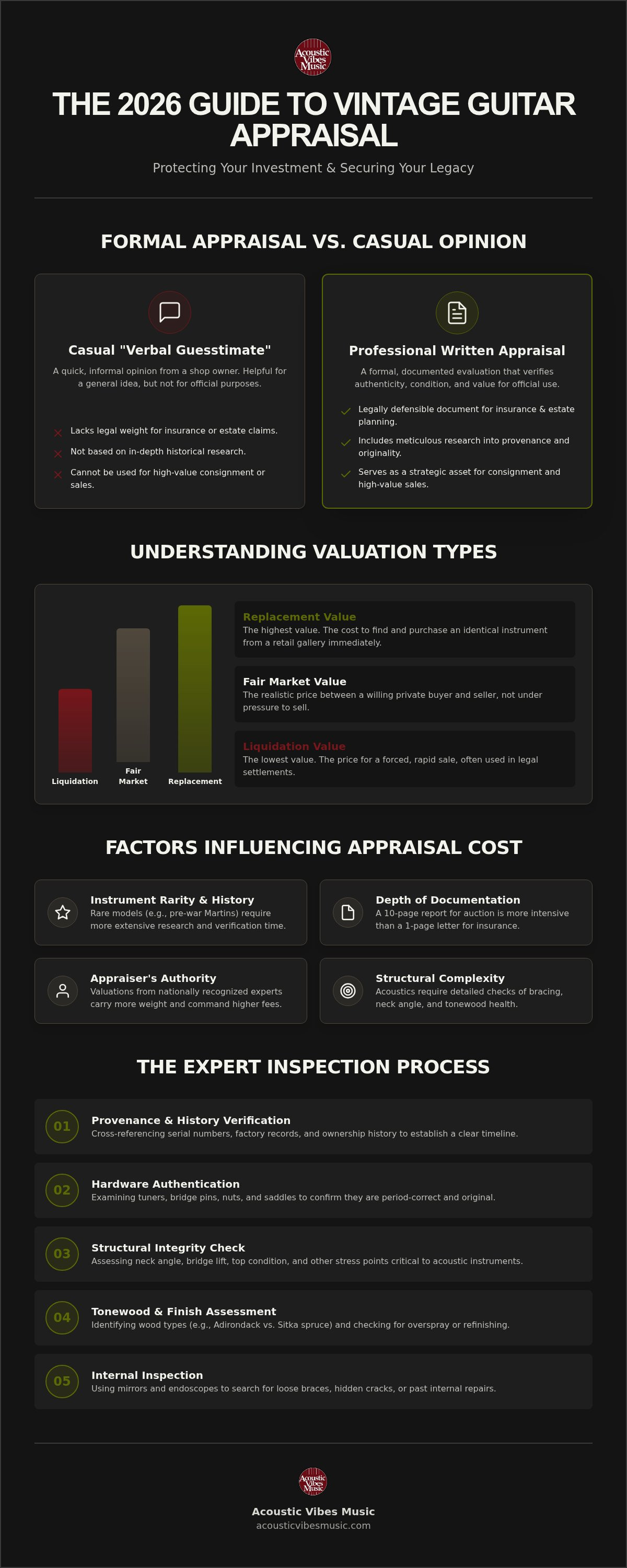
A professional valuation is a forensic journey into the soul of an instrument. It goes far beyond a cursory glance at a headstock. When you invest in the cost of vintage guitar appraisal, you're paying for a master luthier's eyes and specialized toolkit. The process is methodical and designed to eliminate any doubt regarding the instrument's pedigree. This rigorous sequence ensures that every detail, from the molecular aging of the finish to the carved shape of an internal brace, is accounted for in the final valuation.
Acoustic guitars are living things, and they often require maintenance to stay playable. A neck reset is a common procedure for older instruments. While some collectors worry about it, a professionally executed reset often maintains or even increases value by ensuring playability. We also look for non-original bridges. A replaced bridge can dampen resonance and significantly lower the instrument's purity. Similarly, we evaluate fret wear. A "refret" done to professional standards is acceptable, but sloppy work using incorrect wire gauges can be a major value-detractor.
The materials used in construction are the primary drivers of an instrument's market weight. There's a massive value difference between authentic Brazilian Rosewood and modern alternatives. Understanding these material nuances is vital; for instance, the tonal and value differences in Rosewood vs. Mahogany Back and Sides can change an appraisal by thousands of dollars. We also distinguish between "checking," which is the natural weather-related cracking of nitrocellulose, and structural wood cracks. Checking is often prized as a sign of age, whereas a wood crack requires a structural deduction. Ensure your instrument's history is accurately recorded by scheduling an expert evaluation with our master luthiers at Acoustic Vibes Music today.
Once you've secured a certified valuation, you hold the keys to a high-value exit. A professional appraisal isn't just a document for your files; it's the ultimate sales tool. It transforms a "used guitar" into a "certified asset." Many owners wonder if the initial cost of vintage guitar appraisal is worth it when planning to sell. The answer is found in the final sale price. By establishing a firm, expert-backed value, you eliminate the lowball offers that often plague the private market. You're no longer guessing; you're negotiating from a position of documented authority.
When you're ready to part with a rare instrument, you face a choice: a quick direct sale or a strategic consignment sale. While direct buyers offer immediate cash, they must build in a significant profit margin for themselves, which often means a lower payout for you. Consignment through a specialized gallery allows you to tap into a national network of dedicated collectors who are specifically searching for premium builds. This "Passionate Curator" approach ensures your instrument isn't just sitting on a shelf. It's actively marketed to enthusiasts who appreciate the artistry and heritage of high-end acoustics.
Selling a vintage masterpiece requires more than a smartphone photo and a basic description. Our curation process involves professional photography and high-fidelity video demos that capture the unique tonal character of your guitar. When your instrument is showcased alongside world-class brands like Collings and Boucher, its perceived value naturally rises. Buyers feel a deep sense of security when purchasing through a reputable shop. They know the instrument has been vetted, authenticated, and properly humidified. This trust factor often translates into a faster sale at a higher price point than a private listing could ever achieve.
Moving a rare acoustic across the country requires precision and care. We provide detailed guidance on safe packing techniques and the use of temperature-controlled shipping methods to prevent finish checking or structural stress during transit. Once the instrument arrives at our gallery, our on-site luthier performs a meticulous "pre-sale setup." This ensures the neck angle, action, and intonation are perfect, providing the next owner with an exceptional playing experience from the moment they open the case. The small upfront cost of vintage guitar appraisal and professional prep pays significant dividends in the final transaction. If you're ready to unlock the true value of your collection, Contact Acoustic Vibes Music to discuss appraising or consigning your rare acoustic today.
Your collection represents a lifetime of passion and a significant financial commitment. A professional valuation is the only way to bridge the gap between sentiment and a certified asset. Whether you're updating an insurance policy or preparing for a high-value sale, the cost of vintage guitar appraisal is a strategic investment. It provides the peace of mind that comes with forensic authentication. You now understand that structural integrity, provenance, and market demand are the pillars of a defensible report.
Don't leave your heirloom's future to chance or unverified online forums. As an Authorized Martin Custom Shop Expert Dealer, we specialize in the meticulous care and valuation of heirloom-quality acoustic instruments. Our national shipping and consignment expertise ensures that your guitar reaches the collectors who truly value its artistry. Discover the True Value of Your Collection: Contact Our Experts Today. Let's work together to document and preserve the story of your instrument for the next generation of players.
Insurance underwriters almost always reject verbal opinions because they lack the necessary evidentiary support. A formal written document provides a detailed breakdown of condition and authenticity that a verbal guesstimate simply cannot offer. For a claim to be processed, you need a legally defensible report that includes high-resolution photos and a signed declaration from a recognized expert. It's the only way to guarantee your coverage matches the instrument's actual replacement value.
The cost of vintage guitar appraisal generally ranges from $150 to $350 for a standard written report on a single instrument. If you require specialized documentation for IRS estate filings or high-value insurance riders, fees typically start at $250. These prices reflect the expert time needed to verify provenance and structural health. Collectors with multiple instruments often find that bulk rates provide a more economical path to securing a fully documented gallery.
You can obtain a preliminary digital appraisal using high-quality photographs, which is an excellent first step for screening. This process helps identify the model and basic marketability without the immediate need for shipping. However, a final, insurance-grade valuation often requires a physical inspection. A luthier needs to use tools like UV lights and endoscopes to confirm internal bracing and finish originality, details that even the best digital cameras can miss.
Many professional galleries will credit the appraisal fee toward your final transaction if you choose to sell the instrument directly to them or enter into a consignment agreement. This practice varies between shops, so it's always wise to ask about their specific policy upfront. It's a common way for expert guides to support collectors during the transition from valuation to sale, making the professional evaluation a seamless part of the liquidation process.
A thorough evaluation typically takes between one and two weeks once the instrument is in the luthier's hands. This timeframe allows the appraiser to conduct deep research into factory ledgers and recent auction data. While the physical inspection happens quickly, the detective work involved in verifying provenance and drafting a defensible report requires focused attention. If you're shipping an instrument nationally, remember to account for transit time on both ends of the process.
Providing a clear paper trail can significantly enhance the accuracy of your report. You should gather original sales receipts, previous appraisal documents, and any historical photographs of the instrument. If the guitar has a celebrity owner or a unique one-owner history, letters of authenticity or maintenance logs from reputable luthiers are invaluable. These records help the appraiser verify the instrument's timeline, which can often justify a higher valuation for investment-grade pieces.
A professionally executed neck reset or refret often maintains or even stabilizes an instrument's value by ensuring it remains playable. While collectors prize all-original condition, an unplayable guitar is a liability. If the work was done using period-correct materials and techniques, it's viewed as necessary maintenance. However, sloppy repairs or non-original wire gauges will lead to a deduction. The appraiser's job is to distinguish between high-quality stewardship and value-diminishing modifications.
Industry experts recommend updating your written valuations every two to three years to keep pace with a fluctuating market. The vintage acoustic market can see significant shifts in demand for specific brands or eras. An outdated appraisal might leave you underinsured if prices for rare models have climbed. Regular updates ensure your coverage reflects the current cost of vintage guitar appraisal and the contemporary replacement value of your most prized artisanal tools.