My shopping cart
Your cart is currently empty.
Continue ShoppingA lifetime instrument can be a wise investment without becoming a financial one. The philosophy of buying a lifetime instrument begins with lasting value in your hands: quality, playability, and the pleasure of returning to it over the years, not an assumed rise in resale price. Instruments can be illiquid assets, even when they may appreciate.
It makes sense to want craftsmanship that endures, especially when a purchase is a meaningful commitment. But the highest price or rarest instrument isn’t automatically the right fit. Condition, construction, upkeep, and how the instrument suits your playing all matter.
This guide helps you weigh investment potential against build quality, ownership costs, personal preferences, and budget. You’ll learn what to look for in new and pre-owned instruments, how maintenance affects long-term value, and why a well-made choice should fit both your music and your finances. The goal is not simply to buy for a lifetime, but to choose an instrument you’ll want to live with.
A reputable dealer can make a major purchase easier to evaluate by explaining an instrument’s history, construction, condition, and intended use. For a violin, provenance and construction details can help a buyer and qualified professionals assess the instrument. The same principle applies across acoustic instruments: useful information should clarify what you’re buying, not pressure you toward the most expensive option. Look for clear answers about the instrument, its condition, and the support available after the sale.
Start with the instrument’s role in your musical life. A dependable dealer can connect your playing level, preferred sound, and practical needs with suitable choices. Ask for comparisons between instruments you can actually play, rather than judging only by a label or finish. The instrument should feel comfortable in your hands and produce a sound you enjoy. When a dealer explains why one instrument suits you better than another, you can weigh its merits without relying on prestige alone.
Mid-range options can offer a thoughtful balance: quality materials and careful construction without the cost of the highest tier. Compare how each instrument responds, feels, and holds tuning during a playing session. Consider whether the added refinement of a more expensive model meaningfully serves your goals. Focus on differences you can hear or feel, not status. This keeps the lifetime-instrument idea grounded in everyday playing, where comfort and regular use often matter more than rarity.
A new instrument may suit buyers who value a clean ownership history and the reassurance of a manufacturer’s warranty. New musical instruments often come with a full manufacturer’s warranty, unlike used instruments. Review the warranty’s actual terms before counting it as part of the instrument’s value. Upgrading makes sense when your current instrument no longer supports your technique, comfort, or musical aims. Replacing it is worth considering when a repair cannot reasonably address the problem or the instrument’s condition prevents reliable use.
Financing an expensive instrument can create strain if payments compete with essential expenses or exceed your realistic budget. A private seller may provide less documentation or post-sale support, while undisclosed wear can affect an instrument’s value and playability. Weigh the full commitment, not just the appeal of owning a particular instrument. Don’t rush because an instrument seems rare or a seller creates urgency.
In the United States, an independent appraiser can assess an instrument’s quality and estimate its value, especially for an antique violin. For setup and repair, choose a qualified luthier who works on the instrument type in question. A reputable dealer can also explain an instrument’s history and construction, helping you understand what further evaluation may be useful. Keep appraisal, setup, and repair distinct: each answers a different question about value, playability, or condition.
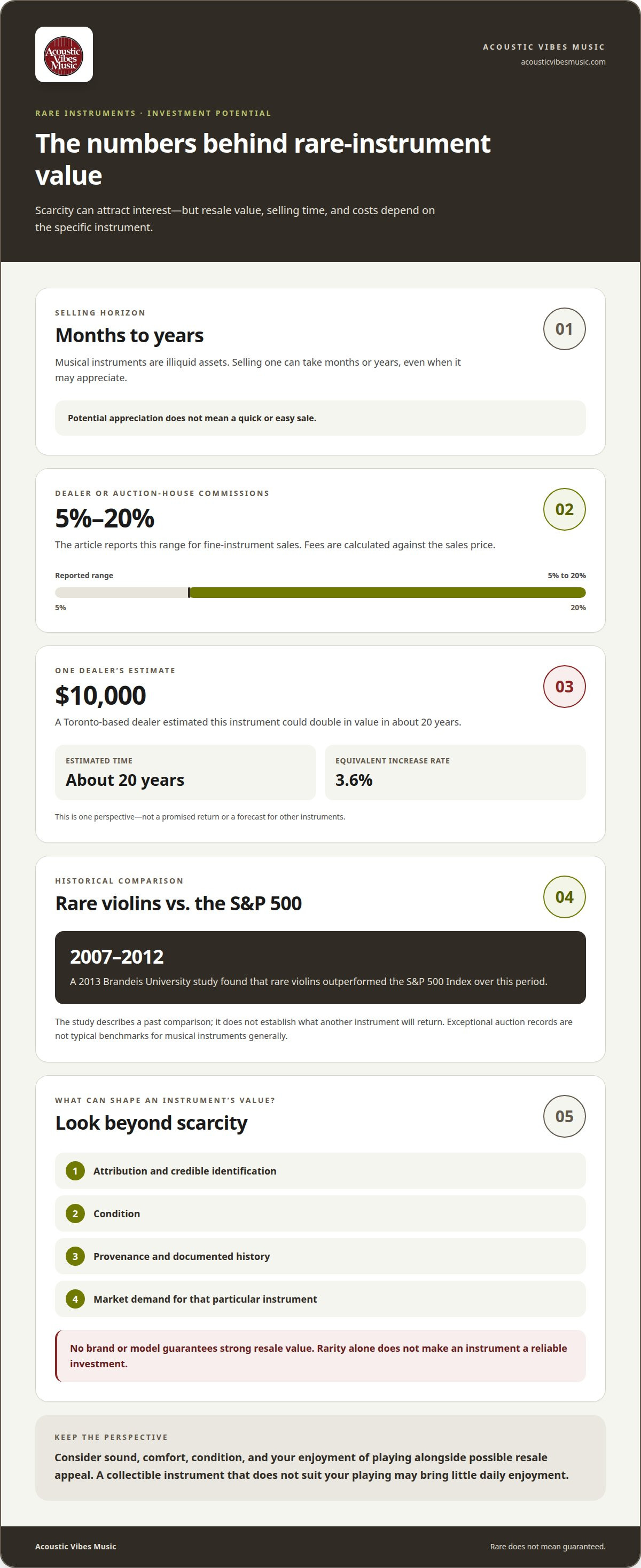
Rare instruments may appreciate, but scarcity alone doesn’t make them reliable investments. Value depends on factors such as attribution, condition, provenance, and the market for a particular instrument.
Balancing sound and investment value means choosing an instrument that meets your musical needs while accounting for its potential resale appeal. A collectible instrument that doesn’t suit your playing may bring little daily enjoyment. Consider sound, comfort, and condition alongside rarity and historical significance. When exploring the philosophy of buying a lifetime instrument at Acoustic Vibes Music, your journey should begin with a genuine connection to the piece, not an assumed future return.
No brand or model guarantees strong resale value; rarity, attribution, condition, and documented history all matter. Stradivari and Amati are notable violin makers whose works rank among the world’s most expensive instruments. Their examples don’t predict the value of another maker’s instrument. A familiar name can attract interest, but an instrument’s authenticity and condition can materially affect its market appeal.
Rare musical instruments can attract collectors when limited supply meets strong demand. Historical examples show how widely values can differ between a pristine masterwork and a composite violin with a top attributed to G.B. Guadagnini. These sales involved different instruments and circumstances, so they aren’t direct comparisons.
Attribution can be decisive. The contrast between certified works and workshop copies shows why a celebrated maker’s name alone cannot establish value. For antique instruments, credible identification, condition, and supporting history shape how buyers assess a piece. Investment appeal rests on the specific instrument, not simply the story attached to it.
Historical valuations also illustrate the scale of the rare violin market. While headline-grabbing auction records make the news, these are exceptional instruments, not typical benchmarks for musical instruments generally. A 2013 Brandeis University study found that rare violins outperformed the S&P 500 Index over the 2007–2012 period, but that past comparison doesn’t establish what another instrument will return.
Musical instruments are illiquid assets: selling one can take months or years, and dealer or auction-house commissions for fine instruments range from 5% to 20% of the sales price. A Toronto-based dealer estimated that a $10,000 instrument could double in value in about 20 years, equivalent to a 3.6% rate of increase. Treat such estimates as one perspective, and account for selling time and fees when considering investment potential.
Climate, storage, and playing habits all influence an instrument’s lifespan. Wooden instruments, including violins and guitars, can shift as the wood adapts to its environment, so stable storage and careful handling help preserve their condition. For safe transit and long-term storage of delicate gear, utilizing precision protective inserts from resources such as foampackagingdirect.com can safeguard valuable equipment against unexpected impacts.
The purchase price is only one part of ownership. A long-term plan should account for routine care, repairs, insurance, and time out of use. For example, a guitar that needs a setup or structural repair brings different ownership demands from one that remains comfortable and stable. Costs vary with the instrument’s condition, materials, use, and care needs, so weigh them alongside sound and playability.
Insurance deserves attention when an instrument would be difficult to replace. Coverage terms may distinguish between loss, theft, accidental damage, and instruments used outside the home. Keep records that identify the instrument, such as its maker, model, serial number, photographs, and purchase documents. For a rare or antique violin, an appraisal can help establish its condition and estimated value. Review the policy’s limits and exclusions to understand what protection applies.
New musical instruments often come with a full manufacturer’s warranty, unlike used instruments. That difference can affect repair planning, but a warranty’s value depends on its actual terms and covered issues. Used instruments may have an ownership history and existing wear, making their current condition especially relevant to future maintenance. The same wooden instrument can respond differently after moving between a dry room and a more humid environment.
Regular playing is part of responsible ownership, not simply a source of wear. Fine instruments should be played with care and appropriate maintenance to help preserve their condition. After playing, wipe away moisture and residue, store the instrument securely, and avoid places with abrupt temperature changes. These habits reduce avoidable exposure, while a luthier can address developing mechanical or structural concerns before they interfere with playability.
Build a realistic care routine around the instrument’s materials and use. A frequently played guitar may need attention to its strings and setup, while a violin’s bow and fittings also require careful handling. Don’t assume every instrument needs the same service; construction, condition, and playing frequency shape its needs. A professional repair assessment can distinguish routine adjustments from work involving cracks, loose joints, or other structural concerns.
Tax treatment may also matter for some buyers. A contemporary instrument or bow can be depreciated on a schedule to recoup its cost by offsetting it against taxable income. Because eligibility and treatment depend on the buyer’s circumstances, keep purchase and ownership records organized for a qualified tax professional. This is separate from sound, maintenance, and insurance, and shouldn’t be treated as a guaranteed financial benefit.
Include care and protection in the lifetime-instrument decision. An instrument that is thoughtfully stored and regularly maintained is easier to enjoy and assess than one neglected between performances. Consider its warranty status, condition, insurance needs, and maintenance demands before deciding whether ownership fits your plans.
Choose an instrument that can last by assessing its construction, materials, condition, and maintenance needs together. For a pre-owned guitar, examine structural integrity, tuning stability, and overall wear. Then consider whether its sound and feel suit the way you play. A premium finish cannot compensate for structural problems or poor fit. The best choice is one you can afford to maintain and will want to play.
Start with the instrument’s structure. Look for secure joints, components that function as intended, and damage that may affect playability. On a used instrument, distinguish deep cracks or warping from minor cosmetic blemishes. The former can interfere with playing; a small surface mark may not. This distinction keeps appearance from distracting you from the condition that matters most.
Materials deserve close attention, especially in wooden instruments. Wood can change as it adapts to its environment over time, affecting how an instrument responds. Many stringed instruments, including guitars and violins, are said to sound better as their wood matures. That possibility isn’t a substitute for evaluating the instrument in front of you. Listen to its tone and assess its response rather than assuming age alone improves sound.
Consider country of origin as part of an instrument’s background, not as a standalone quality rating. Pair that information with construction, materials, condition, and ease of maintenance. For example, two guitars may have different origins and both meet your needs; compare their build and playing response directly. A name or place of manufacture provides context, but shouldn’t outweigh what you can observe and hear.
For a pre-owned instrument, assess tuning stability during a playing session and look for signs of structural change. Notice whether it holds its tuning as you play and whether cracks or warping affect comfort or sound. Separate those concerns from cosmetic wear. A worn finish may be acceptable if the instrument remains structurally sound and plays well; damage that impairs performance deserves more attention.
Maintenance is part of build quality because a lasting instrument should be practical to care for. Consider which materials and construction features may need attention over time, and whether routine care suits your habits. A complex instrument that demands more upkeep may be a poor fit if you want a straightforward daily companion. A durable choice is not simply one that survives; it must remain usable and enjoyable.
Try the instrument in the role you expect it to fill. A guitar intended for regular practice should feel comfortable through the passages you play most. Listen for a clear, pleasing response and notice whether the instrument feels stable in your hands. These practical checks connect craftsmanship to real use. They also help distinguish meaningful construction quality from features that look impressive but don’t improve your playing experience.
For an antique violin, a qualified appraiser can assess quality and estimate value, particularly because antique examples may be in poor condition. That assessment can add context to visible wear and construction details. For other pre-owned instruments, combine a close condition review with attention to sound, stability, materials, and maintenance. A lifetime instrument should fit your playing, care routine, and budget, not just your ideal of perfect craftsmanship.
A sound purchase balances craftsmanship and playing feel against what your budget can comfortably support. The right choice should serve your music without turning ownership into a lasting financial strain.
Balancing quality with financial priorities means choosing the strongest fit within a budget that protects other obligations. It matters because an instrument’s appeal can outlast the excitement of buying it, while debt payments remain. Consider the middle-priced range for quality materials without paying for the most expensive option. Set a spending limit first, then compare instruments against the features and sound you value.
Keep the full purchase in view. That example shows why your instrument budget should include the complete setup, not just the most compelling item. Saving in advance can make an expensive purchase more manageable and help avoid consumer debt.
Pre-owned musical instruments often cost less than new models, and some cost 50% or more less. A well-maintained used instrument can also offer rewarding playability and a richer sound than a new instrument that hasn’t been broken in. Compare the actual condition and playing experience, rather than assuming new always means better value.
Fit, comfort, and playing level describe how naturally an instrument supports your technique and musical goals. An awkward instrument can discourage practice, even if its materials are excellent. How important are these factors? They’re central: an instrument should feel manageable now and suit the music you want to play, rather than require a purchase based only on future ambition.
Match the instrument’s response to your current ability and intended use. A developing player may appreciate a responsive instrument that makes practice enjoyable, while an experienced musician may prioritize a particular tone or expressive range. The best choice isn’t automatically the most advanced. It’s the one that encourages confident playing and leaves room for growth.
Give personal preference a deliberate place in your decision. Compare how the instrument feels during familiar passages, how its sound suits your music, and whether its weight or shape remains comfortable. A guitar that feels effortless in a short trial may feel different during a longer session. Take time to notice what supports relaxed, consistent playing.
Build your shortlist around three priorities: musical needs, comfortable fit, and a budget you can maintain. Rank them before comparing specific instruments. If two choices both meet those needs, the more affordable one may leave room for upkeep or other musical goals. Explore instruments suited to your playing priorities and focus on the qualities you’ll appreciate each time you pick one up.
Acoustic Vibes Music offers used and consignment instruments for players weighing condition, sound, and budget. A pre-owned instrument can be a practical route to a well-crafted guitar, but its individual feel and condition still matter. Explore acoustic guitars, classical and flamenco guitars, and banjos with your musical needs in mind. Comparing these instruments can help you focus on what feels comfortable, sounds engaging, and suits your playing. For a thoughtful next step, contact Acoustic Vibes Music.
A lasting instrument isn’t defined by resale prospects or prestige alone. It earns its place through the music you make with it, the comfort you feel as you play, and the connection that deepens over time. That’s the heart of the philosophy of buying a lifetime instrument: choose for the musician you are today while making room for the player you hope to become.
Let your next move be guided by a real playing experience, not a name or an imagined future value. Acoustic Vibes Music offers acoustic guitars, classical and flamenco guitars, and banjos, including used and consignment instruments. Take the opportunity to explore what feels right for your sound and budget. Contact Acoustic Vibes Music to discuss your instrument search, and take your next step toward a more rewarding musical life.
It can be rewarding, but a musical instrument shouldn’t be treated as a dependable financial investment. Resale value depends on the particular instrument, and selling can take time. Ask yourself whether you’d still value owning it if its resale price stayed the same. If so, its playing life may be the stronger reason to buy.
“Buy it for life” describes choosing a well-made item you expect to use for a long time, rather than replacing it frequently. It doesn’t mean an instrument will last without care or suit every future need. Musical goals change, too. A durable instrument makes the most sense when you can see yourself playing it regularly and its sound and feel remain appealing.
Make regular playing part of its care, and respond to changes in sound, feel, or stability. Keep records of repairs and maintenance alongside identifying details and purchase documents. That history can help you understand later work and support an appraisal if you need one. Treat the instrument as both a musical companion and a carefully maintained piece of personal property.
It means selecting an instrument you expect to keep and play for years, based on fit, sound, construction, and your finances. It doesn’t require buying the rarest or most expensive model. The philosophy of buying a lifetime instrument puts daily enjoyment ahead of prestige: picture it in your practice routine, performances, or informal playing, and decide whether it belongs there.
There’s no single total that fits every owner. Consider the purchase, accessories, routine maintenance, repairs, insurance, and any eventual selling costs. The mix depends on the instrument’s condition, how often you play it, the care it needs, and the protection you choose. A heavily used instrument may need a different maintenance plan from one played occasionally, so calculate ownership around your habits.
Choose based on your priorities and the individual instrument. A new model may include a manufacturer’s warranty; a used instrument may offer a lower-cost route to a well-played sound. Vintage instruments can have historical appeal, but age alone doesn’t establish quality. For an antique violin, an appraiser can assess condition and estimate value. Compare the instrument’s actual sound, feel, and condition.
Play music you know well, then listen for an even response and notice whether the instrument feels comfortable. For a pre-owned instrument, consider its repair history and whether wear affects its function. A reputable dealer can explain its construction and history. For an unusual or antique instrument, an independent appraisal can offer a separate perspective on authenticity, condition, and estimated value.
Costs depend on the instrument, its condition, and the work required, so there’s no universal lifetime estimate. Routine adjustments differ from repairs involving structural damage, and parts or materials can also affect the work. A useful ownership plan leaves room for both regular care and unexpected problems. Keep service records, since they help show what work has been done and how the instrument has been maintained.