My shopping cart
Your cart is currently empty.
Continue ShoppingThe most useful clawhammer feature may be a small cutaway in the neck, not a special model name. For many players, the best banjo for clawhammer style is an open-back five-string, whose lighter build and mellow, old-time character suit the style. A scoop is optional, but some players value the extra space it creates near the head.
If you’re drawn to clawhammer’s rhythmic, warm sound, the right setup can make choosing a banjo much easier. It doesn’t need to be elaborate. It should feel comfortable and suit the tone and playing position you want.
This guide explains the differences between open-back and resonator banjos, how tone features shape an old-time sound, and what to consider when choosing a scooped neck. You’ll also learn how neck feel, a protective case, and beginner accessories fit into the decision.
Use these details to narrow your options with confidence, whether you’re choosing a first banjo or refining a setup for the music you want to play.
The best banjo for clawhammer style is usually an open-back five-string. Its construction suits the warm, mellow character often associated with old-time playing, and its layout has four long strings and a shorter drone string. You can play clawhammer on any five-string banjo, so an open back is a preference, not a requirement.
The main alternative is a resonator banjo. Its bowl-shaped back, attached behind the rim, projects sound forward and is commonly associated with bluegrass setups. An open-back banjo is generally lighter because it lacks that added structure. If you prefer a more contained, bassier sound and a comfortable instrument, start by comparing open-back models.
Gold Tone makes several open-back banjos associated with clawhammer and old-time playing. The CC-OT is explicitly designed as a beginner clawhammer model, while the CC-100 is another beginner-oriented five-string. The CC-Carlin offers a 12-inch pot, and the HM-25 and BC-350 provide other open-back options to compare. Their names and construction give you a starting point, but the feel and sound in your hands matter most.
Gold Tone open-back models vary in build and setup, so compare those features rather than choosing by price alone. A simpler starter banjo can be a sensible first instrument; a more elaborate model may suit you if you already know the tone and feel you want. Setup matters: comfortable string height and a responsive playing surface can make practice more enjoyable.
Vintage Japanese-made open-back banjos from the 1960s and 1970s are another route for old-time players. Their age and individual condition make each instrument a distinct case. Look closely at how the neck feels, whether the strings respond evenly, and whether the instrument holds its tuning during playing. A vintage example can offer a different character, but age alone doesn’t establish playability.
Use this quick comparison to narrow the type:
Choose the sound and playing feel that keep you reaching for the banjo. A Gold Tone CC-OT, a 12-inch CC-Carlin, or a vintage Japanese open-back can each fit a different preference; the right choice is the one whose tone, neck, and setup work together for your clawhammer playing.
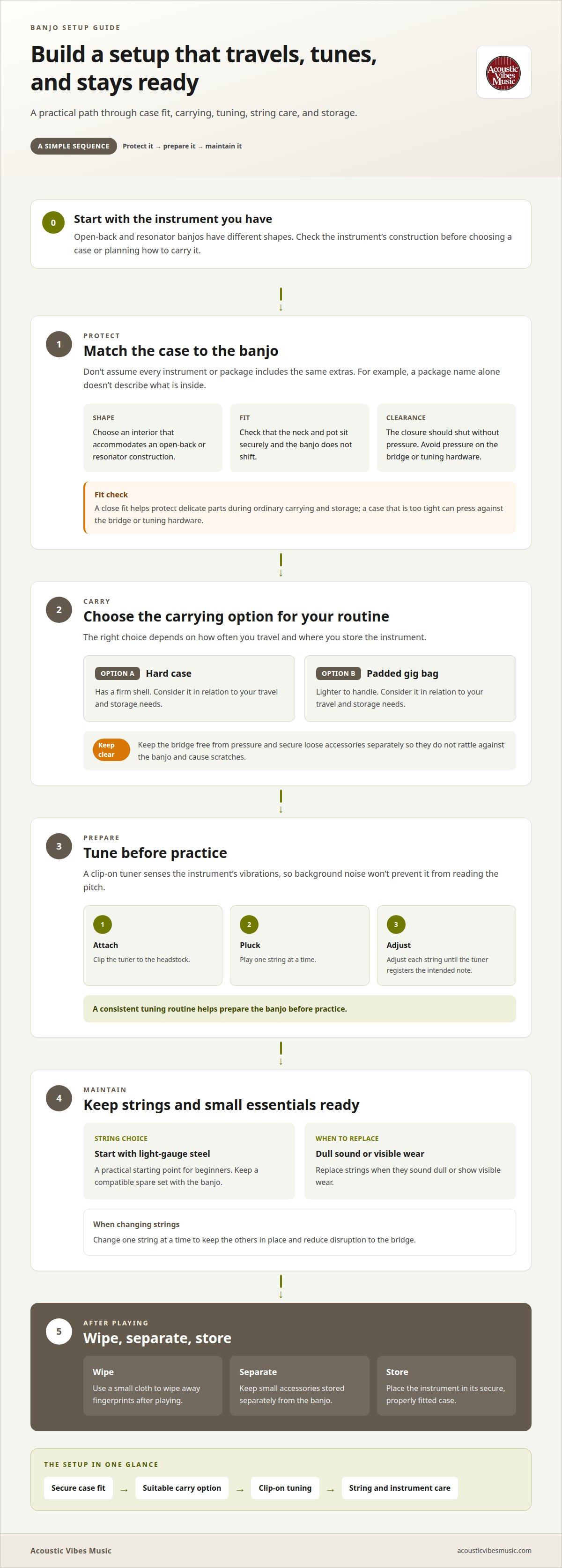
A case and a few practical accessories make a banjo easier to carry, tune, and maintain. Don’t assume every instrument comes with the same extras. For example, the name Deering Goodtime Old Time Banjo Beginner Package identifies a package, but the name alone doesn’t describe its contents. Consider the case and accessories separately.
Start with case fit. Open-back and resonator banjos have different shapes, so choose a case that accommodates the instrument’s construction. Check that the neck and pot sit securely, the closure shuts without pressure, and the banjo doesn’t shift inside. A close fit helps protect delicate parts during ordinary carrying and storage. A case that’s too tight can press against the bridge or tuning hardware.
Next, consider how you’ll carry the banjo. A hard case has a firm shell, while a padded gig bag is lighter to handle. The right choice depends on how often you travel and where you’ll store the instrument. With either option, keep the bridge free from pressure and secure loose accessories separately. A tuner or spare string rattling against the banjo can cause scratches.
For beginners, a clip-on tuner is a useful first accessory. It senses the instrument’s vibrations, so background noise won’t prevent it from reading the pitch. Attach it to the headstock, pluck one string at a time, and adjust each string until the tuner registers the intended note. This simple routine helps make tuning consistent before practice.
String choice also affects the playing experience. Light-gauge steel strings are a practical starting point for beginners. Keep a compatible spare set with the banjo, and replace strings when they sound dull or show visible wear. Change one string at a time to keep the others in place and reduce disruption to the bridge. Wipe away fingerprints with a small cloth after playing.
Build the setup around your actual routine: a secure case for transport, a clip-on tuner for preparation, and spare strings for maintenance. If you’re comparing banjos, consider banjo options alongside the accessories you’ll use from the first practice session.
Tone rings, rims, and heads all shape how a banjo responds. Compare them as a combination, not as isolated specifications.
A tone ring influences how the instrument transfers string energy into sound. For an old-time voice, listen for balance among low notes, clear highs, and sustain. The Vega Vintage Star uses a Dobson tone ring, described as balancing low frequencies with clear highs while adding sustain. That combination can suit players seeking warmth without losing note definition.
The Dobson ring has a long history: Henry Dobson patented it in 1881. Another example is the Gold Tone OT-800, which has a 32-hole Tubaphone-style tone ring. These designs offer distinct construction approaches, but the name alone can’t tell you how a particular banjo will sound. Play the same short phrase on each instrument, then compare its low notes, bright notes, and how long they ring.
Listen at a steady playing volume. A tone that sounds rich when struck hard may feel different with a softer clawhammer stroke. Bring a familiar tune, use the same finger attack, and notice whether the sound stays clear across the strings. This comparison connects the ring’s design to the old-time character you actually hear.
The rim supports the head and tone-ring assembly, so its size and construction are useful comparison points. The Vega Vintage Star pairs its Dobson ring with a 12-inch violin-grade maple rim. Gold Tone’s BC-350 also has a 12-inch rim, while the HM-25 uses a three-ply maple rim. These examples show why a model’s full construction matters.
Don’t assume that two 12-inch rims will sound identical. The tone ring, head, bridge, strings, and setup also contribute to the instrument’s response. Compare complete banjos and listen for the attack, note separation, and low-end presence that fit your playing. A larger rim measurement is a specification, not a promise of a particular tone.
The head is the surface beneath the strings and bridge that vibrates when you play. Its tension affects response, so compare instruments as they’re set up rather than judging by material or appearance alone. If one banjo sounds dull and another speaks clearly, head adjustment may be part of the difference. A luthier can assess the setup if the head seems uneven or difficult to keep responsive.
Use a consistent test: play a phrase on the low strings, a melody across the higher strings, then a few ringing notes. Notice which banjo gives you the balance and sustain you prefer. This practical listening test makes details such as a Dobson ring, Tubaphone-style ring, or maple rim meaningful choices, not just names on a specification sheet.
A scoop is a cutaway in the neck near the pot, where the fingerboard meets the banjo head. It creates more room for the picking hand to strike strings over the head, a position some old-time players prefer. It’s a playing feature, not a requirement: you can play clawhammer on a banjo without a scoop.
In clawhammer, the back of a fingernail strikes a string, often near the head, while the thumb catches the short drone string. A scoop gives the striking finger more clearance in that area. Try a few strokes over the head, then move toward the fretted part of the neck. The extra space matters most if your hand naturally lands close to the head or your nails touch the fingerboard.
Several models in the research examples include scoops: the Gold Tone CC-OT, Gold Tone BC-120, and Recording King OT-25. These names give you specific instruments to compare, but don’t assume every clawhammer model has this feature. Look at the neck profile near the pot and test the striking position that feels natural to you.
A scoop also comes down to musical preference. Bluegrass players often pick over the head, while clawhammer players may prefer to strike closer to the neck. These are common tendencies, not fixed rules. If you play both styles, try a scooped and an un-scooped banjo with the same short passage. Listen to the tone and notice whether your finger has comfortable clearance.
Use this simple comparison when trying an instrument:
This test helps distinguish a useful feature from an appealing specification. If your hand clears the neck comfortably, a scoop may add little. If your nail repeatedly catches the fingerboard during a natural clawhammer stroke, the extra space may improve your playing position.
Choose based on how you play, not the label alone. A Gold Tone CC-OT, BC-120, or Recording King OT-25 can be a helpful reference when comparing scooped necks. The best fit lets your striking finger move naturally while keeping the sound and fretted notes you want. A scoop supports one approach to clawhammer; it doesn’t define the style or limit the music you can play.
The rim supports the head and anchors other parts of the banjo’s construction. Its diameter and material are useful comparison points, but neither determines the entire sound. Compare the rim alongside the head, tone ring, bridge, and setup. This helps you judge the instrument as a complete system rather than choosing by one specification.
Diameter gives you a concrete place to begin. The Vega White Oak is offered in 11-inch and 12-inch sizes, while the Gold Tone HM-100A pairs a 12-inch rim with a shorter, 19-fret scale. Those examples show that rim size can appear alongside other design choices. Don’t treat diameter as a direct measure of comfort: neck scale, body shape, and playing position also affect how an instrument feels.
A larger rim supports a larger head, changing the vibrating surface beneath the bridge. This can influence response, though the result depends on the full setup. To compare sizes, play the same short melody on each banjo with a similar stroke and volume. Listen for note separation and sustain, then try soft and firm attacks. The contrast can reveal which instrument responds best to your touch.
Material deserves the same careful listening. Maple appears in banjo rim construction, including the three-ply maple rim on the Gold Tone HM-25. The number of plies describes how the rim is built, but it doesn’t independently determine tone. A banjo’s head, tone ring, and setup all contribute. Compare complete instruments, and treat a material label as one piece of construction information.
Use these steps to make a focused comparison:
For instance, comparing an 11-inch Vega White Oak with its 12-inch counterpart gives you a direct size reference. Comparing either with the HM-100A adds a different neck-scale specification. Keep those distinctions clear: size, material, and scale describe separate aspects of the build. Your playing test reveals how they come together in practice.
Use rim details to narrow your choices, then let sound and comfort decide. Explore banjos suited to your playing and compare their construction with the qualities you value.
Acoustic Vibes Music offers banjos for players comparing open-back construction, rim size, tone, and neck feel. Use the details in this guide to narrow your options: decide whether a scoop suits your picking hand, then compare each instrument’s response to your clawhammer stroke. A comfortable setup and a sound you enjoy matter more than any single feature.
When you’re ready to compare banjos, Acoustic Vibes Music can help you focus your choice on the music you play. Bring your priorities, such as a mellow old-time tone or extra clearance near the head, to guide the conversation. Contact Acoustic Vibes Music to discuss choosing a banjo for clawhammer playing.
Your first instrument can shape how you practice, explore tunes, and develop your sound. Look beyond the initial purchase: choose a banjo that feels inviting now and continues to inspire you as your clawhammer technique evolves. The best banjo for clawhammer style is the one that fits your hands, musical goals, and preferred sound.
Acoustic Vibes Music offers banjos alongside acoustic guitars and classical and flamenco guitars, supporting players drawn to a range of acoustic traditions. If you’re ready to turn your preferences into a choice, contact Acoustic Vibes Music for help choosing.
Trust your ear, take time to assess the feel, and choose the instrument that makes you eager to play. Your next tune starts with that connection.
No, a scoop is optional for clawhammer playing. It gives your striking hand extra clearance near the head, but an un-scooped neck works if your finger moves freely. Consider your repertoire, too: a scoop removes part of the fretted playing area near the pot. If you often play notes high on the neck, weigh that trade-off before choosing.
Choose by the specific instrument’s sound, feel, and setup, rather than brand name alone. Gold Tone offers open-back examples such as the CC-OT and CC-100, while the Deering Goodtime is another familiar starter option. Recording King also makes open-back models, including the Dirty 30s. Compare instruments by playing the same tune on each, so brand differences don’t distract from comfort and response.
Light-gauge steel strings are a practical starting point for beginners. For the head, assess the banjo as a complete instrument rather than seeking one universal material or setting. Play a quiet melody and a firmer rhythmic passage, and note whether both stay clear and balanced. If the response changes noticeably across the head, the setup and head tension may need attention.
The terms often describe closely related old-time banjo techniques, and players may use them interchangeably. Both use a downward finger stroke on melody strings, with the thumb contributing a rhythmic note. Usage varies among musicians, so a label alone may not indicate a different instrument or setup. When comparing lessons or playing styles, focus on the picking motion and sound.
A comfortable neck, dependable setup, and tone suited to your music are strong priorities. Many players start with an open-back five-string, then decide whether a scoop helps their striking hand. The best banjo for clawhammer style is also one you can hold comfortably through a practice session. Try playing seated, move between strings, and check that fretted notes sound clean without excessive effort.
Useful examples to compare include the Gold Tone AC-1, CC-50, CC-100, and CC-OT, plus the Deering Goodtime and Recording King Dirty 30s. These models provide different starting points, not a single winner for every beginner. Compare neck comfort, tuning stability, and how easily each instrument responds to a light stroke. A well-adjusted setup can make practice more comfortable than a poor setup on a costlier banjo.
Either construction works for clawhammer. A resonator changes how the banjo projects sound and adds structure behind the pot, while an open-back design offers a different feel and response. Think about where you’ll play, whether in a quiet room, with a group, or in a larger space. Test the instrument in a setting like the one you have in mind, since projection that suits solo practice may differ in an ensemble.
Examples listed with scoops include the Gold Tone CC-OT, Gold Tone BC-120, and Recording King OT-25. A scoop isn’t required; its value depends on where your striking finger naturally lands. If you’re comparing these models, test a familiar tune both near the head and along the fretted area. That reveals whether the cutaway improves your hand movement or limits notes you use.