My shopping cart
Your cart is currently empty.
Continue ShoppingWhy does the "fair market value" you see on digital marketplaces rarely match the actual check a professional shop is willing to cut? It's a question that haunts every collector looking to upgrade their sound. You've spent years admiring the silking on your guitar's spruce top and the rich resonance of its rosewood back. When it's time to move toward a new Martin or a boutique Boucher, receiving a low offer feels like a dismissal of that artistry. Understanding your acoustic guitar trade in value shouldn't feel like a guessing game or a battle of wits.
We know the sting of feeling lowballed by retailers who treat heirloom instruments like disposable commodities. You deserve a transparent process that respects the heritage and construction of your gear. This guide reveals the professional framework used to calculate worth in the 2026 market. We'll help you decide between the speed of a trade-in and the higher returns of expert consignment. You'll learn how to prepare your instrument to command its highest possible price, giving you total confidence before you ever ship a case for appraisal.
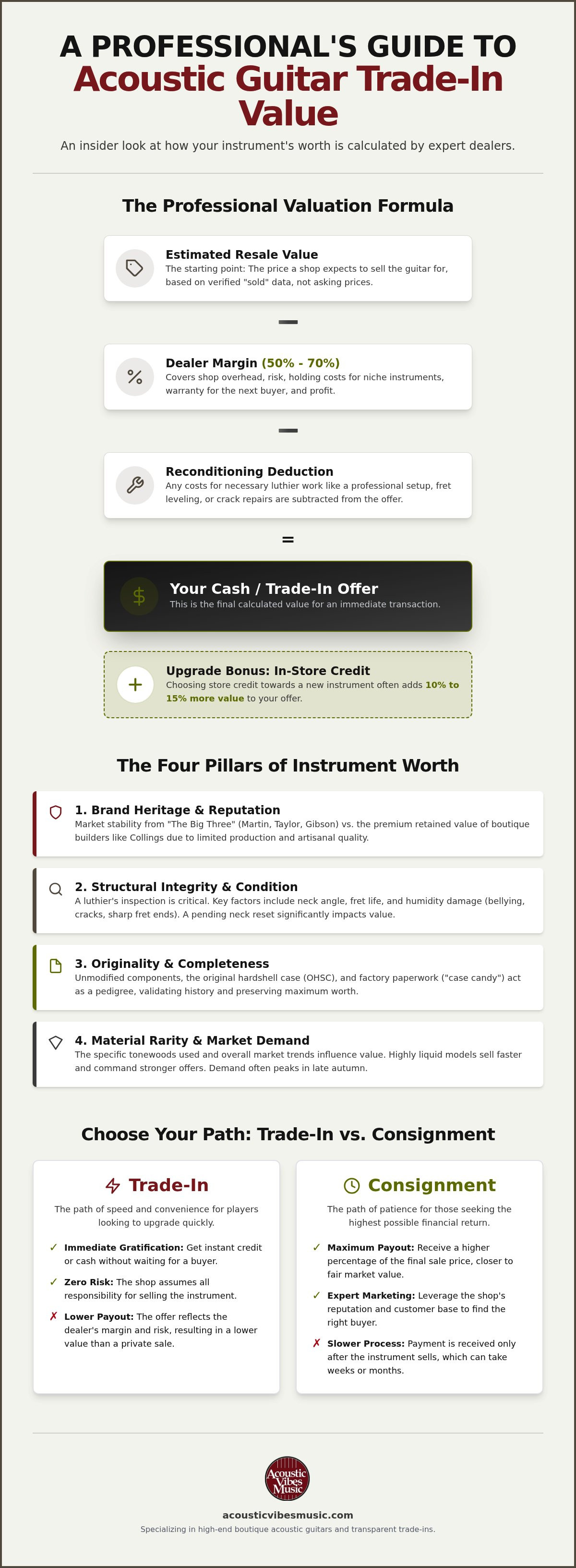
Calculating the acoustic guitar trade in value begins with a cold look at data rather than emotional attachment. Professional dealers don't pull numbers from thin air; they use a specific investment formula. The process starts by identifying the "Resale Value," which is the price the shop expects to receive when they eventually sell the instrument. This isn't based on what people are asking for online, but rather on verified "sold" data from specialized platforms. Understanding the history of vintage guitar values helps appraisers recognize how certain models retain worth over decades, while others fluctuate with market whims.
Once the resale value is established, shops apply a "Dealer Margin." This typically ranges from 50% to 70% of the resale price. This margin covers the shop's overhead, the risk of the instrument sitting in inventory, and a modest profit. From this offer, a "Reconditioning Deduction" is subtracted. If your guitar needs a professional setup, fret leveling, or a bridge re-glue, those luthier costs are deducted from your quote. However, many boutique shops offer an "In-Store Credit" incentive. Choosing credit toward a new Martin or Collings often yields 10% to 15% more value than a straight cash buyout, making it the smartest path for players looking to upgrade.
A common point of confusion is the gap between a "private party" price and a dealer's offer. When you sell a guitar yourself, you assume all the risk, including shipping, potential returns, and scams. A professional shop provides a different service. They offer immediate liquidity and assume the responsibility of providing a warranty to the next buyer. High-end instruments often have a significant "holding cost" because they appeal to a specific, smaller audience. A rare Boucher might take six months to find the right home. The shop's offer reflects the capital they'll have tied up in that instrument while it waits for a buyer.
Demand for specific brands shifts like the tides. While "flavor of the month" builders might see temporary price spikes, timeless classics from Taylor or Gibson offer much higher price stability. Market Liquidity is the speed at which a specific guitar model converts back to cash. If you are trading a highly liquid model, you'll likely see a stronger offer because the shop knows it will move quickly. Seasonal trends also play a role; demand often surges in late autumn as players look for indoor projects, while mid-summer can see a slight cooling in the used market. Timing your trade to these cycles can subtly influence your final acoustic guitar trade in value.
Determining your acoustic guitar trade in value requires looking past the glossy finish to the DNA of the instrument. Professional appraisers weigh four distinct pillars: brand heritage, structural integrity, originality, and material rarity. While "The Big Three"—Martin, Taylor, and Gibson—provide a baseline of market stability, boutique names like Collings often command a higher percentage of their original retail price because of their limited production and artisanal reputation. During a formal appraisal process, every detail matters. Original hardshell cases, factory hangtags, and unmodified components act as a pedigree that validates the instrument's history and preserves its worth.
Appraisal begins with a luthier's eye. We look specifically at the neck angle; if the saddle is shaved low and the action is still high, a costly neck reset is on the horizon. Fret life is equally critical. Deep divots in the first five frets suggest a pending level and crown or a full refret. Humidity is the silent killer of value. We check for bellying behind the bridge, shrunk fret ends that feel sharp to the touch, and hairline cracks in the soundboard. If your instrument has suffered from bridge lift, our guide on Acoustic Guitar Bridge Repair Cost explains how these necessary fixes are factored into the final offer.
High-end instruments from builders like Boucher or a Collings D1 operate on a different valuation curve than mass-produced models. Their value is tied to the artistry of the build and the rarity of the materials used. For example, Adirondack spruce or premium Rosewood back and sides significantly boost an appraisal. Torrefied tops are a specific value-add for modern high-end acoustics, as the heat-treating process mimics the cellular structure of vintage wood for superior resonance. Custom shop specs like a specific nut width or a unique neck profile can either narrow or broaden the appeal, depending on current player trends. If you're curious about how your premium instrument stacks up, you can browse our curated inventory to see how we position these masterworks.
Deciding how to transition from your current instrument to your next masterpiece is a strategic choice. You must weigh the speed of the transaction against the total financial return. Trade-ins offer immediate gratification; you bypass the waiting period and move directly into a new sound. Conversely, consignment is designed for those seeking the maximum possible payout. This choice often depends on whether you are moving a reliable "workhorse" or a rare "collector" piece that requires a specific, discerning buyer to appreciate its true worth.
Risk management is a significant factor in this decision. Selling a high-end instrument privately involves navigating complex shipping logistics, potential payment scams, and the general anxiety of meetups with strangers. Letting a professional shop handle the sale transfers that entire burden to the experts. We manage the insurance, the trial periods, and the professional photography required to showcase an instrument's artistry. Beyond safety, there is a distinct "Tax Advantage" to trading. In many jurisdictions, the acoustic guitar trade in value is deducted from the price of your new purchase before sales tax is calculated. This tax saving can effectively narrow the gap between a trade offer and a private sale price, making the trade more lucrative than it appears on paper.
Immediate trade-ins are ideal for high-liquidity models from Martin or Taylor. These instruments have a predictable market and a large pool of ready buyers. If you've already discovered your dream guitar in our current inventory, trading is the most efficient path to securing it before someone else does. It also protects you from the "depreciation trap" that can affect modern standard models if the market shifts while you're trying to sell privately. You lock in your value today and start playing your upgrade tomorrow.
For heirloom-quality instruments, consignment is often the superior route. Industry-standard consignment fees generally range from 20% to 25%, which is a small price to pay for leveraging a specialist shop's reputation and reach. We use our national network to find collectors who specifically seek out rare builds and artisanal craftsmanship. You can see how we position these exceptional instruments by viewing our feature on High End Acoustic Guitars for Sale. This exposure ensures your guitar isn't just another listing, but a highlighted work of art presented to the right audience.
Presenting your instrument for appraisal is about more than aesthetics; it is about demonstrating stewardship. A guitar covered in grime and dull finish suggests neglect, which might lead an appraiser to look more skeptically at the internal structure. By investing a small amount of time in professional preparation, you can significantly influence your acoustic guitar trade in value. Think of this process as "detailing" a car before a sale. You want the appraiser to see the instrument's potential immediately, rather than the work required to get it back on the showroom floor.
Consider the ROI of minor repairs before you ship your instrument. Sometimes, spending a small amount on a professional setup can add triple that value to your trade-in offer. If the action is high or the frets are scratchy, the shop must account for that labor in their margin. Handing over a guitar that plays perfectly removes that deduction immediately. Locate the original hardshell case and every piece of "case candy" you possess. Original manuals, truss rod wrenches, and even factory stickers help recreate the "new" experience for the next owner, which adds a premium to the resale price.
Use high-quality, specialized polishes and avoid any silicone-based products. Silicone can penetrate the wood grain and make future finish repairs nearly impossible. Fresh strings are non-negotiable. An appraiser needs to hear the true resonance of the tonewoods, not the dull thud of dead strings. Before you arrive, perform a basic structural check yourself by testing for loose braces. Hold the guitar by the neck and gently tap the top wood around the bridge and the lower bouts with your fingertips. Listen for a clear, drum-like ring. If you hear a buzzing or a sharp "clack" sound, a brace may have become unglued and will need attention before the appraisal.
Collectors and boutique shops value a documented history. Original sales receipts and Certificates of Authenticity act as a passport for your instrument, proving its provenance. This is especially critical for custom builds where specific upgrades might not be visible to the naked eye. Highlighting premium features, such as Boucher's torrefied top specs or a custom nut width, via the original build sheet ensures the appraiser recognizes the full value of your investment. Compile a brief "life history" of the instrument, including a record of any luthier work or professional appraisals you've received. Ready to see what your instrument is worth? Contact our expert curators today for a professional evaluation of your collection.
Choosing where to trade your instrument is just as critical as the instrument itself. Big-box retailers often operate on volume, treating every piece of gear like a generic SKU in a database. At Acoustic Vibes Music, we take a different approach. We are passionate curators who recognize the technical nuances that define a world-class instrument. Whether it is the unique voicing of a Lowden or the refined craftsmanship of a Yamaha L-Series, we understand why these guitars command a premium. Our appraisals are rooted in decades of experience within the high-end market, ensuring you receive a valuation that respects the artistry of your collection.
We've built our reputation on an "enthusiast to enthusiast" experience. You aren't just dealing with a salesperson; you're speaking with experts who share your reverence for tone and heritage. This specialized knowledge allows us to offer a more nuanced acoustic guitar trade in value than generalist shops. We look at the specific grain of the tonewoods, the precision of the binding, and the overall soul of the instrument. To make the process stress-free, we provide expert guidance on seamless national shipping. We help you navigate the logistics of safely transporting your high-end instrument, ensuring it arrives in our hands exactly as it left yours.
Our process is designed for clarity and confidence. It begins with an initial remote evaluation. You send us detailed photos and specifications, and we provide a ballpark estimate based on current market data and our specialized inventory needs. If the estimate aligns with your goals, we move to a professional in-hand inspection. Our expert staff examines the structural integrity and playability in person to verify the final offer. This transparent workflow makes it easier than ever to finalize your upgrade to a Collings or a Martin Custom Shop model that will define your next chapter as a player.
Every instrument that enters our shop is treated with the utmost respect. Our in-house luthier services ensure that every traded guitar is meticulously set up and maintained before finding its next home. This commitment to quality preserves the integrity of the instruments and supports a vibrant community of high-end acoustic players. When you trade with us, you aren't just moving gear; you're joining a network of collectors and musicians who value excellence above all else. We're ready to help you find your next great sound. Contact us today to start your professional guitar appraisal.
Your journey toward a new masterpiece begins by looking beyond the sticker price and understanding the true artistry of your current collection. We've explored how a professional shop calculates acoustic guitar trade in value through a balanced formula of market data and luthier expertise. By focusing on the four pillars of worth and preparing your instrument with the care it deserves, you position yourself for a seamless and rewarding upgrade.
Whether you're trading a reliable workhorse or consigning an heirloom-quality piece, the right partnership makes all the difference. At Acoustic Vibes Music, we combine expert appraisal for Martin, Taylor, and Collings with professional in-house luthier services to ensure every valuation is fair and transparent. Our nationwide shipping and consignment specialists are here to guide you through every step of the process, protecting your investment from case to case.
Ready to discover what your instrument is worth in today's market? Start Your High-End Guitar Trade-In Appraisal Today and take the first step toward the tone you've always dreamed of. The pursuit of quality is a shared passion, and we're excited to help you find your next great inspiration.
The decision depends on whether you prioritize immediate liquidity or the absolute highest dollar amount. Trading in your instrument provides a guaranteed, instant transaction and often includes tax advantages that narrow the financial gap. Private sales might yield more cash but require managing listings, fielding inquiries, and assuming the risks of shipping and payment fraud. For high-end instruments, the security of a professional dealer often outweighs the potential gains of a private marketplace.
A headstock repair typically reduces an instrument's market value by 40% to 50%, even if the work was performed by a master luthier. While a professional repair can restore full structural integrity and tone, collectors view it as a major compromise in originality. When we calculate the acoustic guitar trade in value for such pieces, we focus on the quality of the fix and the remaining playability to ensure the offer reflects its current utility.
Rare tonewoods like Brazilian Rosewood or master-grade Koa significantly increase an instrument's valuation. These materials are increasingly difficult to source and offer a specific harmonic complexity that enthusiasts crave. Because of CITES regulations and limited supply, guitars featuring these woods hold their value exceptionally well. Our curators specifically look for these premium appointments when evaluating boutique builds, as they represent the pinnacle of acoustic craftsmanship and long-term investment potential.
For high-liquidity brands like Martin or Taylor, you can generally expect a trade-in offer between 60% and 70% of the current used market value. This percentage accounts for the shop's overhead, the cost of a professional setup, and the risk of holding inventory. Because these brands move quickly in a curated gallery, they often command the most stable and predictable offers compared to obscure or mass-produced alternatives that lack a dedicated collector following.
You can absolutely trade in a guitar that requires a neck reset, though the cost of the luthier service will be deducted from the final offer. At Acoustic Vibes Music, our in-house luthier team evaluates the neck angle to determine the exact scope of work needed. This transparency ensures you aren't penalized more than necessary. We view these instruments as opportunities for restoration, allowing us to return a vintage or heavily played piece to its peak performance.
Safe transport requires a heavy-duty, double-walled guitar box and plenty of padding. Start by slightly loosening the strings to reduce tension on the neck. Fill any gaps inside the hardshell case with crumpled acid-free paper to prevent the instrument from shifting. Once the case is inside the box, ensure there is at least two inches of packing material on all sides. We provide detailed guidance to ensure your prized instrument arrives safely for its professional evaluation.
Most specialized shops offer a higher acoustic guitar trade in value when the credit is applied toward a more expensive, premium upgrade. This incentive is designed to help players move into higher tiers of craftsmanship, such as moving from a standard model to a Martin Custom Shop or Collings build. By choosing in-store credit over a cash buyout, you maximize your purchasing power and often benefit from additional tax savings on the new acquisition.
Replaced bridge pins rarely affect value, but tuner upgrades can be a double-edged sword. If the new tuners required drilling new holes in the headstock, the value will likely decrease because the instrument is no longer in its original factory state. However, high-end drop-in replacements like Waverly tuners can sometimes be viewed as a neutral or slight positive for players, provided the original parts are included in the case for the next owner.