My shopping cart
Your cart is currently empty.
Continue ShoppingA neck reset isn't a sign of a failing instrument; it's a scheduled rebirth for a masterwork of wood and wire. If you've noticed the strings on your vintage Gibson or boutique Boucher slowly drifting away from the fretboard, you're likely facing the inevitable physics of string tension. It's a stressful realization for any collector. You want your guitar to play like a dream again, but the confusion surrounding the acoustic guitar neck reset cost and the fear of a botched repair can feel paralyzing. We understand that these instruments are more than just tools. They're heirlooms that deserve reverence and technical precision.
You deserve a clear, expert roadmap to understand this complex restoration. This guide provides an authoritative look at 2026 labor rates and the hidden expenses that often accompany high-end luthier work. We'll examine how different neck joints, from traditional dovetails to modern bolt-on systems, directly impact your final invoice. By the end of this article, you'll have the confidence to choose a professional shop that treats your instrument with the same passion you do. We'll help you ensure your guitar returns to your hands with perfect action and its structural integrity fully intact.
Every high-end instrument tells a story of tension and release. A neck reset is the ultimate structural correction, a process where a luthier physically detaches the neck from the body to carve a new, steeper angle. This isn't a simple seasonal adjustment. While a standard setup involves tweaking the truss rod or filing a saddle, a reset addresses the fundamental geometry of the guitar. For many owners of premium acoustic guitars, understanding the acoustic guitar neck reset cost is the first step in a long term preservation plan. In 2026, national labor rates for this complex procedure typically range from $600 to $750 for standard instruments, while vintage masterpieces often command a base price of $1,000 or more due to their delicate nature.
Imagine a constant pull of approximately 180 pounds of tension. That's what your guitar's soundboard and neck joint endure every single day. Over two or three decades, the wood naturally yields to this force. The top may lift slightly behind the bridge, and the neck joint itself may compress. This shift creates the "Acoustic Triangle," where the strings sit too high off the fretboard, making the instrument nearly unplayable. Most Set-in Neck Construction designs will eventually reach a tipping point. You'll know you've hit it when your luthier tells you there's no more saddle left to shave down. At this stage, only a full reset can restore the original factory geometry and the vibrant, resonant tone you remember.
Diagnostic precision is key. You can perform a basic check by placing a long straightedge along the frets, sliding it toward the bridge. Ideally, the end of the straightedge should rest exactly on top of the bridge wood. If it falls significantly below the bridge, the neck angle has collapsed. Watch for other warning signs like visible gaps at the heel or a "hump" where the neck meets the body at the 14th fret. These symptoms suggest the wood has shifted beyond the reach of a simple setup. Because the acoustic guitar neck reset cost is a significant investment, consulting an expert luthier for a definitive diagnostic is essential. They'll help you determine if your heirloom is ready for this transformative restoration or if a less invasive fix might suffice for now.
The architecture of your guitar dictates the complexity of its restoration. While a casual observer might see a simple wooden joint, a specialist sees hours of meticulous labor and specialized tooling. The primary driver of the acoustic guitar neck reset cost is the design of the neck joint itself. Different manufacturers employ distinct engineering philosophies that either simplify or complicate the removal process. For instance, a vintage instrument assembled with traditional hide glue requires a far more delicate touch than a modern build using synthetic adhesives. Every nuance of the build, from the type of varnish to the age of the wood, plays a role in the final invoice.
Dovetail joints, found on heritage brands like Martin and Gibson, represent the pinnacle of traditional lutherie. These joints are held together by friction and glue, requiring the "Steam and Shim" method for disassembly. A luthier must carefully inject steam into the joint to soften the adhesive, a process fraught with risk to the surrounding finish. In contrast, modern bolt-on systems, pioneered by Taylor and adopted by builders like Collings, utilize precision-engineered shims. This modular approach significantly reduces labor hours. According to technical standards maintained by the Guild of American Luthiers, the removal of a traditional dovetail is one of the most invasive procedures a guitar can undergo, which is why it commands a premium price compared to bolt-on resets.
A master-level reset isn't just about the angle; it's about the art of invisibility. When a neck is detached, the surrounding nitrocellulose lacquer often cracks or chips along the seam. Collectors and owners of Boucher guitars or other high-end models typically demand a seamless aesthetic restoration. This involves melting the lacquer back together or performing precision touch-ups to hide the "witness lines" where the finish was broken. Finish witness lines are the faint, visible edges left behind after a repair that can signal a previous reset to future buyers and potentially impact the instrument's 2026 market valuation. Achieving a museum-quality result adds significant time to the project, but it ensures the instrument retains its visual integrity and resale value. If you're unsure about the current state of your instrument's finish, you can always consult with a specialist to discuss the best path forward.
A neck reset is rarely a solitary event. Think of it as a structural foundation. Once the geometry of the neck is restored, the rest of the instrument's setup must be recalibrated to meet this new reality. This is what specialists often call the "Action Triangle," the critical relationship between the nut, the saddle, and the frets. When the neck angle changes, the previous heights of these components become obsolete. Budgeting for a complete restoration ensures that your investment results in an instrument that plays with effortless precision rather than one that merely has a corrected angle. While the primary acoustic guitar neck reset cost covers the labor of the joint itself, these ancillary repairs are what truly bring the guitar back to life.
Your existing saddle was likely shaved down over the years to compensate for a collapsing neck angle. Once the neck is reset to its optimal position, that old saddle will be far too short to provide proper string height. A master luthier will almost always need to hand-carve a new saddle from premium materials to match the corrected geometry. Similarly, the string height at the nut often requires minute adjustments or a full replacement to prevent buzzing or high action in the first position. Choosing high-quality materials like bone over synthetic alternatives can influence the final cost, but the tonal rewards are undeniable. For a deeper look at these components, explore our guide on Acoustic Guitar Nut Replacement: Costs and Materials.
The portion of the fretboard that extends over the guitar body, often called the "tongue," frequently develops a slight rise or fall over time. When the neck is removed and re-angled, this area must be meticulously leveled to ensure a flat playing surface across the entire range. It's common for a reset to necessitate a fret level, crown, and polish, or even a partial refret if the wear is significant. This ensures that your Collings or Lowden performs without a hint of fret buzz. Understanding the difference between these services is crucial for any collector. You can learn more by reading about Fret Dressing vs. Refret: Which Maintenance Do You Need?.
The tactile sensation of a fresh bone saddle and perfectly crowned frets is unmistakable. It's the difference between a guitar that merely works and one that inspires you to play for hours. When you consult with a specialist, ask for a comprehensive quote that includes these essential finishing touches. This transparency prevents surprises and guarantees that your heirloom instrument returns to you in peak performance condition, ready for its next twenty years of music making.
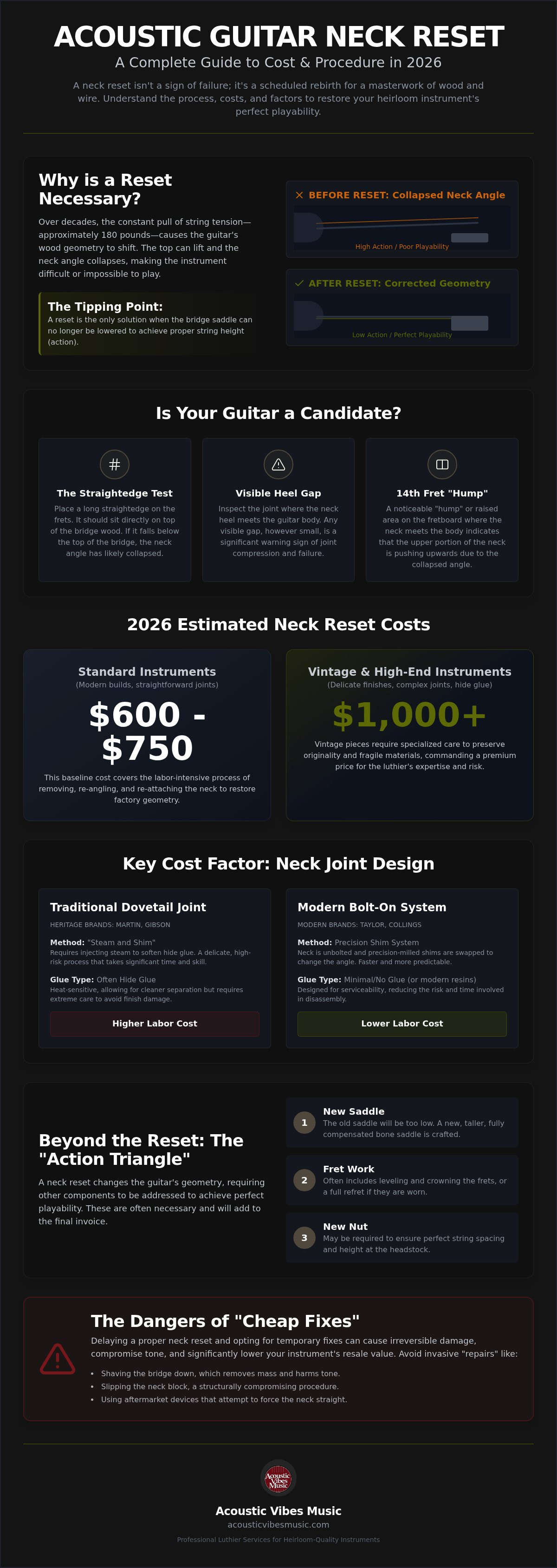
It’s a common temptation to seek a shortcut when faced with the acoustic guitar neck reset cost. You might encounter advice on digital forums suggesting you "shave the bridge" to lower the action without touching the neck joint. This is a destructive, non-reversible hack that compromises the instrument’s physical soul. Professional luthiers refuse to perform these modifications because they fundamentally weaken the bridge and destroy the guitar’s tonal potential. A bridge that has been thinned out cannot drive the soundboard with the same authority as a full-thickness component. It's a temporary patch that leaves the underlying structural issue to worsen over time.
Correcting the neck angle is about more than just finger comfort. It’s about the "break angle," the degree at which the strings pass over the saddle. A steep, healthy angle ensures maximum vibration is transferred into the top. When you avoid a reset, you starve the tonewoods of their ability to resonate. This is particularly noticeable on instruments with complex harmonic profiles. Understanding how different woods react to tension is vital; for instance, you can explore the nuances of Rosewood vs. Mahogany Back and Sides in our ultimate tonewood guide. Maintaining the proper tension ensures the long-term health and vibrancy of these precious materials.
Provenance is everything in the world of high-end collecting. For brands like Martin or Collings, a documented, professional neck reset is viewed as a responsible maintenance milestone. It shows the instrument has been cared for by an expert who understands its heritage. Conversely, a modified bridge is a massive red flag for any serious buyer. Shaving the bridge is a permanent modification that can reduce a guitar’s market value by 30% or more, essentially turning a minor savings into a major financial loss. Authentic restoration preserves both the history and the future of your investment.
High-end guitars from Taylor or Gibson are engineered to specific tolerances. Bypassing a necessary reset with a "quick fix" often leads to a loss of volume and tonal complexity that no amount of string changing can fix. We believe in doing it right the first time to protect your instrument's legacy. Don't let a temporary fix ruin a lifetime of music. If your heirloom is showing signs of high action, schedule a consultation with our master luthiers to discuss a proper restoration plan.
At Acoustic Vibes Music, we view every instrument that enters our care as a unique piece of functional art. Our philosophy is rooted in a deep reverence for the luthier’s craft; we believe that a high-end guitar isn't just a collection of wood and wire, but a legacy waiting to be preserved. When you consider the acoustic guitar neck reset cost, you're investing in more than just a repair. You're securing the future of an instrument that may have been your companion for decades. We treat every restoration with the same meticulous attention to detail that we apply to our curated gallery of new arrivals, ensuring that the soul of your guitar remains intact throughout the process.
Specialized knowledge is the hallmark of a master repair. The structural nuances of a Lowden, the precision of a Boucher, or the heritage construction of a Yamaha require an expert guide who understands brand-specific geometry. Because we are a boutique destination for the world’s finest acoustics, our team possesses an intimate familiarity with these builds. We manage all luthier services by appointment, allowing us to dedicate the necessary time to diagnose each instrument's specific needs without the distractions of a high-volume, assembly-line environment. For collectors across the country, our national shipping protocols ensure your heirloom reaches our hands safely and returns to yours in peak performance condition.
Navigating the technical requirements of industry leaders like Martin Guitars and Taylor Guitars demands a high level of specialized skill. As an authorized dealer for Martin Custom Shop and Taylor, we stay at the forefront of their evolving construction methods. Boutique builders such as Collings set an even higher bar for luthier artistry, utilizing traditional joints that require a sophisticated touch to reset correctly. Choosing a shop that lives and breathes these brands every day provides a layer of security that general repair centers simply cannot match. We understand the specific adhesives, finish types, and bracing patterns that define these world-class instruments.
Restoring your guitar starts with a comprehensive diagnostic appointment. During this intake process, we evaluate the "Action Triangle" discussed earlier and provide a detailed estimation of the work required. We believe in transparency; you'll receive a clear roadmap of the necessary steps to bring your guitar back to factory specifications. This methodical approach eliminates the confusion often found in repair quotes and builds a foundation of trust. Ultimately, a professional neck reset is the ultimate gift to a lifelong musical companion. It's a rebirth that clears the path for another generation of music, ensuring your guitar plays with the same effortless grace it did the day it was born.
Your guitar is a living testament to artisanal skill, and a neck reset is the ultimate act of stewardship. We've explored how the relentless physics of string tension eventually alters even the finest builds, and why bypassing a necessary restoration with destructive shortcuts only devalues your investment. Understanding the acoustic guitar neck reset cost is about more than just numbers; it's about committing to the long-term health and tonal brilliance of your heirloom. Whether it’s a vintage Martin or a boutique Collings, these instruments deserve the technical precision that only a specialist can provide.
As an authorized dealer for Martin, Taylor, and Collings, we bring a curator’s eye to every repair. We manage our luthier services by appointment to ensure your guitar receives the focused, high-end care it requires. Don’t let high action silence your favorite companion. Embrace the expertise needed to return your instrument to its factory-fresh playability and resonant glory. Schedule a Professional Luthier Consultation for Your Instrument today and let’s begin the journey of bringing your guitar back to life. Your music deserves nothing less than perfection.
Yes, a neck reset is one of the most invasive structural repairs a guitar can undergo. It involves using heat and steam to physically separate the neck from the body. This isn't a routine adjustment like a setup; it’s a major operation that requires high-level luthier skill. It ensures the joint is stable and the finish remains intact while restoring the foundational geometry of your instrument.
The acoustic guitar neck reset cost for a Martin depends on the joint type and age. Traditional dovetail joints found on most Martin models require the "steam and shim" method, which is labor intensive. Owners should prepare for several hours of meticulous work. This is often bundled with a new saddle and fret dressing to achieve peak playability. It’s an investment in the heritage of a world-class instrument.
A professionally executed reset usually improves the sound significantly. By restoring the correct neck angle, you increase the break angle of the strings over the saddle. This allows for more efficient energy transfer from the strings to the soundboard. Most players notice increased volume, better sustain, and a more focused tonal response once the structural geometry is returned to its original factory specifications.
The actual labor involves several hours of active work, but the entire process usually spans one to two weeks. This timeframe allows the wood to settle after steam injection and ensures the new glue joint is fully cured before being placed under tension. Because we manage services by appointment, the intake process includes a clear timeline based on the complexity of your specific instrument and any additional repairs needed.
Lighter strings might slow the progression of wood movement, but they won't reverse existing structural shifts. Once the neck angle has collapsed, reducing tension is merely a temporary delay. Lighter strings also sacrifice the driving force needed for a high-quality soundboard to vibrate fully. If your action is unplayable, a structural reset is the only permanent solution to restore the instrument's original voice and effortless feel.
This is a personal decision based on the guitar's sentimental value. From a purely financial standpoint, the acoustic guitar neck reset cost may approach the market value of an entry-level instrument. However, if the guitar is a cherished companion with a unique sound, the investment in professional luthier services can grant it decades of life. A new budget guitar simply won't have the same character as your broken-in favorite.
If ignored, the high string action will eventually make the guitar unplayable. The constant tension may also lead to further structural issues, such as a belly in the soundboard or damage to the bridge. Over time, the instrument loses its tonal complexity and volume. Postponing the repair often leads to more expensive ancillary work later, as the geometry continues to drift further from its intended factory alignment.
A professionally executed neck reset actually preserves or increases the value of a vintage guitar. Collectors understand that wood movement is inevitable over fifty or sixty years. A reset performed by an expert using period-correct methods is considered essential maintenance. It ensures the instrument remains a functional tool of music rather than a static display piece, provided the aesthetic restoration is handled with the proper reverence.