My shopping cart
Your cart is currently empty.
Continue ShoppingWhat if the secret to that elusive, pre-war bluegrass growl isn't just in your fingers, but in the specific density of a sand-cast tone ring? It's a question that many serious players ask when they decide to move beyond intermediate gear. You've likely felt the frustration of staring at technical spec sheets while worrying that your next major investment might lack the depth you crave. We know the pressure of choosing between professional-grade banjos, especially when you want an instrument that feels like a curated work of art rather than just another factory product.
You deserve a banjo that rewards your dedication with incredible tone and lasting value. This guide provides the expert clarity you need to understand the mechanical differences that drive professional sound. We'll break down the nuances of resonator projection versus open-back warmth and explain how 2026 CITES regulations on Pernambuco wood impact the high-end market. You'll learn how to spot a master-grade setup and choose a boutique instrument that will remain a centerpiece of your collection for a lifetime.
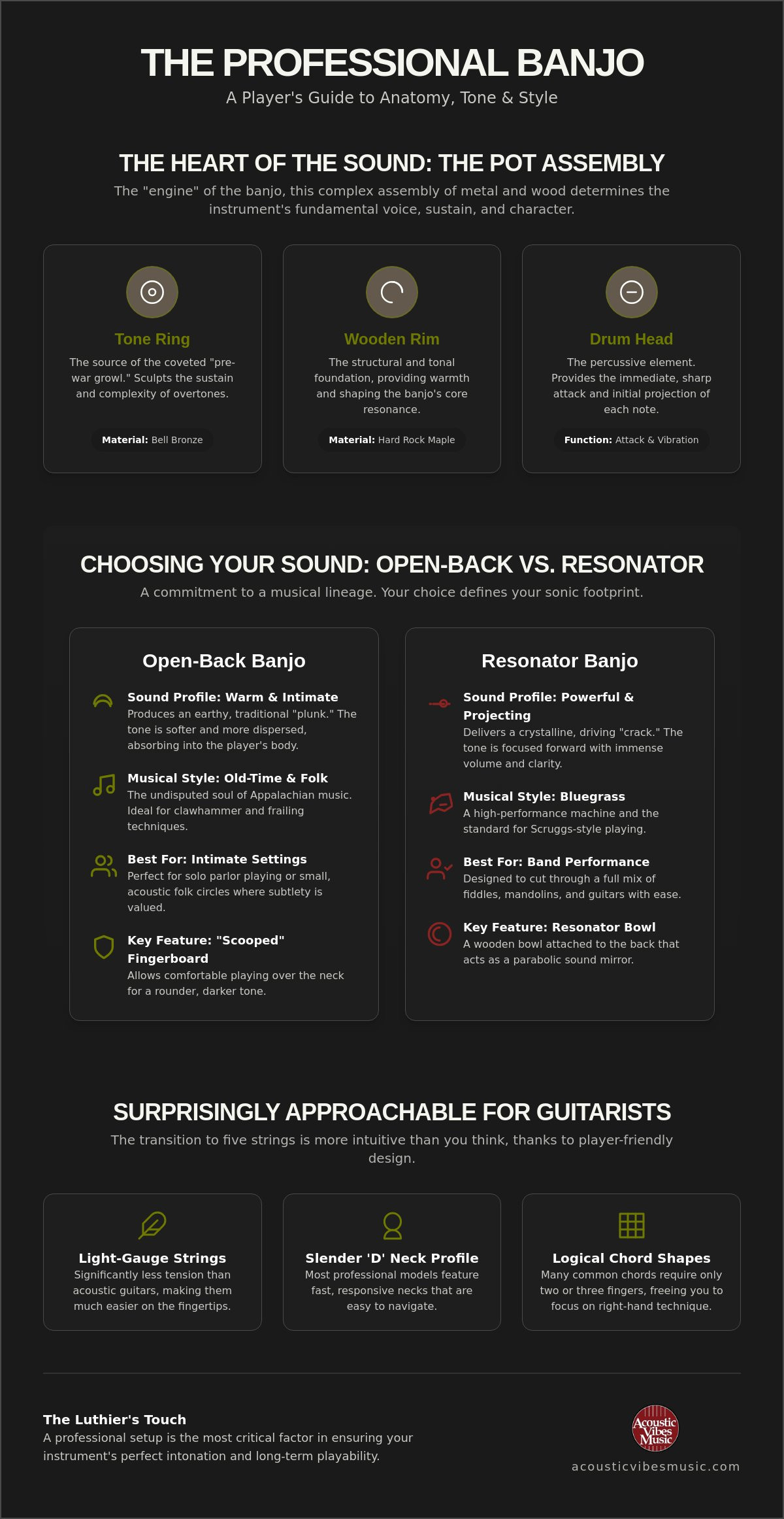
A premium banjo is a marvel of mechanical engineering and organic artistry. Unlike a guitar, which relies primarily on a hollow wooden box for resonance, banjos function as a unique hybrid of a percussion instrument and a stringed one. The drum-like head provides the immediate attack, while the wooden rim and metal tone ring sculpt the sustain and character. When you step into our gallery, you'll see that high-end models aren't just assembled; they are curated from materials like bell bronze and rock maple to ensure every note rings with authority. We view these instruments as functional sculptures where every bolt and bracket serves a specific acoustic purpose.
If you're already familiar with high-end acoustic guitars, you'll find the transition to five strings remarkably intuitive. One of the most pleasant surprises is the string tension. Banjos utilize much lighter string gauges, making them significantly easier on the fingertips. Most professional models feature a slender-D neck profile that feels fast and responsive, debunking the myth that these necks are cumbersome or difficult to navigate. The standard G-tuning is also incredibly logical. Many chord shapes require only two or three fingers, allowing you to focus on your right-hand technique and the joy of discovery. Exploring the history of the banjo reveals how these design choices evolved to favor speed and clarity, making it an accessible gateway for any acoustic enthusiast.
Think of the pot assembly as the engine of the instrument. This complex grouping of the rim, tone ring, head, and tension hoop determines the banjo's fundamental voice. A 12-inch rim offers a deeper, more resonant frequency response that suits old-time styles, while the classic 11-inch rim provides the punch and "crack" required for bluegrass. The bridge acts as the vital link, transferring string vibration directly into the head. Every component must work in perfect harmony to produce a professional-grade sound.
We take a "Passionate Curator" approach to our collection. Every instrument is hand-selected for its resonant integrity. We look for rims made from hard rock maple and tone rings cast from bell bronze. These materials offer a complexity of overtones that lesser materials simply cannot match. It's about finding that perfect balance where hardware precision meets the wood's natural warmth. This meticulous attention to detail ensures that your instrument holds its value and inspires your playing for decades. Don't settle for a thin-sounding instrument when you can experience the power of a masterfully built pot assembly.
Choosing between professional-grade banjos is more than a technical decision; it's a commitment to a specific musical lineage. Your choice defines your sonic footprint and dictates how you interact with other musicians. In our gallery, we often see collectors weighing the intimate, earthy "plunk" of an open-back against the crystalline, driving "crack" of a resonator model. While both instruments share a similar DNA, their physical builds create entirely different acoustic experiences. We maintain a curated selection of both varieties to ensure every player finds an instrument that resonates with their personal style and performance needs.
The open-back banjo is the undisputed soul of old-time music. It offers a warm, intimate tone that feels grounded and deeply traditional. Because the back of the pot remains open, the sound is softer and more dispersed, making it the perfect companion for solo parlor playing or small folk circles. Many of our boutique open-backs feature "scooped" fingerboards. This design allows you to strike the strings comfortably over the neck rather than the head, producing a rounder, darker sound essential for clawhammer and frailing styles. If you explore the Blue Ridge Music Trails banjo history, you'll see how these instruments became the backbone of Appalachian culture. We've noticed that many enthusiasts who appreciate these organic textures also explore the best intermediate mandolin options to round out their acoustic collection.
On the other end of the spectrum, the resonator banjo is a high-performance machine built for power and precision. It's the standard for Scruggs-style bluegrass, designed to cut through the sound of a fiddle and mandolin with ease. The resonator itself is a wooden bowl attached to the back of the pot assembly via a metal flange. This setup acts as a sound mirror, reflecting every vibration forward toward your audience rather than letting it soak into your clothing. The result is massive volume, incredible sustain, and a bright, punchy attack. Be prepared for the physical presence of these instruments, though. A professional resonator model is significantly heavier than an open-back, often weighing between 10 and 14 pounds due to the heavy bell bronze tone ring and the additional resonator hardware. It's a powerhouse meant for the stage and the ensemble. If you're ready to experience this level of projection, you can browse our current collection of premium banjos to find your next heirloom-quality instrument.
To understand the soul of professional-grade banjos, you must look beneath the head and into the heart of the pot assembly. The interplay between metal and wood determines whether an instrument merely makes noise or truly sings. For the serious collector, the tone ring is the most critical variable. A heavy bell bronze tone ring provides the massive volume and complex overtones required for professional bluegrass projection. In contrast, a rolled brass ring offers a lighter, more fundamental-focused response, while "woody" models skip the metal ring entirely to emphasize the natural resonance of the rim. The Tubaphone-style tone ring, characterized by its perforated square tube design, serves as a hallmark of vintage-inspired clarity, offering a bright, bell-like sustain that is particularly prized by open-back enthusiasts.
Many collectors spend a lifetime chasing the "pre-war" sound profile. This legendary tone, associated with instruments built in the late 1920s and early 1930s, is defined by a specific combination of sand-cast bronze alloys and old-growth woods. It produces a dry, punchy note with a quick decay that allows every individual string to be heard clearly in a fast-moving mix. Modern boutique builders spend years perfecting their casting processes to replicate this elusive frequency response. When you play a master-built instrument, you're not just hearing wood and metal; you're hearing the result of decades of acoustic research and artisanal dedication.
While the tone ring provides the power, the wood species of the neck and rim colors the final voice. We carefully select instruments that showcase the unique properties of high-grade tonewoods:
The rim is the foundation of the entire instrument. We prioritize 3-ply rims over multi-ply alternatives because they utilize less glue and more solid wood, which significantly improves resonance. A high-quality rim should be perfectly round and fitted with precision to the tone ring. This mechanical bond is what allows the instrument to vibrate as a single unit.
Hardware plating also plays a role in long-term value and aesthetics. Nickel plating offers a classic, understated look that ages gracefully with a light patina. Gold plating, while more of a luxury investment, provides superior corrosion resistance and a striking visual presence. We ensure every instrument in our gallery features high-grade tension hoops and coordinating hardware that can withstand the high head tension required for professional playability. These technical details aren't just specs; they are the building blocks of an heirloom-quality instrument.
Our gallery currently houses over 60 hand-selected banjos, ranging from punchy tenor models to professional-grade 5-string resonators. In the current market, finding boutique instruments of this caliber has become a challenge as demand for high-end acoustic gear continues to outpace production. We pride ourselves on being a sanctuary for the serious player, offering immediate access to instruments that often carry significant waitlists elsewhere. The artistry of Collings Banjos and other elite builders represents the pinnacle of modern lutherie, where every grain of wood is chosen for its specific acoustic property. These pieces move quickly. We encourage you to reach out directly to discuss our current arrivals before they're gone.
Performance-ready 5-string models are the workhorses of our collection. These instruments feature heavy 20-hole bell bronze tone rings that provide the "crack" and sustain required for serious stage work. Modern players particularly appreciate the slender neck profiles that allow for effortless position shifts and complex melodic work. For those seeking investment-grade quality, the Deering Tenbrooks Saratoga Star with an -06- Tone Ring is currently priced at $6,549.00, while the Deering Greg Deering Limited (GDL) stands at $7,249.00. These are legacy instruments designed to perform at the highest level for decades.
For the collector who prizes tonal depth and visual elegance, our artisanal open-back models are a revelation. Many of these instruments utilize 12-inch rims to produce a rich, resonant low-end that feels grounded and authoritative. You'll find breathtaking examples of curly maple and intricate headstock inlays that make each piece a unique work of art. These instruments are the perfect sonic companion for those who already possess a curated Martin guitar collection, offering a different but equally sophisticated acoustic texture. Whether you're drawn to the intimate warmth of a wood-rim model or the bell-like clarity of a brass-ring build, these instruments are true heirlooms.
If you're ready to find your next masterpiece, contact our expert guides today to explore our latest hand-selected arrivals.
Professional banjos are unique among stringed instruments because they are essentially modular machines. Every component, from the tailpiece to the tension hoop, can be adjusted to alter the voice and feel of the instrument. This mechanical flexibility makes a professional setup more critical here than for almost any other piece of equipment in your collection. A bridge that is even a fraction of an inch out of place will ruin your intonation, while a head that is too loose will sap the instrument of its natural projection. Our in-house luthier repair services ensure that every instrument leaves our gallery optimized for peak performance. We take the time to dial in the action and resonance so you can focus entirely on the music.
Maintaining your instrument requires a balance of technical knowledge and sensory awareness. You should regularly check your coordinator rods to ensure the pot assembly remains stable and the neck angle stays true. We also recommend monitoring neck relief to prevent buzzing as the seasons change and the wood naturally breathes. Because we operate with desert-climate expertise, we understand the profound impact of humidity on fine tonewoods. Keeping your instrument in a stable environment is the best way to prevent cracks and maintain the integrity of the rim. For absolute consistency in your sound, we suggest checking your head tension with a drum dial to ensure uniform pressure across all brackets. These small adjustments prevent larger issues and keep your instrument sounding its best for decades.
We act as your expert guide through every step of the acquisition process. Our team hand-selects every instrument in the gallery, rejecting any that don't meet our rigorous standards for resonance and craftsmanship. For our national customers, we offer detailed consultations to help you identify the specific "voice" you need for your playing style over the phone. We then utilize specialized packing techniques and nationwide shipping expertise to ensure your investment arrives safely. Your instrument will be play-ready the moment it's unboxed. We believe that buying a premium instrument should be an inspiring experience, and we are here to ensure your new banjo provides a lifetime of musical satisfaction.
Explore our full collection of banjos today and find the perfect addition to your musical journey.
Choosing a professional instrument is a journey into the heart of acoustic craftsmanship. You now understand how the mechanical precision of a pot assembly and the organic warmth of specific tonewoods converge to create a master-grade sound. Whether you're drawn to the driving projection of a bell bronze resonator or the intimate folk textures of a 12-inch open-back, your perfect instrument is more than just a purchase; it's a legacy. We invite you to explore our gallery, where we've hand-selected a diverse array of banjos that represent the pinnacle of modern lutherie.
Every piece in our inventory reflects our commitment to excellence. With over 60 high-end models in stock, we offer a selection that is rare in today's market. Every purchase includes an expert luthier setup to ensure your instrument arrives play-ready, and we provide secure national shipping for collectors across the country. Don't let your next masterpiece wait on a factory backorder. Browse our Curated Collection of Premium Banjos today and discover the joy of playing an instrument that truly resonates with your soul. Your musical future is waiting to be heard.
Banjos are surprisingly more approachable than acoustic guitars because they utilize much lighter string gauges. This lower tension is gentle on the fingertips, and the standard G-tuning makes basic chord shapes incredibly intuitive. Many beginners find they can play a recognizable tune much faster on five strings than they can on six.
The primary difference lies in the fifth string and the intended musical genre. A 5-string model features a short "drone" string used for bluegrass and clawhammer styles. In contrast, 4-string tenor or plectrum models are traditionally played with a flatpick in Celtic music or traditional jazz ensembles.
Weight is almost entirely determined by the presence of a metal tone ring and a resonator. A professional bluegrass instrument with a heavy bell bronze ring can weigh up to 14 pounds. Open-back banjos without these heavy metal components are significantly lighter and more portable for casual parlor playing.
While you can play the notes on any instrument, a resonator model is essential for the authentic bluegrass "crack" and volume. The resonator reflects sound forward, allowing you to be heard over fiddles and mandolins. It provides the sustain and projection required for Scruggs-style picking in an ensemble setting.
Prioritize structural integrity by checking for a perfectly round rim and a straight neck. Ensure the tone ring is original and hasn't suffered any hairline cracks. Be mindful of 2026 CITES regulations if the instrument contains rare woods like Pernambuco, as commercial trade across borders now requires specific permits.
Aim for a professional setup at least once a year or whenever you notice a shift in intonation. Environmental changes impact head tension and neck relief significantly. A quick check-up ensures your bridge is perfectly positioned and your action remains fast and responsive for peak performance.
You should avoid using a standard guitar strap because banjos require specific attachment points that won't slip. Most players prefer a "cradle" strap that loops securely under the brackets. This design distributes the weight of heavy resonator models more evenly across your shoulder for long performances.
Light-gauge nickel-plated steel strings are the gold standard for achieving a bright, snappy tone. These strings provide the necessary brilliance to cut through a mix without sacrificing playability. Regularly changing your strings is the simplest way to maintain that crystalline, professional-grade attack you hear on classic recordings.