My shopping cart
Your cart is currently empty.
Continue ShoppingThe most expensive dreadnought in the room might actually be the worst tool for your fingerstyle progression. If you've ever felt your intricate melodies get lost in a muddy wash of bass or struggled with a cramped nut width that leads to buzzed notes, you aren't alone. Many players assume any premium instrument will suffice, but finding the best acoustic guitar for fingerpicking requires looking beyond the label and focusing on specific geometry. You deserve a guitar that responds to the lightest touch with crystalline clarity and perfect string separation across every register.
We've hand-selected a collection of instruments that solve these exact frustrations, from the precision of the 2026 Taylor 314ce "Next Generation" with its innovative long-tenon neck to artisanal boutique models built for the stage. You'll discover how nut width, bridge spacing, and specific tonewoods like rosewood, which is now easier to travel with thanks to updated CITES exemptions, directly impact your technical ceiling. This guide explores the architecture of heirloom-quality guitars that offer the sustain and balance needed for professional performance. Let's find the instrument that feels like a natural extension of your hands.
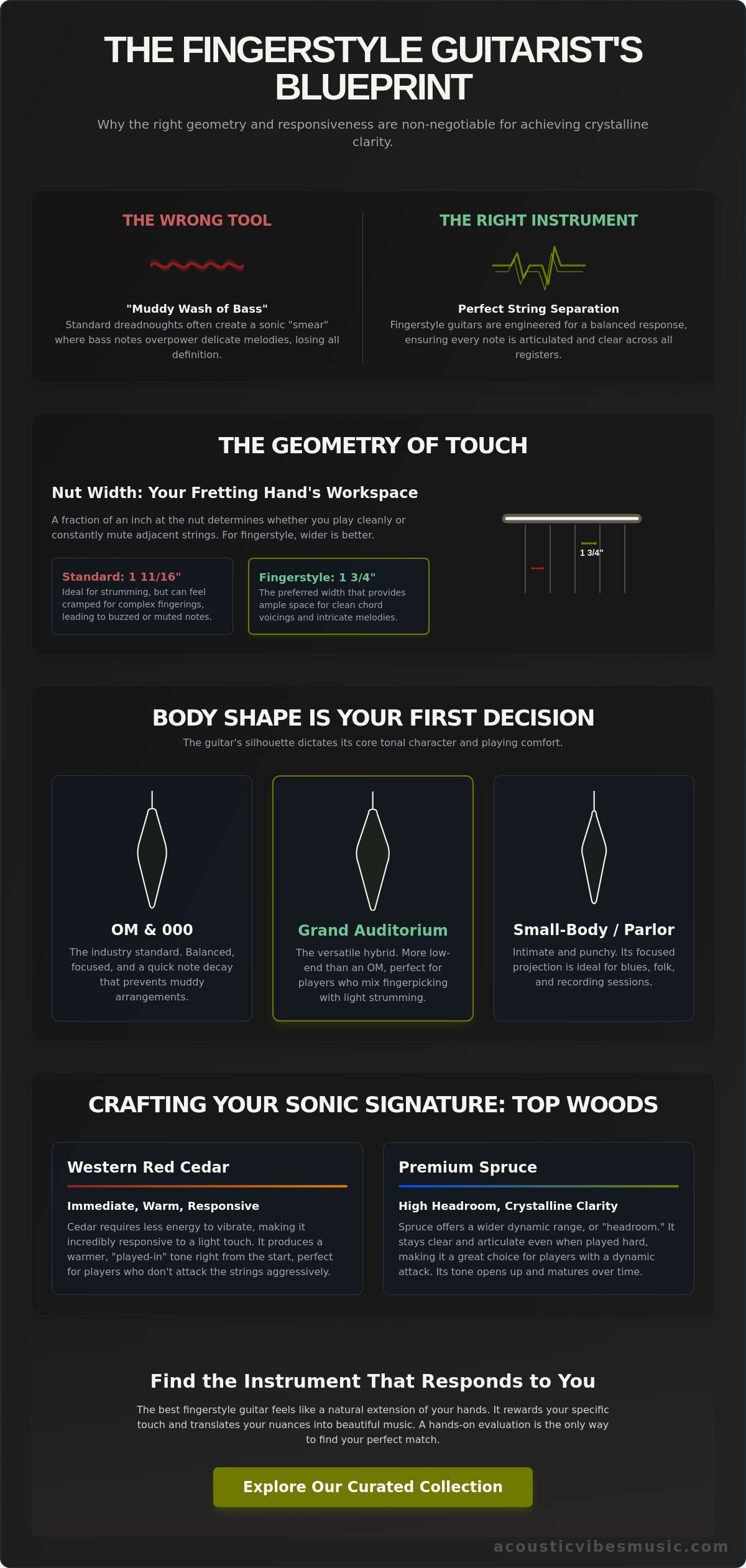
To truly understand what is fingerstyle guitar at a professional level, you have to look past the aesthetics and into the physics of the build. For decades, the dreadnought was king. It's loud, bold, and designed to cut through a bluegrass band. But for a solo fingerstylist, that booming bass is often a handicap. It swallows the delicate treble melodies. The search for the best acoustic guitar for fingerpicking usually leads away from these "all-rounders" toward instruments designed for balance, intimacy, and crystalline clarity.
You need to hear the thumb's bass line and the melody on the high E string as distinct, articulated voices. A guitar with poor separation creates a sonic "smear" where notes bleed into one another. Premium fingerstyle guitars prioritize a flat frequency response where no single string dominates. This is combined with dynamic sensitivity, which is essentially the guitar's "startup speed." While a heavy-strumming guitar needs a stiff top to handle a pick, a fingerstyle tool needs a top that vibrates with the slightest graze of a fingernail. Ergonomics play a massive role too. A narrower waist and shallower body depth allow the instrument to sit closer to your torso, facilitating the complex hand angles required for modern techniques.
It's a common misconception that louder is always better. In reality, high-volume guitars often require significant "input energy" to get the wood moving. If you pluck a stiff-topped guitar lightly, the sound is often thin and choked. For fingerpicking, we look for responsiveness. This is achieved through sophisticated bracing patterns and artisanal thinning of the soundboard. When the instrument reacts to a light touch, it reduces player fatigue. You don't have to fight the guitar to be heard. Instead, the instrument does the work, allowing you to focus on the nuance and emotion of your arrangement.
Your choice of silhouette dictates the core character of your sound and how the guitar feels during long seated sessions. We curate specific shapes that cater to these technical demands.
Finding the best acoustic guitar for fingerpicking is about choosing an instrument that rewards your specific touch. Whether it's the unique "Irish sound" found in Lowden Guitars or the refined precision of a custom shop build, the goal is a transparent connection between your fingers and the air.
Body shape provides the canvas, but the geometry of the neck and bridge determines the ease of your performance. Finding the best acoustic guitar for fingerpicking requires a meticulous look at measurements that most casual players overlook. A fraction of an inch at the nut or saddle can be the difference between a fluid arrangement and a frustrating series of muffled notes. These specs aren't just numbers; they're the physical blueprint of your technical potential.
The industry standard for decades was the 1 11/16-inch nut, which is ideal for tight chord grips and flatpicking. However, fingerstyle players generally prefer a 1 3/4-inch (44.5mm) nut width. This extra space allows your fretting hand to execute complex chord voicings without accidentally muting adjacent strings. If you're transitioning from a nylon-string background, you might even explore a 1 13/16-inch nut. This width offers a spaciousness reminiscent of classical instruments. This physical architecture works in tandem with how tonewoods affect sonic signatures to create a balanced, professional-grade experience.
This is the most critical specification that many guides ignore. While the nut width affects your fretting hand, the string spacing at the bridge dictates how your plucking hand navigates. A standard 2 1/8-inch spacing can feel cramped during rapid-fire passages. Upgrading to an instrument with 2 1/4-inch or 2 5/16-inch spacing at the saddle provides the necessary room for your thumb and fingers to strike cleanly. This wider spread prevents the muddiness that occurs when fingers trip over strings during intricate patterns. It's a hallmark of boutique builds found in our Lowden collection or specialized custom shop pieces.
Scale length also alters the tactile response. A shorter scale, typically around 24.9 inches, reduces string tension. This makes it easier to execute expressive vibrato and large stretches. Conversely, a standard 25.4-inch scale provides the snap and tension required for alternate tunings like DADGAD. When you pair the right scale with a comfortable neck profile, such as a modified V or a slim C, the instrument disappears, leaving only the music. If you're ready to feel this precision firsthand, you can explore our current inventory of high-end acoustics to see how these specifications translate into effortless playability.
Selecting the best acoustic guitar for fingerpicking in 2026 means looking at instruments that offer more than just a famous name on the headstock. It's about finding a tool that responds to your specific touch with surgical precision. While many retail lists focus on entry-level dreadnoughts, our curation highlights boutique builders who treat every soundboard as a unique piece of art. These instruments are designed to answer the question of What Defines the Best Acoustic Guitar for Fingerpicking? through superior voicing and high-end materials. You aren't just buying a guitar; you're investing in a piece of functional art that removes the barriers between your creativity and the audience.
The European approach to lutherie often prioritizes a lush, piano-like sustain and a complex harmonic profile. Lowden guitars are the gold standard for this "Celtic" voice. They utilize a unique A-frame bracing system that allows the soundboard to vibrate with incredible freedom, providing a signature airy quality. For players who prefer a lighter touch, a Cedar-topped Lowden provides immediate warmth and responsiveness. If you're looking for more headroom and punch, Boucher guitars are legendary for their use of master-grade Adirondack spruce. These tops offer a crystalline clarity that ensures every note in a fast-moving fingerstyle arrangement remains distinct and powerful.
American builders continue to lead the market with a mix of traditional craftsmanship and modern innovation. A Martin Custom Shop build takes the iconic OM (Orchestra Model) blueprint and refines it with hand-scalloped bracing and premium tonewoods, offering a significant jump in dynamic range over standard production models. For those who demand absolute perfection in recording, Collings guitars remain the benchmark. Their OM series is famous for unrivaled note-to-note balance, ensuring no string overpowers another during complex chord voicings.
Innovation is also at the forefront of the 2026 market. Taylor guitars have set a new bar with their 2026 "Next Generation" 314ce. This model introduces the "Action Control Neck" and updated scalloped V-Class bracing, which optimizes both volume and intonation across the entire fretboard. For a more intimate experience, the Taylor 812ce uses a 12-fret design that shifts the bridge to the center of the lower bout, creating a sweet, rounded tone that's perfect for delicate fingerpicking. Whether you're drawn to the heritage of a custom Martin or the modern ergonomics of a Taylor, these instruments represent the pinnacle of professional fingerstyle performance.
If the body shape is the canvas, the tonewoods are the palette. Choosing the best acoustic guitar for fingerpicking requires a deep understanding of how specific species of wood translate the vibration of a string into audible art. You aren't just looking for a "good" sound; you're looking for a specific response profile that matches your attack. In 2026, the market is more vibrant than ever, especially with the continued ease of rosewood trade following the 2019 CITES regulation updates which exempt finished instruments. This has allowed builders to once again focus on the "holy grail" combinations that have defined the fingerstyle genre for a century.
The soundboard, or top, is the most critical component of your instrument's voice. It acts as the engine, converting your physical touch into moving air. For many, Sitka Spruce is the default choice. It's reliable and offers a wide dynamic range, making it ideal for hybrid players who switch between nails and a plectrum. However, true fingerstyle specialists often gravitate toward Western Red Cedar. Cedar is less dense than spruce, which means it has a lower "startup energy." It vibrates almost instantly under a light touch, providing a warm, intimate character that feels broken-in from day one.
If you have a more aggressive, percussive style, Adirondack (Red Spruce) might be your perfect match. It offers the highest ceiling for headroom, meaning the sound won't "break up" or compress when you dig in. When evaluating these in person, test the response by plucking a single note at minimal volume. A truly responsive top will bloom even with that tiny amount of energy. This tactile feedback is what separates a standard instrument from a professional tool.
While the top creates the sound, the back and sides shape and color it. Each wood species adds a different flavor to the sustain and harmonic content.
Understanding these nuances helps you narrow down the search for an instrument that feels like a natural extension of your musical voice. To experience how these exotic and traditional woods interact with different bracing patterns, we invite you to browse our curated selection of boutique acoustic guitars and find the sonic signature that resonates with your style.
Specifications and tonewood descriptions provide the map, but the final journey requires your own hands on the strings. Finding the best acoustic guitar for fingerpicking is a deeply personal endeavor that transcends digital research. Every piece of wood is organic and unique. Two identical models from the same production line can possess subtly different personalities. This is why a hands-on evaluation is non-negotiable for the discerning collector. You need to feel the vibration against your chest and hear how the instrument reacts to your specific nail attack and thumb pressure.
When you explore our curated collection of high end acoustic guitars for sale, you aren't just browsing inventory. You're entering a gallery where every instrument has been vetted for its technical merit and emotive potential. A professional environment allows you to compare the surgical precision of a Collings against the lush, airy sustain of a Lowden in real-time. This comparative process is the only way to ensure your investment truly elevates your professional technique.
Listen for the bloom. When you pluck a single note, it shouldn't just vanish. A high-quality fingerstyle guitar allows the note to develop, revealing a complex series of harmonic overtones as it decays. Run your fingers up the fretboard to check for "dead spots" or unevenness in volume. For fingerstyle, consistent string-to-string balance is vital. You also need to assess the neck-to-body transition. If your arrangements involve upper-fret melodies, ensure the heel design and cutaway (if present) allow for fluid movement without straining your hand. These tactile details are the difference between a guitar you admire and one you can't put down.
An heirloom instrument is a lifetime companion. While standard guitars may lose their luster, boutique brands like Boucher or Atkin often appreciate in both tonal character and value. Our role as a passionate curator is to act as your expert guide, helping you navigate the nuances of custom shop appointments and rare wood sets. Once you've selected your instrument, our luthier repair services ensure the action is dialed in perfectly for your touch. A professional setup can lower the strings just enough to prevent fatigue while maintaining the clarity required for aggressive alternate tunings.
Protecting your investment is the final step. High-end acoustics are sensitive to their environment. We always recommend a high-quality hardshell case and consistent humidity control to preserve the wood's integrity for decades to come. Your journey toward professional fingerstyle excellence starts with a single, perfectly balanced chord. Come experience the artistry of premium lutherie and find the voice that has been waiting for your touch.
Finding the best acoustic guitar for fingerpicking is a journey that moves through technical geometry and into the soul of artisanal craftsmanship. You now understand how nut width, string spacing, and responsive tonewoods like Cedar and Rosewood work together to remove the barriers between your creativity and your performance. It's about more than just a purchase. It's an investment in a lifetime of musical discovery and professional growth.
As an Authorized Martin Custom Shop Expert Dealer and an exclusive USA Lowden dealer, we've hand-selected a gallery of instruments that represent the pinnacle of modern lutherie. Our on-site professional luthier services ensure that every instrument leaves our care with a custom setup tailored to your specific touch. Explore our curated collection of premium fingerstyle guitars and feel the difference that expert curation makes. We can't wait to help you find the instrument that inspires your next masterpiece.
A 12-fret guitar is often preferred for solo fingerstyle because moving the bridge to the center of the lower bout creates a warmer, more intimate tone. This design increases the efficiency of the soundboard, resulting in a sweet resonance and richer bass response. While 14-fret models offer better access to the upper registers, the 12-fret configuration provides a unique "bloom" to every note that many specialists find irresistible.
The Orchestra Model (OM) and Grand Concert are the premier choices for players who demand balance and clarity. These shapes provide a focused frequency response that prevents the bass from overwhelming the treble melodies. Unlike larger dreadnoughts, these mid-sized bodies react quickly to a light touch. This makes them the best acoustic guitar for fingerpicking when you need every note in a complex arrangement to stand out with professional definition.
A cutaway is only necessary if your musical repertoire requires frequent access to the frets above the 14th position. Many modern fingerstyle arrangements utilize the entire length of the fretboard for harmonics and high-register melodies, making a cutaway a vital functional feature. If you primarily play in the open position or mid-neck, a non-cutaway body provides a traditional aesthetic and a slightly fuller internal air volume for resonance.
The 1 3/4 inch nut width provides the essential physical space required for clean fretting and complex chord voicings. This extra width prevents your fingers from accidentally muting adjacent strings during intricate passages. While narrower nuts are excellent for strumming, the wider spacing at the nut allows for greater precision. It ensures that open strings ring clearly even when you're navigating dense, harmonically rich fingerboard patterns.
Light-gauge phosphor bronze strings are the industry standard for their perfect balance of warm overtones and manageable tension. Coated strings are also a popular choice because they reduce finger squeak and maintain their tonal brilliance through long practice sessions. Some players prefer silk and steel strings for a softer tactile feel and a mellow, vintage-inspired voice. Choosing the right gauge is a personal decision that depends on your desired volume and hand strength.
You can certainly play fingerstyle on a dreadnought, though you may find it requires more physical effort to drive the larger soundboard. Dreadnoughts are voiced for volume and bass, which can sometimes result in a "muddy" sound where the melody gets lost in the low-end. If you prefer the power of a large body, look for models with scalloped bracing. This modification allows the top to vibrate more freely under the lighter pressure of your fingers.
Scale length determines the amount of tension on the strings and the physical distance between the frets. A shorter scale, typically around 24.9 inches, makes the strings feel more supple and easier to press down or bend. This is often the best acoustic guitar for fingerpicking for players with smaller hands or those who enjoy a "slinky" feel. Longer scales provide more tension and snap, which is beneficial for maintaining clarity when using alternate tunings.
Cedar is generally better for players with a delicate touch, while Spruce is superior for those with a more aggressive attack. Cedar soundboards offer immediate warmth and responsiveness, reacting to the slightest graze of a fingernail. Spruce provides more "headroom," meaning the tone stays clear and punchy even when you play with significant force. Your choice should depend on whether you prioritize an intimate, broken-in sound or dynamic power and projection.