My shopping cart
Your cart is currently empty.
Continue ShoppingIs the vintage aesthetic of slotted peghead guitars just a nod to tradition, or does it hold the key to a superior sonic profile? Many players find themselves drawn to the elegant, open architecture of a slotted headstock. Yet, they often hesitate because of persistent myths about difficult restringing or purely cosmetic benefits. You aren't alone if you've looked at a boutique 12-fret parlor and wondered if that steeper break angle actually translates to the rich, piano-like clarity that enthusiasts rave about.
We're here to settle the debate. This guide explores the mechanical optimization of the slotted design and explains how increased downward pressure on the nut can transform your playing experience. You'll learn to identify which legendary brands, from Martin and Gibson to Collings and Bourgeois, are currently leading the way in premium craftsmanship. Discover the genuine tonal advantages, master the art of the string change, and explore our expert-level inventory to find an instrument that feels like a curated piece of history. Let's dive into the physics and artistry of these exceptional acoustic guitars for the 2026 market.
Step into any high-end guitar gallery, and your eyes will inevitably drift toward the vintage elegance of slotted peghead guitars. This design, characterized by two distinct vertical channels carved through the guitar headstock, represents a bridge between the instrument's classical origins and its modern steel-string evolution. Unlike the standard solid design where strings wrap around vertical posts, a slotted headstock features horizontal posts. These tuners are mounted through the side of the wood, creating a striking architectural look that immediately signals artisanal quality and custom-shop heritage.
Historically, this was the gold standard. Before the mid-1930s, most acoustic instruments followed the classical tradition of the 12-fret neck joint paired with a slotted head. As players demanded more volume and higher string tension for stage performances, the industry shifted toward solid headstocks for manufacturing efficiency. Today, collectors and tone seekers view the return to this design as a mark of excellence. It's a visual shorthand for heritage and meticulous attention to detail. When you see those open slots, you know you're looking at a piece of history refined for the modern ear.
To understand why this matters, you have to look at the hardware. The vertical slots house horizontal tuner posts, requiring specialized side-mounted tuning machines. You'll often find premium hardware from legendary makers like Waverly or Schaller on these builds. These components aren't just for show; they provide a smooth, precise tuning experience that complements the instrument's high-end construction. The tactile response of turning a side-mounted gear feels deliberate. It connects you to the guitar's soul in a way that modern, sealed tuners often can't match. Brands like Martin Guitars and Collings Guitars continue to champion this anatomy for their most resonant, vintage-inspired models.
Beyond the undeniable "vintage" vibe, there are functional differences that affect how the instrument performs in your hands. Consider these mechanical advantages:
Choosing between these designs often comes down to your personal connection with the instrument. If you value a guitar that tells a story through its construction while offering a mechanical edge in string tension, slotted peghead guitars are the ultimate choice for your collection.
The physical architecture of slotted peghead guitars does more than just catch the light; it fundamentally alters the instrument's acoustic footprint. While a solid headstock offers a direct, percussive response, the slotted alternative introduces a sophisticated layer of harmonic complexity. This shift in tone begins at the nut. Because the tuning posts are positioned lower relative to the fingerboard, the strings must bend at a more aggressive angle to reach them. This creates a mechanical advantage that many seasoned players find indispensable for capturing the full voice of their instrument.
The break angle is the critical vector for acoustic resonance. By increasing this angle, the design exerts significantly more downward pressure on the nut, ensuring the string remains seated with absolute stability. This firm contact minimizes energy dissipation. When you strike a note, the response is immediate and vibrant. You'll feel a subtle difference in your fretting hand, too. While the actual tension remains the same as a solid headstock, the increased efficiency in energy transfer often makes the strings feel more "alive" and responsive to a light touch.
Enhanced note clarity is perhaps the most celebrated benefit of this design. Treble frequencies, which are easily dampened by poor contact points, ring out with a piano-like shimmer. This clarity extends across the entire fretboard, providing exceptional note separation during complex chord voicings. It also helps solve common tonal imbalances. For instance, the G and D strings on standard builds can sometimes suffer from a "dead" or muffled quality. Expert luthiers often suggest that players maintain slotted headstocks to ensure these middle strings retain their punch and sustain through consistent downward force.
Fingerstyle enthusiasts often gravitate toward these models for their unique "bloom." While a solid headstock might provide a quick attack, the slotted design offers a more expansive, airy decay. This is partly due to the distribution of mass. Removing wood for the slots lightens the headstock, which can alter the resonance of the entire neck. The result is a guitar that feels less like a tool and more like a breathing entity. If you're looking to explore this nuanced sound, you might find your next inspiration among our curated selection of acoustic guitars, where every instrument is chosen for its exceptional voice.
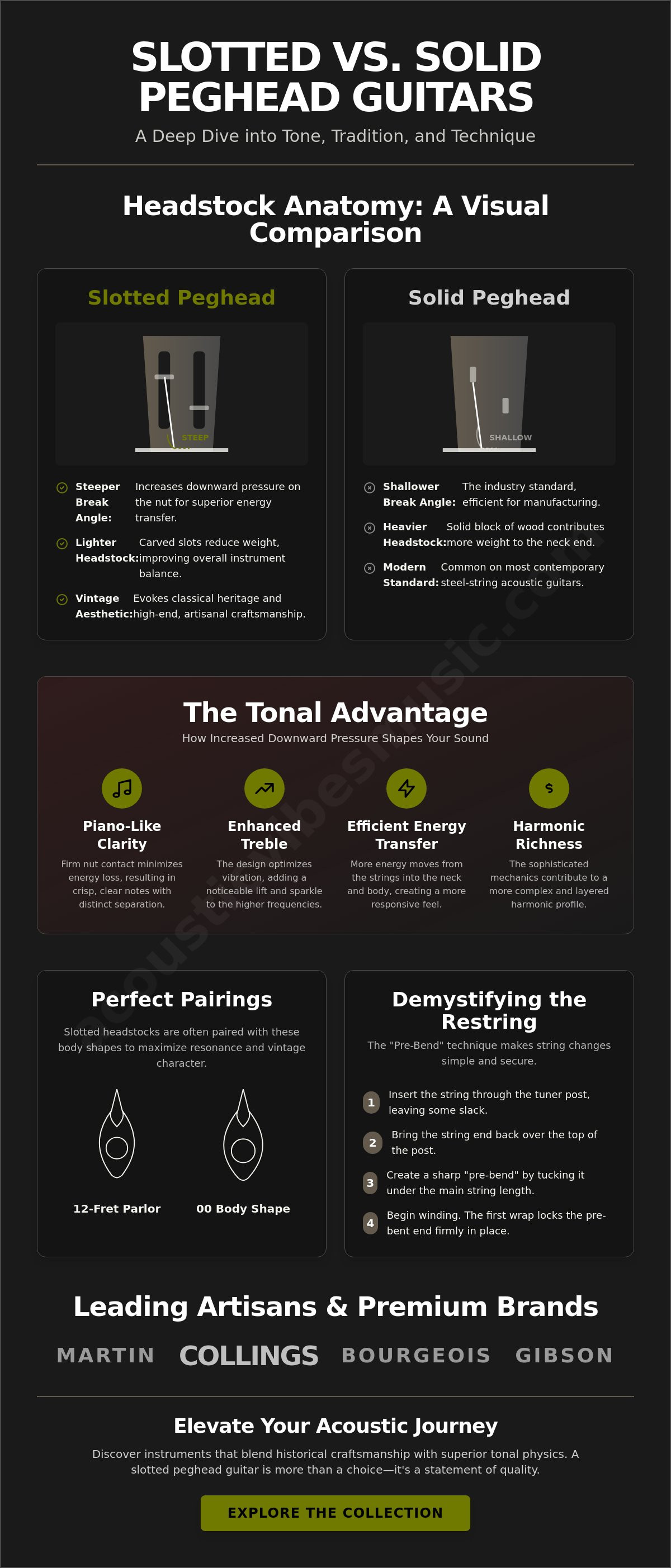
Finding the perfect instrument requires looking beyond the aesthetics. While slotted peghead guitars are visually arresting, their true power is unlocked when paired with the right body architecture. This design is most often found on instruments that prioritize intimacy, resonance, and a specific historical character. Whether you're a dedicated fingerstyle player or a flatpicker looking for a unique edge, understanding how body shape interacts with the headstock is essential for your search.
There is a reason why the slotted headstock is almost synonymous with the 12-fret neck joint. In this configuration, the neck meets the body at the 12th fret rather than the 14th; this requires the bridge to be shifted further back into the center of the lower bout. This "sweet spot" placement allows the bridge to drive the top more efficiently, resulting in a warmer, more expansive voice. When you combine this with the increased break angle of the slotted design, you get a guitar with incredible sustain and harmonic richness. It's the gold standard for traditionalists. Explore our 12-fret and slotted peghead collection to experience this resonant combination firsthand.
Smaller bodies like Parlor and 00 models thrive with this setup. These instruments are built for the nuanced textures of old-time blues and folk. The slotted design adds a level of note separation that prevents these smaller boxes from sounding "boxy," giving them a voice that punches far above their weight. You'll often find these paired with a wider nut width, such as 1 3/4 or 1 13/16 inches. This matching of nut width to the headstock design ensures optimal string spacing for complex fingerstyle work. Conversely, finding a dreadnought with a slotted headstock is rare, but it is a formidable tool for flatpickers. The added downward pressure on the nut provides the stability needed for aggressive picking while maintaining a vintage, sophisticated look that stands out on any stage.
Few builders command the heritage of the Martin Custom Shop. Their artisans frequently revisit the pre-war era, crafting 12-fret masterpieces that define the classic American acoustic sound. If you prefer a blend of precision engineering and vintage soul, Collings Guitars sets an incredibly high bar. Their headstock carvings are legendary for their cleanliness and structural integrity. We also keep a close watch on boutique builders like Atkin and Boucher Guitars. These makers are pushing the boundaries of the design, ensuring that slotted peghead guitars remain a vibrant, evolving part of the modern market.
The most common hesitation we hear from enthusiasts isn't about the tone or the look; it's the fear of the first string change. Don't let the vertical architecture of slotted peghead guitars intimidate you. While the process differs from a standard solid headstock, it isn't inherently more difficult. In fact, many professional techs prefer this design because it allows for a cleaner, more secure string wrap that often results in superior tuning stability once the strings have settled. The secret is moving away from guesswork and adopting a precise, repeatable method.
Mastering this ritual is about preparation. Use a pair of needle-nose pliers and a dedicated string winder to make the process effortless. Follow these steps for a professional finish:
Because these guitars often feature high-end, open-gear hardware like Waverly or Schaller, they require a touch of periodic maintenance. A tiny drop of acid-free lubricant on the worm gears once a year keeps the action smooth and prevents premature wear. Pay close attention to the nut as well. The steeper break angle we discussed earlier means the strings exert more force; if the nut slots aren't perfectly polished, you might experience "binding" or that frustrating "ping" sound while tuning. High-quality tuning machines and a well-cut nut are the non-negotiable bedrock of a reliable slotted headstock. If your current instrument feels stiff or won't hold pitch, it's a great idea to browse our latest arrivals to see how modern boutique builders are perfecting this classic design.
Selecting the right instrument is the final, most rewarding step in your journey toward superior tone. We've explored the physics of the break angle and the heritage of the 12-fret design; now, it's time to look at the specific masterpieces that define the market in 2026. Our collection of slotted peghead guitars is a testament to the enduring appeal of this architecture, ranging from faithful pre-war recreations to forward-thinking boutique builds. Whether you're a seasoned collector or a player looking for your first heirloom-quality piece, these selections represent the pinnacle of current craftsmanship.
For the vintage enthusiast, few instruments carry the weight and authority of a Martin Custom Shop 12-fret build. These guitars often feature premium Adirondack spruce tops and authentic pre-war bracing patterns that allow the top to vibrate with incredible freedom. The tone profile is unmistakable. You get a deep, resonant bass that anchors the sound, paired with shimmering trebles that benefit from the slotted headstock's increased downward pressure. It's a staple for collectors who demand an instrument that sounds as historic as it looks. The tactile experience of the wider neck and the airy resonance of the 000 body shape make it a definitive choice for traditional fingerstyle and vocal accompaniment.
If your tastes lean toward the artisanal and unique, boutique builders are pushing slotted peghead guitars into exciting new territories. Atkin Guitars has gained a massive following for models like "The Forty Three," which uses relic-inspired finishes and specialized bracing to capture a "broken-in" feel right out of the case. Their slotted models offer a punchy, dry vintage character that's perfect for recording.
On the other end of the spectrum, Lowden Guitars provides a modern, sophisticated take on the design. Known for their unique A-frame bracing and dolphin-profile voicing, Lowden instruments with slotted headstocks are favorites among Celtic and modern fingerstyle players. The design choices here emphasize harmonic complexity and a lush, piano-like sustain that fills the room. For those seeking investment-grade quality with a modern edge, Collings Guitars continues to set the standard for precision engineering, ensuring every slot and tuner post is a work of structural art. Explore our full range of acoustic guitars to find the specific voice that resonates with your musical soul.
The path to a truly distinctive sound often leads back to the elegant heritage of slotted peghead guitars. As we have explored, this design is far more than a vintage aesthetic. It is a deliberate mechanical optimization that provides superior break angles, enhanced note clarity, and a resonant bloom that standard headstocks rarely achieve. By mastering simple restringing techniques and understanding the synergy of the 12-fret body, you unlock an instrument that feels like a natural extension of your musical voice.
We invite you to experience this artistry firsthand. As an authorized dealer for the Martin Custom Shop, Collings, and Lowden, we hand-select every instrument to ensure it meets our rigorous standards for tone and playability. Every guitar in our gallery receives an expert in-house luthier setup before it leaves our shop. With our professional packing and reliable nationwide shipping, your next heirloom-quality discovery is ready for its new home. Browse our curated collection of 100+ Slotted Peghead Guitars and find the instrument that inspires your next masterpiece. We can't wait to help you find your perfect match.
Restringing isn't harder; it simply follows a different mechanical logic. Once you master the "L-hook" and the inside-out threading method, the process is just as fast as a solid headstock. Many players find the horizontal posts actually provide a more secure anchor for the string. It's a satisfying ritual that connects you deeper to the instrument's vintage engineering and rewards you with a tidy, professional look.
"Better" depends on your tonal goals, but slotted peghead guitars offer undeniable mechanical benefits. The steeper break angle increases downward pressure on the nut, which enhances note separation and treble shimmer. This design creates a more "airy" resonance and a piano-like clarity that fingerstyle players often prefer. It provides a sophisticated harmonic bloom that stands in contrast to the punchier, more direct attack of a solid headstock.
Classical guitars utilize this design because it accommodates the thicker diameter of nylon strings and the traditional side-mounted rollers. The slotted architecture allows for a more consistent break angle across the nut, which is crucial for the lower tension of nylon. It's a heritage design that has proven its reliability and acoustic efficiency for centuries. Modern steel-string builders adapted this look to capture that same vintage elegance and resonance.
You cannot use standard vertical tuners because the geometry is entirely different. Slotted headstocks require specialized side-mounted tuning machines where the gears and posts are oriented horizontally. High-end brands like Waverly and Schaller produce premium open-gear hardware specifically for these builds. These components are precision-engineered to handle the specific tension and mounting requirements of the slotted channels, ensuring smooth and reliable tuning for years to come.
Removing wood to create the slots significantly reduces the physical mass of the headstock. This change shifts the instrument's center of gravity slightly toward the body, which can make the guitar feel more balanced and ergonomic. Many players find this particularly beneficial on smaller body shapes like parlors or 00 models. It prevents the "neck-heavy" feel common in some modern builds, allowing for a more comfortable and natural playing position.
Most slotted peghead guitars thrive with light or custom-light gauges to maximize their resonant, airy qualities. However, the design's increased downward pressure means you can often achieve great results with medium strings if the bracing allows. Always consult the specific manufacturer's recommendations. Boutique builders like Collings or Atkin voice their instruments for specific tensions to ensure the top vibrates with optimal efficiency and harmonic richness.
There is no evidence that this design is more fragile than a solid headstock when crafted by expert luthiers. While the wood is carved out, the remaining "pillars" are robust and reinforced by the metal tuner plates. As long as you avoid extreme impact, a slotted headstock will last a lifetime. The side-mounted hardware often adds a level of structural reinforcement to the grain, making it a reliable choice for touring professionals.
Legendary names like Martin and Collings are the gold standard for traditional 12-fret slotted models. For a more modern or boutique flair, builders like Lowden and Atkin offer incredible precision and unique tonal voicing. We also see exceptional work from Boucher and Bourgeois, who use the design to maximize the projection of their high-grade spruce tops. Each brand brings a unique philosophy and reverence to this classic architectural feature.