My shopping cart
Your cart is currently empty.
Continue ShoppingCould the safest place for your banjo be somewhere other than a display stand? If you’re wondering how to store a banjo between sessions, the answer depends on how long it will sit, the room around it, and how well it’s supported. A few consistent habits help protect the neck, finish, and head while keeping the instrument ready to play.
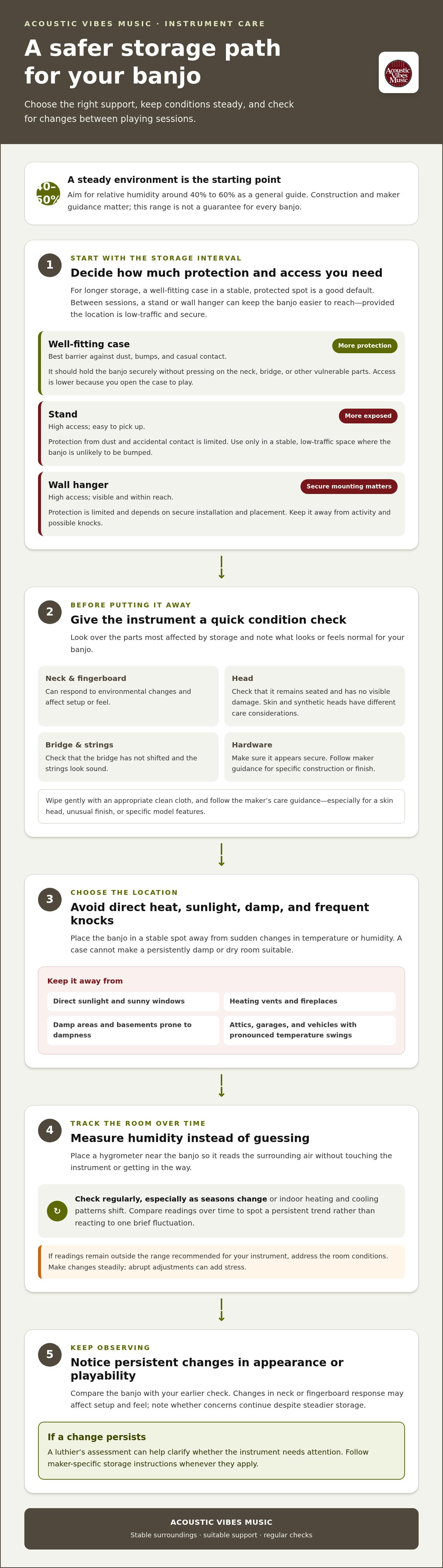
Keeping your banjo close at hand is convenient, but changes in humidity, heat, sunlight, and accidental bumps can affect its condition. Aim for steady surroundings, with relative humidity around 40% to 60%, and choose between a secure stand for short breaks and a case for longer storage.
This guide explains how to store a banjo safely in its case or on display, where to place it, and what to watch for as conditions shift. You’ll learn how to reduce strain on the neck, protect different banjo heads and finishes, and recognize when a storage-related change may need a luthier’s attention.
Protect your banjo from knocks and abrupt environmental changes. The safest place isn’t simply wherever the instrument is out of sight. Choose a stable spot where it won’t be bumped, crowded, or exposed to sudden shifts in heat or humidity. Use a suitable case, secure stand, or properly installed wall hanger based on how long the banjo will be stored and how much activity there is nearby.
A banjo combines wood, metal, strings, and a tensioned head, and these materials can respond differently to their surroundings. The neck and fingerboard may shift as conditions change, affecting the instrument’s setup and feel. For an overview of modern banjo construction, note the combination of a wooden neck, metal components, and a head made from skin or synthetic material. Follow the maker’s care guidance for your instrument, especially if it has a skin head, unusual finish, or other specific features.
Good storage reduces impact risks, limits unnecessary environmental swings, and makes it easier to spot changes. Before putting the banjo away, look over its head, bridge, strings, and hardware. A quick check gives you a familiar point of reference if the instrument’s appearance or feel changes later.
Pay particular attention to the neck and fingerboard, which may respond to changes in the surrounding environment. Check that the head remains seated and free of visible damage, the bridge hasn’t shifted, the strings look sound, and the hardware appears secure. Skin and synthetic heads have different care considerations, so follow the guidance for your banjo’s specific head and construction rather than assuming one rule suits every instrument.
A closed, well-fitting case helps shield a banjo from dust and accidental knocks, making it a strong choice for longer storage. It should hold the instrument securely without pressing on the neck, bridge, or other vulnerable parts. A stand or wall hanger offers easier access between sessions, but use one only in a stable, low-traffic space where the instrument is unlikely to be bumped.
For longer storage, a well-fitting case in a stable, protected spot is a good default. Whichever option you choose, keep the banjo away from hazards and follow any model-specific storage instructions from its maker.
Wood responds to its surroundings. As humidity rises or falls, the neck and fingerboard can expand or contract, potentially changing the banjo’s setup and feel. Temperature swings can also add stress, especially when an instrument moves quickly between a hot or cold space and a more moderate one. The goal isn’t to make conditions perfect. It’s to avoid sharp, repeated changes and keep the banjo in a steady environment.
There isn’t one humidity level that guarantees ideal care for every banjo. Construction matters, including the wood, finish, and whether the head is skin or synthetic. Treat general instrument-care ranges as a guide, not a promise, and follow the maker’s instructions when they provide specific advice for your model. A measured reading is more useful than guessing from how a room feels.
Place a hygrometer near the banjo, where it can read the surrounding air without touching the instrument or getting in the way. Check it regularly, particularly as seasons change or indoor heating and cooling patterns shift. Comparing readings over time helps you spot a persistent trend instead of reacting to one brief fluctuation.
A case may soften short-term changes around a banjo, but it can’t correct a room that stays persistently too damp or too dry. If readings remain outside the range recommended for your instrument, address the room conditions rather than relying on the case alone. Avoid abrupt adjustments, too. Steady changes are gentler on the instrument.
Keep the banjo away from direct sunlight, heating vents, fireplaces, and damp areas. A sunny window can warm it unevenly, while a nearby heat source may dry or heat it quickly. Basements can be prone to dampness, and attics, garages, and vehicles can experience pronounced temperature swings. These spaces are poor choices for routine storage, even when the banjo is inside a case.
Consistent conditions are the foundation of consistent instrument care. Keep the banjo in a room that stays comfortable and stable, and check humidity there instead of relying on appearances. If changes in the instrument’s feel persist despite steadier storage, professional assessment can help clarify whether it needs attention. Acoustic Vibes Music offers professional instrument repair and maintenance for banjos and other stringed instruments. Learn about professional banjo care.
Choosing how to store a banjo comes down to how much protection it needs and how often you want it within reach. A case limits dust and accidental contact, while a stand or wall hanger keeps the instrument ready to play. Neither option makes a poor storage location safe: room conditions still matter, and any support must suit the banjo’s shape and construction.
| Storage option | Protection | Access |
|---|---|---|
| Hard case | Best barrier against dust, bumps, and casual contact | Lower; open the case to play |
| Stand | Limited protection; the banjo remains exposed | High; easy to pick up |
| Wall hanger | Limited protection; depends on secure mounting and placement | High; visible and within reach |
A case should support the banjo securely so it doesn’t shift around, while avoiding pressure on the neck, bridge, head, or other vulnerable parts. A well-fitting, closed case helps keep off dust and reduces the chance of an accidental knock. If the instrument rocks, feels pinched, or sits under pressure when the case is closed, the fit isn’t protective. Follow the instrument maker’s and case maker’s storage instructions, including guidance on case position.
A case isn’t climate control. A damp, overheated, or rapidly changing storage area remains unsuitable, even with the banjo enclosed. Think of the case as a physical buffer, not a substitute for choosing a stable room.
Display storage can work well in a stable room when the support is secure and correctly fitted for the instrument. Place a stand on level ground, or mount a hanger firmly according to its instructions. Keep the banjo out of walkways and door swings, and beyond the reach of children or pets. Avoid spots near windows, heat sources, and damp areas.
Choose a setup that suits your space and habits, then check it periodically. Stands can be nudged, and mounts can loosen. A visible instrument is convenient, but it’s also more exposed to knocks and room conditions. For a longer break from playing, a well-fitting case in a suitable room offers more protection.
A brief routine after playing helps you notice small changes before they become harder to assess. Keep it gentle: don’t force parts into place or make adjustments just because the banjo is going into storage. Whether you’re packing up after a lively traditional session—like the Irish tenor banjo playing featured on paraicbanjo.com—or stepping away for a longer break, use these steps as a starting point and follow any care instructions specific to your instrument.
That’s enough for routine care. Avoid trying to correct a loose component or persistent rattle by tightening hardware without knowing what’s causing it. Note the change and seek an assessment if it continues or worsens.
Make visual checks part of your regular playing or storage habits rather than relying on a universal schedule. Take a closer look after a major change in room conditions, such as the start of a heating season or a move to a different storage space. If you monitor humidity, compare readings over time instead of reacting to a single measurement.
Look for changes in the neck or finish, an altered-looking head, a shifted bridge, or hardware that appears loose. Notice whether the banjo feels or sounds different when you play it again, but don’t assume a particular symptom proves damage. A brief note about when you noticed a change can help a technician assess it. For a persistent concern, learn about professional banjo maintenance.
A banjo can feel or sound a little different as seasons and room conditions change. A temporary shift doesn’t automatically mean something is damaged, but a change that persists, worsens, or affects playability deserves attention. Knowing how to store a banjo helps reduce avoidable stress and makes it easier to notice when the instrument may need an expert assessment.
Keep an eye out for changes such as:
These signs can have several possible causes. A buzz, for example, doesn’t identify a specific fault by itself, and a seasonal change in feel isn’t proof of structural damage. Note what changed and when, and avoid diagnosing the instrument from one symptom alone.
Don’t force the neck, head, or bridge into a new position or make an unfamiliar adjustment to “correct” a change. Banjo construction and setup vary, and an improvised adjustment can create additional problems. If an issue persists or becomes more pronounced, an instrument-specific evaluation is a safer next step.
Professional maintenance isn’t a fixed requirement for every owner. Consider it when a concern remains after conditions have stabilized, playability has changed noticeably, or you see a crack, loose bridge, or another visible issue. A luthier can assess the instrument as a whole and determine whether it needs an adjustment or repair, rather than relying on guesswork.
Acoustic Vibes Music provides professional repair and maintenance for stringed instruments, including banjos, by appointment. Read more about professional care at Acoustic Vibes Music.
Good storage is about consistency, not simply putting your banjo away. Keep it somewhere protected from knocks and abrupt changes in temperature or humidity. Use a case for longer breaks or a secure stand in a calm, low-traffic room. A hygrometer can help you track conditions instead of relying on guesswork.
A gentle wipe and a quick look at the neck, head, bridge, and hardware make a practical end-of-session routine. Follow the care guidance for your particular banjo, and pay attention to changes that persist or worsen. Buzzing, visible cracks, a loose bridge, or an unexpected shift in playability can have different causes. Avoid forcing adjustments and seek an instrument-specific assessment when needed.
Whether you’re caring for a new instrument or one with years of music behind it, thoughtful habits help preserve its tone and playability. Acoustic Vibes Music sells banjos and other acoustic instruments and offers professional stringed-instrument repair and maintenance by appointment. Explore Acoustic Vibes Music for instruments and professional care.
Yes, a well-fitting case is a protective choice, especially for longer breaks or when the instrument could be bumped. It helps shield the banjo from dust and accidental contact, but shouldn’t press on the neck, bridge, head, or other delicate parts. Store the case as its maker and your banjo’s maker recommend, in a room with stable conditions. A case won’t make a damp or overheated space suitable.
As general guidance for wooden instruments, a relative humidity range of 40% to 60% is often recommended, but it isn’t a guarantee or a universal target for every banjo. Construction, finish, and head material can affect care needs, so follow the maker’s instructions for your instrument. Use a hygrometer near the storage spot and watch readings over time. Don’t rely on how the room feels or react to one brief fluctuation.
Yes, a wall hanger can be suitable if it’s securely mounted, correctly fitted, and placed in a stable, low-traffic room. Keep the banjo away from door swings, walkways, children, pets, direct sunlight, and heat sources. A hanger makes the instrument easy to reach, but leaves it exposed to dust and accidental knocks. It also doesn’t control humidity, so keep monitoring room conditions.
Don’t loosen the strings automatically just because you’re putting the banjo away. Follow the instrument maker’s guidance, particularly if you’re preparing it for an extended break, since recommendations can vary by instrument. For ordinary storage, avoid changing the tuning or setup without a clear reason. If the banjo develops a persistent change in feel or playability, have it assessed rather than trying to solve the issue by altering string tension.
No, a garage or car is generally a poor storage choice because temperatures can swing sharply, and garages may also become damp. Similar caution applies to attics and other spaces without stable conditions. A case can protect against bumps and dust, but it can’t make an unsuitable environment safe. Keep the banjo in a room that stays comfortable and steady, away from direct sun, fireplaces, and heating vents.
For a longer break, gently wipe the banjo with an appropriate clean cloth, check for visible changes, then place it in a well-fitting case without forcing any part into position. Follow the instrument and case makers’ instructions for storage and case placement. Choose a stable room, track humidity readings, and inspect the instrument periodically, especially after indoor conditions shift. Don’t loosen strings unless the maker recommends it.
Yes, prolonged or repeated changes in humidity can affect the wooden parts of a banjo and may alter its setup or playability. Head material and instrument construction also matter, so a change in sound or feel doesn’t identify the cause by itself. Monitor readings with a hygrometer and aim for steady conditions, using 40% to 60% relative humidity only as general wooden-instrument guidance. Seek an assessment for persistent or worsening changes.