My shopping cart
Your cart is currently empty.
Continue ShoppingThe most famous name on a ukulele’s headstock might not be the one that feels or sounds right in your hands. When comparing high-end ukulele brands, reputation is a useful starting point, but the details matter more: how the instrument is built, the voice its materials produce, and whether its size and feel suit your playing.
It’s understandable to look to respected makers for reassurance, especially when craftsmanship can be hard to judge from specifications alone. This guide compares established Hawaiian makers such as Kamaka, Kanile’a, and KoAloha with mainland names including Martin and Collings, while also considering custom builders and more accessible, feature-rich options. You’ll learn what to listen and look for, how soprano, concert, and tenor sizes can shape the playing experience, and why setup and ongoing care belong in the decision. Use the comparisons to build a shortlist, then audition instruments where you can. Choose for your sound, hands, and needs, not prestige alone.
A high-end ukulele brand earns consideration through the quality and consistency of its instruments, not simply a celebrated name or premium positioning. Look at material selection, workmanship, setup, and available support after purchase. Then judge whether the specific instrument suits your hands, sound preferences, and intended use.
A high-end ukulele brand is one whose instruments show considered material choices, careful construction, reliable quality, and player-focused support, while still needing to prove their fit one instrument at a time. Solid-wood construction can be a useful point of comparison with laminate construction, but neither a material label nor a maker’s reputation tells the whole story. The history of the ukulele offers helpful background on the instrument’s construction and materials. For a specific purchase, verify the details of the exact model.
Body materials and construction influence how an instrument responds and resonates, contributing to its character. Solid wood and laminates are built differently, but “solid” alone isn’t a guarantee of superior sound or workmanship. Examine the finish and visible joints, and ask how the body is constructed. Confirm the wood, joinery, finish, and production method for the model and production year you’re considering.
Separate a maker’s general approach from the specifications of a particular model. A company may offer instruments with different materials, construction methods, or levels of handwork across its range. Don’t assume every model shares the same features. Check maker or retailer documentation, especially if you’re considering a pre-owned instrument with an uncertain history.
No. Brand recognition can help you identify makers worth researching, but it can’t tell you whether a particular ukulele feels comfortable, sounds appealing, or is in good condition. Assess the instrument itself: inspect its condition, check the setup, and play it if possible. Notice whether the neck and body feel comfortable and whether its sound suits your playing.
Think about intended use, too. An instrument for frequent travel may need to meet different practical priorities than one chosen for a particular repertoire or home playing. A respected maker may be an excellent fit for one player and not another. Compare individual instruments on their merits, and check what repair or after-sale support is available before deciding. Prestige can narrow the search. Your ears and hands should make the final call.
Start with makers that offer different histories and approaches, then compare actual instruments rather than assuming a name tells you how one will sound. Kamaka, KoAloha, and Kanile’a are Hawaiian makers associated with the island’s ukulele tradition. For cultural and historical context, the University of Hawai‘i Press offers a scholarly history of the 'ukulele. Origin is meaningful, but it isn’t a quality guarantee.
Brand character is a useful guide to what you might explore, but each ukulele remains an individual instrument. The comparison below lists documented examples and notes where model-specific details need checking. Available ranges can change, so confirm current specifications with the maker or retailer before deciding.
| Maker | Origin and documented example | Construction and sound | Size |
|---|---|---|---|
| Kamaka | Hawaiian maker; documented examples include the HF-3 and a deluxe HF-3 variation. | Confirm materials and construction for the chosen model. Listen to the individual instrument rather than relying on a general sound label. | Tenor |
| KoAloha | Hawaiian maker; the KCM-00 is a documented example. | Verify construction details for the exact instrument. Compare its resonance, projection, and tonal balance in an audition. | Concert |
| Kanile’a | Hawaiian maker; documented examples include Koa tenor models. | Check the specific model’s materials and production details. Treat sound impressions as tendencies, not promises. | Tenor |
| Pono | Comparison candidate; verify current range, origin, and model details before shortlisting. | Confirm construction and listen to a specific instrument. Don’t infer its character from the brand name. | Verify by model |
| Romero Creations | Comparison candidate; verify current models and production details with the maker or retailer. | Check materials and construction for the particular instrument, then assess its sound directly. | Verify by model |
Kamaka, KoAloha, and Kanile’a give players distinct makers to research within Hawai‘i’s ukulele-making tradition. A scholarly history can deepen your understanding of that heritage, but it can’t predict the feel or voice of a specific instrument. Use each maker’s current model information as a starting point, then listen for the response and tone you enjoy.
Pono and Romero Creations are worth investigating, but confirm their current ranges and construction details before comparing them with the examples above. A specialist retailer can also help you evaluate instruments hands-on. Acoustic Vibes Music offers ukuleles and new and pre-owned instruments. Check its current inventory before assuming any named maker is available.
A useful comparison starts with the player, not the logo. Match the instrument’s sound and feel to the player before weighing reputation. Compare candidates under similar conditions, then consider which maker’s instruments meet your needs.
Size affects reach, body comfort, and the space between frets. Soprano ukuleles are the most compact; concert and tenor bodies and fretboards are progressively larger, while baritones are larger again. Those differences can affect how comfortably you hold chords and move along the neck. The best size depends on your hands, posture, and playing goals, not a hierarchy of quality.
Soprano, concert, and tenor instruments commonly use G-C-E-A tuning, while baritone ukuleles commonly use D-G-B-E. Tuning can vary, so check the instrument’s setup and intended tuning before comparing it with another. Try more than one size if possible. Play familiar chords and melodies, and notice whether your fretting hand can reach comfortably and your picking hand rests naturally.
Listen as well as look. Play the same short passage on each instrument, with the same tuning and in the same room. Compare projection, sustain, and balance across strings. Ask yourself whether you prefer a bright, direct voice or a warmer, rounder one. Recordings can help with initial research, but microphone placement and the room affect what you hear. Use them to shortlist, not to replace an audition.
Work through a practical check:
Use the same tuning, musical passage, and listening conditions for each audition. A qualified retailer or repair specialist can help assess setup and condition, but your comfort and ears matter too. For a broader look at Hawaiian maker traditions before you listen, read Ukulele Magazine’s profile of Hawaii’s distinguished ukulele builders. You can also explore Acoustic Vibes Music’s ukulele selection as another place to consider instruments and their individual feel.
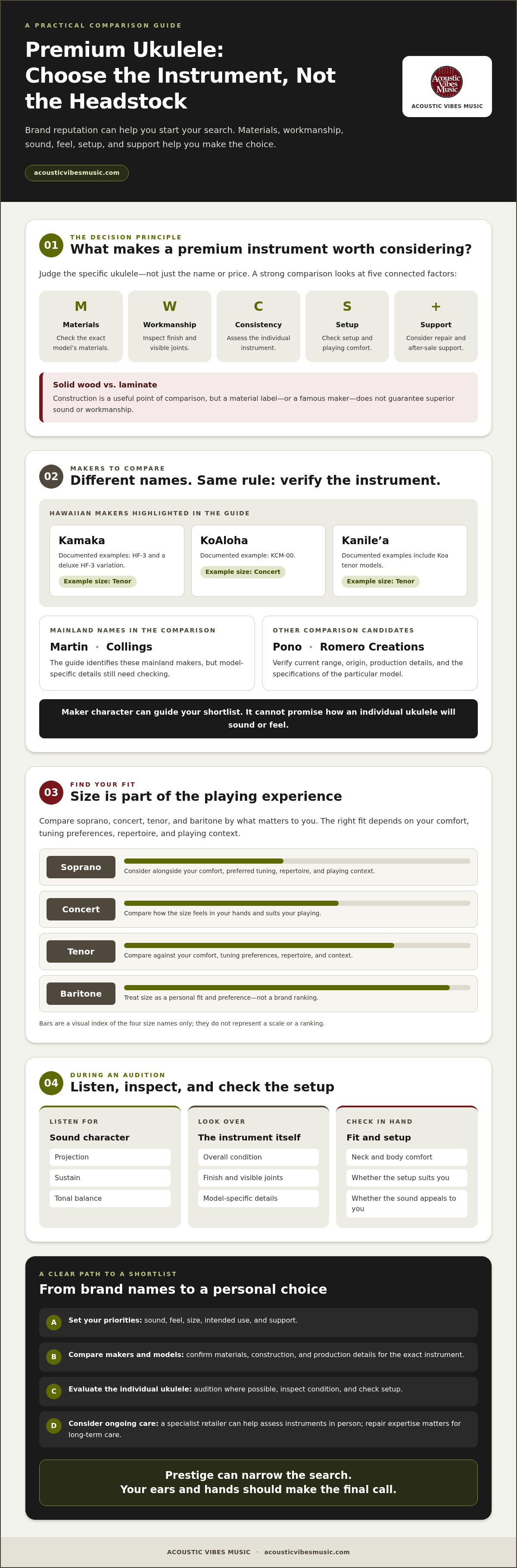
A focused shortlist makes it easier to compare high-end ukulele brands without getting swept up in reputation or decorative details. Work from your needs toward the instrument: define how you’ll play, choose a comfortable size, identify makers with relevant verified models, audition candidates, and check the condition of the one you may buy.
Start with the music you play and the qualities you value. Write down your preferred sound, size, construction, and whether you’re open to pre-owned instruments. Use the comparison table as a research starting point, then verify each candidate’s current specifications with the maker or seller. Keep an alternative maker on your list, even if you already have a favorite. A side-by-side audition can reveal that your preferences are more flexible, or more specific, than you expected.
Next, compare actual instruments rather than model descriptions alone. If you can audition them, play the same passage and listen for the qualities that matter to you. If you can’t, gather enough detail to make an informed decision before placing an order.
A prestigious name doesn’t remove the need to check setup, feel, or condition. Ask the seller for clear answers before committing, especially when you can’t play the ukulele first:
Think beyond the initial purchase. Consider the case and accessories you may need, potential setup or repair work, and how you’ll care for the instrument over time. For pre-owned options, ask about maintenance history and whether a repair specialist has assessed its condition.
Ready to compare candidates? Explore Acoustic Vibes Music’s ukulele selection and confirm current inventory and instrument details before relying on a specific brand or model being available.
Maker descriptions can point you toward a sound or style, but an individual ukulele is what you’ll actually play. A specialist retailer can help you compare instruments in person, notice differences in comfort and response, and ask practical questions about setup and condition. That guidance is especially useful when two instruments look similar on paper but feel distinct in your hands.
Hands-on comparison turns broad preferences into useful observations. Try the same chords or short passage on each instrument. Does the neck feel comfortable? Do the strings respond evenly? Does the voice have the projection and sustain you want? A specialist can demonstrate differences in playability and setup, while helping you assess whether an instrument’s condition deserves a closer look.
Acoustic Vibes Music is a specialist retailer offering ukuleles, including new and pre-owned instruments, and professional stringed-instrument repair and maintenance by appointment. Repair expertise can be a helpful consideration as you think about instrument care over time. Ask what support is appropriate for the particular instrument; don’t assume every repair or adjustment applies to every ukulele.
Return to your shortlist and compare specific instruments against the priorities you set: size, sound, construction, comfort, and condition. A brand can guide your research, but the right choice still depends on the instrument itself and how it works for you. The high-end ukulele brands you’ve researched are a starting point, not a substitute for checking the details.
Before visiting or purchasing online, verify current inventory directly with the retailer. Ask which ukuleles are available and confirm the maker, model, size, condition, setup information, and any included items for each candidate. If you’re considering a pre-owned instrument, request condition details and ask about its maintenance history. For an online purchase, review return terms and available after-sale assistance before deciding.
Bring your questions and compare with care. Explore Acoustic Vibes Music and ask about its current ukulele selection to find out what may fit your shortlist.
The strongest choice among high-end ukulele brands isn’t automatically the most famous maker. Let craftsmanship guide your research, then compare the individual instrument’s sound, size, setup, and condition against the way you play. A careful audition, or clear answers from a retailer when buying online, can turn a shortlist into a confident decision.
Keep your priorities close: comfort matters, tonal character is personal, and the details of a specific instrument matter more than assumptions about a brand. Also consider the support you may need after purchase, including repair and maintenance.
Acoustic Vibes Music is a specialist acoustic instrument retailer offering ukuleles, new and pre-owned instruments, and professional repair and maintenance by appointment. Explore Acoustic Vibes Music and ask about its current ukulele selection and the details of any instrument you’re considering. Take your time, trust your ears and hands, and enjoy finding a ukulele that inspires you to play.
There’s no single best maker for every player, but Kamaka, KoAloha, and Kanile’a are respected Hawaiian names worth researching. Martin and Collings offer other established points of comparison, while Pono and Romero Creations may also merit a closer look. Treat this as a shortlist, not a ranking. Confirm each maker’s current ukulele range and compare specific instruments for sound, construction, setup, condition, and comfort.
No. Hawaiian makers have a deep connection to the instrument’s cultural history, and that heritage can be an important part of a buyer’s choice. It doesn’t guarantee that a particular ukulele will be better for you than one made elsewhere. Compare individual instruments by craftsmanship, condition, setup, feel, and sound. Let origin inform your research, then trust your playing experience to guide the decision.
There’s no universal spending threshold for a high-end ukulele. Premium instruments span a broad range, and price alone can’t confirm quality or personal fit. Set a budget that accounts for the instrument and any case, accessories, setup, or future maintenance you may need. Then compare verified specifications, condition, and sound among instruments within your budget. If buying pre-owned, ask about its history and any work it may need.
A high-end ukulele combines considered material choices, careful workmanship, consistent construction, a suitable setup, and useful support after purchase. Solid-wood construction may be one factor, but it doesn’t guarantee an instrument will sound or feel better to every player. Check the specific model’s materials and construction, inspect its finish and fretwork, and assess playability and condition. A maker’s reputation is a helpful research clue, not proof of quality in one instrument.
Yes. A beginner can choose a premium ukulele if it feels comfortable, suits their goals, and fits their budget. Higher-end features aren’t necessary for learning, though a well-set-up instrument may make practice more enjoyable. Try different sizes if possible, and check that chords feel manageable and notes sound clear. Beginners should also consider care and maintenance needs before choosing an instrument, rather than assuming the most prestigious option is the best starting point.
Choose by comfort, tuning, and the music you want to play. Concert and tenor ukuleles are commonly tuned G-C-E-A, while baritone instruments commonly use D-G-B-E, though you should confirm an instrument’s actual setup. Their different body and fretboard sizes affect feel and reach. Try each size with familiar chords and melodies, and consider how its tuning fits your repertoire. No size is universally best; let comfort and musical goals lead.
A handmade ukulele can be worthwhile if its craftsmanship, materials, sound, and feel match what you value. Handwork alone doesn’t guarantee that an instrument will suit your playing or outperform every production-made alternative. Compare it with other instruments, check construction and setup, and consider the maker’s support and the instrument’s care needs. If you can’t audition it, request clear current photos, condition details, and the seller’s return terms before buying.