My shopping cart
Your cart is currently empty.
Continue ShoppingThe biggest acoustic guitar isn’t automatically the fullest sounding choice, and the smallest isn’t always the most comfortable. Dreadnought, Concert, and Jumbo are useful labels, but they aren’t a universal size chart: proportions vary by maker, and measurements on a screen don’t always show how a guitar will feel in your lap. If those names and numbers leave you unsure where to start, you’re not alone. Guitar body shapes and sizes explained in practical terms can make the choice more straightforward.
The right fit depends on more than a label. Body width, depth, and overall proportions affect how comfortably you hold a guitar, while shape works alongside tonewoods and construction to influence sound. This guide covers common acoustic body styles and size terminology, explains how dimensions relate to playing position and tonal character, and outlines what to compare when choosing. You’ll have a clearer idea of what to look for, and why trying a guitar in your usual playing position can tell you more than its name alone.
Body shape describes the outline and proportions of an acoustic guitar’s body. Body size refers to its physical dimensions, such as width, length, and depth. Neck dimensions, including nut width and string spacing, are separate measurements that affect how the neck feels in your hand. These details work together, but one can’t stand in for another.
Parlor, concert, OM, auditorium, dreadnought, and jumbo are familiar names for broad body designs. They’re a useful starting point, not a universal measuring system. A shape name may describe a general design, but exact dimensions depend on the manufacturer. For an overview of common types, see Acoustic guitar body shapes. Understanding that distinction is central to having guitar body shapes and sizes explained in a way that helps you compare actual instruments.
Look at the guitar from the front. The upper bout is the section around the shoulders, nearest the neck. The lower bout is the broader section near the bridge. Between them, the waist is the narrower curve. Body depth describes the thickness from the back to the soundboard, best seen from the side.
Simple body guide, viewed from the front:
Neck end → upper bout (shoulders) → waist (narrow middle) → lower bout (lower body)
Side view: body depth is measured from the soundboard to the back.
These landmarks help you interpret descriptions and compare proportions. Still, two guitars with the same label may differ in bout widths, waist shape, or depth. Compare the published measurements rather than assuming a name guarantees a particular fit.
No. Body dimensions describe the body itself, while scale length is the vibrating length of a string, measured from the nut to the bridge saddle. Scale length relates to string feel and tension, not body size. Nut width and string spacing describe the layout of the strings across the neck, which can influence fretting and picking comfort.
Keep these measurements in separate columns when comparing instruments online. A smaller body doesn’t automatically mean a shorter scale or narrower neck. Check each specification, then use the guitar’s shape name as context rather than as a substitute for the numbers.
A guitar’s proportions shape how it rests against you. A wider lower bout takes up more space across your lap, while a deeper body may feel bulkier against your torso or place your picking arm at a different angle. Body length can also affect where the instrument sits. These are tendencies, not rules: posture, strap height, and playing position all influence whether a particular guitar feels comfortable.
Size can influence sound, too, because the body resonates as the strings vibrate. A larger body may have the potential for a broader, bass-rich response, while a smaller body may have a more focused character. But size alone doesn’t determine volume, fullness, or balance. The top, tonewoods, bracing, construction, strings, setup, and the player’s attack all contribute. Yamaha explains how the guitar body produces sound, including the role of its resonating chamber.
Body size is measurable; comfort and tonal preference are personal. Use dimensions to narrow your search, then rely on your own posture and listening to decide what feels and sounds right. That distinction is central to having guitar body shapes and sizes explained usefully, rather than treating a label as a verdict.
Start with three measurements: lower-bout width, the body’s widest point across the lower section; body depth, the thickness from the soundboard to the back; and body length, the body’s length from the neck joint area to its end. These describe different aspects of the instrument, so one can’t substitute for another. Scale length and neck measurements describe other parts of the guitar, not body dimensions.
Check each manufacturer’s measurement definitions before comparing figures. For example, confirm where body length begins and how maximum width is measured. Shape names can conceal meaningful variation, so look up specifications for the exact model instead of relying on “concert” or “dreadnought” alone.
No. A larger body may support a different resonance and tonal response, but it doesn’t guarantee greater projection or deeper bass. Top construction and bracing affect how the soundboard moves; setup, string choice, and how firmly you play also influence the result. Broad descriptions can guide expectations, but they aren’t verified specifications or a substitute for listening to the particular guitar.
For a practical comparison, explore the acoustic guitar selection, then compare instruments by their published dimensions and, where possible, their sound and feel.
These names offer a quick sense of an acoustic guitar’s general proportions, but they aren’t a standardized size scale. A parlor is typically compact, while a jumbo is generally among the larger-bodied designs. Concert, OM, auditorium, and dreadnought styles span a range of outlines and proportions, with substantial variation between makers. Use the labels to decide what to explore, then check the exact model’s specifications.
| Body style | Typical relative size | General feel and common context |
|---|---|---|
| Parlor | Compact | A smaller outline may feel less expansive against the player. Often considered for relaxed playing, fingerstyle, or travel, depending on the instrument. |
| Concert | Small to medium | More compact proportions than many full-size designs; a versatile option to try for varied playing styles. |
| OM or auditorium | Medium | A balanced middle ground in overall proportions, often explored by players seeking flexibility for both strumming and fingerstyle. |
| Dreadnought | Large | A broad, substantial body often associated with strumming and strong accompaniment, though construction and player technique shape its response. |
| Jumbo | Very large | A generous outline that may feel more expansive in the lap; commonly explored for full-bodied accompaniment. |
Parlor and smaller concert-style bodies have compact proportions, which some players prefer against their torso or across their lap. That doesn’t make them the automatic choice for a smaller player, or mean they’re limited in tone, volume, or musical use. Try one in your usual seated posture and notice whether your fretting-hand reach, picking-arm position, and shoulders feel relaxed. Fit is personal.
Auditorium bodies generally have a more shaped waist and a less broad outline than dreadnoughts, while dreadnoughts tend to look fuller through the lower bout. Jumbos usually have a broad, rounded outline. These are visual and relative distinctions, not fixed dimensions or guarantees of sound. If you’re weighing two specific styles, see the focused comparison in Dreadnought vs. Grand Auditorium for Strumming.
Even familiar terms can describe different proportions from one maker to another. Compare published body measurements and manufacturer descriptions for the exact guitar rather than assuming two instruments with the same label will feel alike. That’s the practical value of having guitar body shapes and sizes explained: the name helps you shortlist, but the instrument’s dimensions and feel help you decide.
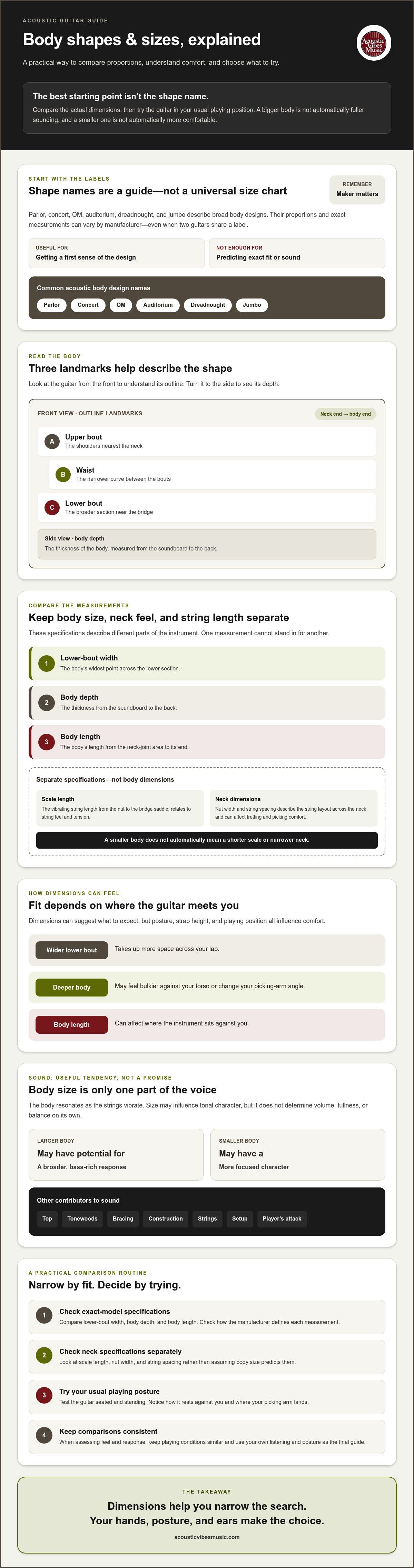
Start with your playing context, then test for comfort. A guitar that feels balanced while seated may sit differently on a strap, so try both positions if you switch between them. Use your usual strap and posture, and hold each instrument long enough to notice whether you’re adjusting your body to accommodate it.
The best-fitting body size is the one you can hold comfortably. Let the measurements guide your shortlist, but trust what your shoulders, arms, and ears tell you in playing position.
Choose a relaxed seated position and check that your shoulders stay down, your fretting hand reaches naturally, and your picking arm isn’t stretched awkwardly over the body. Then try the guitar standing with a strap. Height alone can’t determine the right body size: arm length, posture, and personal preference all matter. A comfortable fit makes it easier to focus on learning and enjoying the instrument.
Playing style can help narrow your options, but it shouldn’t dictate a single shape. A strummer might enjoy the response of one guitar, while a fingerstyle player may prefer another’s balance and feel. Construction and the individual instrument matter, too. Compare options using the techniques and dynamics you actually use; for strumming-focused context, see the article Dreadnought vs. Grand Auditorium for Strumming.
Keep the comparison fair: use familiar songs, similar playing force, and the same seated or standing position for each guitar. If you’re ready to compare instruments, explore the acoustic guitar selection and note which dimensions you’d like to try.
A shape name is a starting point, not a complete specification. To compare guitars confidently, check the exact instrument’s measurements and neck details, then consider how those numbers translate to your playing position. The practical final step in getting guitar body shapes and sizes explained is to use specifications to shortlist options, then judge fit and response for yourself.
Start with the manufacturer’s specifications for the exact model and version. Don’t assume two guitars described with the same body-style name share the same dimensions. Check that measurements are defined consistently before comparing them, especially if one manufacturer lists body depth at the heel and another gives a different measurement point.
Acoustic Vibes Music’s curated selection of new and used acoustic guitars offers a place to browse while comparing your preferences with available instrument details. Check current listings for the specifications of each guitar.
Side-by-side trials reveal differences a spec sheet can’t: how the lower bout rests on your leg, whether the body feels intrusive against your torso, and how easily your picking arm settles into position. If possible, compare guitars seated and standing with your usual strap. Play familiar music on each, keeping your posture, volume, and playing approach as consistent as you can.
Acoustic Vibes Music specializes in acoustic instruments and offers a curated selection of new and used acoustic guitars. Availability of particular styles can change, so check current guitar listings rather than assuming a specific body shape is in stock.
Ready to explore? Browse the acoustic guitar collection and use the dimensions and fit details that matter most to you as a guide.
Shape names are useful guides, but exact dimensions and your playing position matter more than the label. Compare body width and depth alongside neck specifications, then try guitars seated and standing to see how naturally they rest against you. A larger body isn’t automatically louder or better, and a compact one can still have a rich, compelling voice. The right choice is the instrument that feels comfortable and inspires you to play.
With guitar body shapes and sizes explained, you can approach your search with clearer questions and greater confidence. Acoustic Vibes Music is a specialty retailer focused on acoustic instruments, with a curated selection of new and used guitars. Professional instrument repair and maintenance are also available by appointment.
Explore the acoustic guitar collection and keep your preferred dimensions and playing feel in mind as you browse. Trust your hands and ears as much as the measurements. Your ideal fit is waiting to be discovered.
Common acoustic guitar body shapes include parlor, concert, grand concert, OM, auditorium, dreadnought, and jumbo. These names describe broad design families, often suggesting relative proportions and outline rather than one standardized set of dimensions. A maker’s version may differ from another’s, so use the label to begin comparing, not to predict an exact fit. For guitar body shapes and sizes explained clearly, pair shape names with model-specific measurements.
Yes, body size can influence resonance and tonal response, but it doesn’t determine sound on its own. A larger body may support a different balance or a fuller response, while a smaller body may sound more focused. Those are general tendencies, not guarantees. Tonewoods, top construction, bracing, strings, setup, and playing technique also shape the result. Compare specific guitars by listening, not by size labels alone.
A smaller-bodied guitar may feel less bulky for some players, but it isn’t automatically easier to play. Comfort also depends on posture, arm position, neck shape, scale length, and setup. Try the instrument seated and standing, paying attention to whether your shoulders stay relaxed and your hands move naturally. A body that feels comfortable to one player may not suit another, so use fit rather than body size alone as your guide.
Body size refers to the body’s measurements, such as its width, length, and depth. Scale length is the vibrating string length from the nut to the bridge saddle. It affects string feel and tension, but it isn’t a measurement of the body. Nut width and string spacing describe the neck’s dimensions and string layout. Check each specification separately because a smaller body doesn’t necessarily have a shorter scale or narrower neck.
Not necessarily. Some beginners find a dreadnought’s broad body comfortable, while others prefer a less expansive shape. Your height alone can’t determine the right fit: posture, arm reach, and how the guitar rests against you matter, too. Try it seated and standing, and notice whether your picking arm feels strained or your shoulders rise. If it feels awkward, compare another body style rather than assuming you need to adjust to it.
Measurements are useful for narrowing options, but they can’t fully predict comfort or sound. Compare the exact model’s body width, depth, and length using the manufacturer’s measurement definitions, then check neck specifications separately. Photos can help you understand the outline, but won’t show how the guitar rests against you. If possible, play candidates in a similar position and with familiar music to judge their fit and response firsthand.