My shopping cart
Your cart is currently empty.
Continue ShoppingThe Gibson J-45 is a plush cushion for the singer, while the Martin D-18 is a high-velocity cannon for the player. Choosing between a Gibson J-45 vs Martin D-18 isn't just about picking a brand; it's about deciding how you want your music to breathe. You likely already know that both instruments represent the absolute pinnacle of mahogany craftsmanship, yet the choice feels heavy when you're investing in a lifelong companion. It's common to feel torn between the iconic "Workhorse" thump and the legendary "Dreadnought" punch, especially when both models represent such significant milestones in acoustic history.
We're here to clear the fog surrounding "slope-shoulder" curves and "square-shoulder" projection so you can buy with absolute certainty. This guide reveals the definitive differences in tone, playability, and heritage that define these two icons. You'll discover exactly how the J-45's shorter 24.75 inch scale length creates that signature slinky feel compared to the D-18's high-tension 25.4 inch reach. We'll also explore the latest 2026 specs and the arrival of the massive Super D-18 to ensure you find the perfect match for your vocal range and genre. Let's dive into the specialized engineering of these mahogany masterpieces.
The rivalry between the Gibson J-45 vs Martin D-18 is the most enduring debate in the acoustic world. These two instruments represent the absolute gold standard for the mahogany and spruce combination. While other woods offer exotic flair, the honest, dry, and punchy response of mahogany remains the benchmark for professional recording and live performance. We are looking at the 2026 Standard Series models. These are instruments that carry nearly a century of refinement into the hands of modern collectors and serious musicians. When you weigh the Gibson J-45 vs Martin D-18, you are choosing between two distinct philosophies of American lutherie. They aren't just guitars; they are cultural touchstones.
Choosing between them is a rite of passage for any serious player. One is nicknamed the "Workhorse" for its utilitarian reliability, while the other is the "Standard" by which all other dreadnoughts are measured. Both guitars utilize high-grade Sitka spruce tops and genuine mahogany back and sides. Yet, they move air in entirely different ways. Understanding this comparison requires looking past the basic spec sheets and into the historical DNA of each build. It's about how the geometry of the body and the tension of the strings dictate your creative output.
Gibson changed the landscape of acoustic music in 1942 with the release of the J-45. Born during the constraints of wartime production, it earned its reputation as a reliable, no-frills tool for the working musician. The Gibson J-45 history reveals a design centered on balance and vocal accompaniment. Its iconic slope-shoulder silhouette isn't just for aesthetics. It rounds out the low end. This prevents the "boominess" that often masks a singer's voice. This architectural choice made it the quintessential tool for generations of singer-songwriters who need a supportive, percussive bed for their lyrics. It's an instrument that rewards a heavy right hand with a warm, compressed growl. You can explore our current selection of Gibson Acoustic Guitars to see how this legacy continues today.
If the J-45 is a cushion, the Martin D-18 is a lightning bolt. Emerging from the 14-fret dreadnought revolution of the 1930s, the D-18 established the "pre-war" sound that boutique builders still attempt to replicate. Its square-shoulder design and longer scale length provide a massive internal volume. This results in a piano-like clarity and projection. This guitar became the backbone of bluegrass and folk ensembles because it could cut through a mix of banjos and fiddles with ease. The D-18 doesn't just play notes; it projects them with a fundamental strength that has defined American roots music for nearly a hundred years. It offers a crystalline high end and a direct, woody mid-range that never gets muddy. For those seeking this legendary punch, our curated gallery of Martin Guitars showcases the pinnacle of this Pennsylvania tradition.
While the choice of Sitka spruce and mahogany provides a shared tonal foundation, the Gibson J-45 vs Martin D-18 comparison reveals two vastly different approaches to acoustic engineering. These guitars don't just look different; they move air in ways that dictate their unique sonic personalities. The J-45 utilizes a slope-shoulder design, which rounds out the upper bouts and creates a slightly smaller internal air chamber. This geometry focuses the sound, producing a tighter, more controlled low end. In contrast, the Martin D-18's classic square-shoulder dreadnought shape is built for maximum internal volume. This allows the guitar to act as a natural amplifier, projecting a massive, room-filling sound with deep, resonant bass.
The tactile experience is further separated by the nut width and bridge architecture. Gibson typically employs a 1.725 inch nut width on the Standard model, offering a slightly more compact feel that many players find reminiscent of a comfortable electric neck. Martin opts for the modern standard of 1.75 inches, providing a bit more breathing room for complex fingerstyle passages. Even the bridge designs contribute to the personality of each instrument. The Gibson "belly-up" bridge and the Martin "belly-down" style aren't just aesthetic choices. They affect how string energy is transferred into the top. Explore our current inventory of premium acoustic guitars to feel these ergonomic differences for yourself.
The most significant physical differentiator is the scale length. Gibson’s 24.75 inch short scale reduces string tension, making the instrument feel slinkier and easier to play. This lower tension allows the notes to "bloom" with a warm, rounded decay. Martin’s 25.4 inch standard scale creates higher tension, resulting in a crisp "snap" and increased volume. Scale length is the physical tension that defines whether a guitar fights you or follows you. This difference is why the D-18 feels like a powerful engine under your fingers, while the J-45 feels like a broken-in pair of boots.
Internal bracing acts as the skeletal system of the guitar's voice. Martin utilizes forward-shifted scalloped X-bracing, which moves the "X" closer to the soundhole. This allows the top to vibrate more freely, maximizing bass response and sustain. Gibson employs hand-scalloped X-bracing that is tuned for a balanced, mid-forward compression. The history of the Gibson J-45 highlights how this specific bracing creates the legendary "thump" that has made it a favorite in recording studios for decades. While the Martin is designed to explode with sound, the Gibson is engineered to sit perfectly in a mix.
Mahogany is celebrated for its "dry" and honest tonal profile. Unlike the lush, shimmering overtones of rosewood, mahogany emphasizes the fundamental note. This creates a focused sound that cuts through a mix without clutter. When comparing the Gibson J-45 vs Martin D-18, you are choosing between two different ways to present that mahogany honesty. The Gibson J-45 is legendary for its "low-mid thump." It offers a warm, percussive response with a relatively quick decay. This means the notes don't linger; they punch and then get out of the way. It’s a controlled sound that feels naturally compressed, even when played aggressively. It’s the sound of a vintage record, warm and inviting.
The Martin D-18 takes the opposite approach. It’s a sonic cannon defined by crystalline highs and piano-like sustain. While the Gibson thumps, the Martin rings. According to the Martin D-18 official specifications, the combination of its forward-shifted bracing and long scale length provides immense headroom. This refers to the guitar's ability to handle heavy strumming without the sound "breaking up" or becoming muddy. If you have a heavy right hand, the D-18 will reward you with volume that can fill a room without a microphone. It’s a bright, articulate beast that demands your attention with every chord.
Finding a guitar that complements your voice is a deeply personal journey. The J-45 is often the winner here because of its subtle mid-range scoop. By pulling back slightly on those middle frequencies, the guitar creates a sonic "pocket" for the human voice to sit in. It supports the singer rather than competing with them. This is why you see so many vocal-focused artists gravitating toward our collection of Gibson Acoustic Guitars. Conversely, the D-18 is a lead instrument. Its strong mid-range and powerful projection allow it to cut through a dense acoustic mix. If you’re playing in a bluegrass band alongside mandolins and banjos, the D-18 ensures your melodies are heard with absolute clarity.
In the studio, the J-45 is a dream for sound engineers. Its predictable, compressed nature means it takes EQ beautifully and rarely causes the low-end feedback issues that plague larger, boonier guitars. It’s widely considered the most recorded acoustic guitar in history for this very reason. It provides a steady, rhythmic foundation that anchors a track. However, for live, unplugged settings, the D-18 reigns supreme. Its raw volume and direct projection make it the king of the campfire and the festival stage. It doesn't just play music; it projects a statement of authority. Whether you need a studio workhorse or a stage cannon, understanding these sonic signatures is the key to a confident investment.
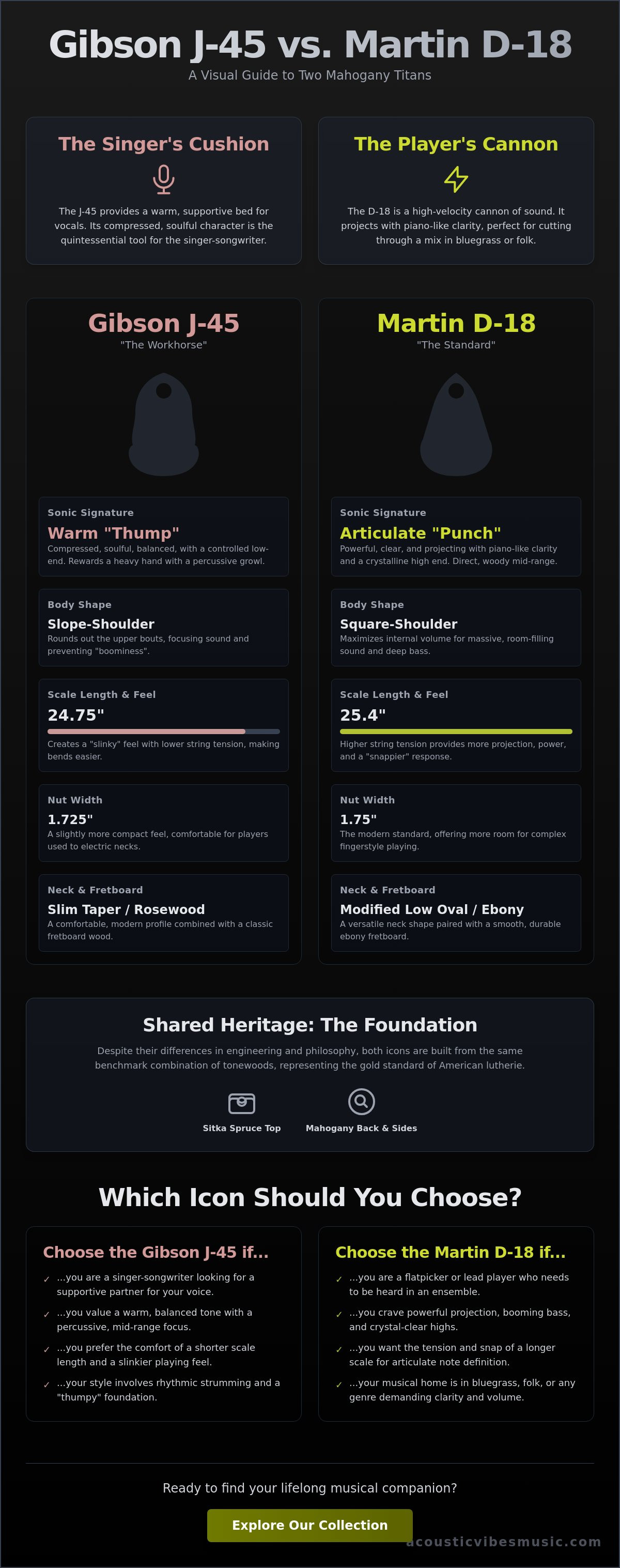
The physical connection between a player and their instrument often dictates how long a practice session lasts. When evaluating the Gibson J-45 vs Martin D-18, the differences in ergonomics are as striking as their tonal departures. Gibson’s J-45 features a Slim Taper neck profile that feels immediately familiar to anyone coming from an electric guitar background. It is sleek and fast. In contrast, the Martin D-18 utilizes a Modified Low Oval profile with a High Performance Taper. This design is slightly slimmer at the nut but maintains a consistent, comfortable depth as you move up the neck. It’s a modern feel that balances traditional girth with contemporary speed.
Tactile sensations extend to the choice of fretboard materials. Martin uses solid ebony. It is dense, dark, and feels like polished glass under your fingertips. This hardness contributes to the D-18's snappy response. Gibson opts for Indian rosewood. This wood is naturally more porous and oily, offering a warmer, more "organic" feel that many players find provides better grip for expressive vibrato. Both manufacturers in 2026 utilize PLEK technology for factory setups. This ensures that the fretwork is laser-accurate right out of the box, though the J-45’s shorter scale often allows for a slightly lower action without buzzing. If you are ready to experience these textures firsthand, you can browse our full collection of professional acoustics today.
The J-45 feels slinkier. Because of its 24.75 inch scale, the strings have less physical tension, making blues bends and complex barre chords feel effortless. It’s an inviting instrument that doesn't fight back. The D-18, however, offers superior stability for players who experiment with alternate tunings like DADGAD or Open G. The higher tension of the 25.4 inch scale keeps the strings from becoming "floppy" when tuned down. This makes our selection of Martin Guitars a favorite for modern fingerstyle and percussive players who need that structural rigidity.
Precision is a matter of millimeters. The D-18’s 1.75 inch nut width is the gold standard for fingerstylists, providing the necessary real estate for clean note separation. The J-45’s 1.725 inch nut is just a hair narrower. This small change makes a big difference for players with smaller hands or those who prefer to wrap their thumb over the top of the neck for chords. Furthermore, the string spacing at the bridge on the Martin is slightly wider. This favors flatpicking accuracy, while the Gibson’s tighter spacing excels at rapid, rhythmic strumming. Your choice depends on whether you value the "pocket" of a rhythm guitar or the "platform" of a lead instrument.
Deciding between the Gibson J-45 vs Martin D-18 is rarely a matter of objective quality. Both instruments represent the pinnacle of American lutherie. Instead, this choice is about matching a specific sonic architecture to your musical identity. The J-45 is the warm, compressed, and soulful choice. It feels like a vintage recording, offering a "thumpy" character that provides a rhythmic foundation without ever sounding harsh. It’s an instrument that values vibe and emotion over clinical precision. It doesn't just play music; it tells a story with a smoky, mid-forward growl that has anchored Americana for decades.
The Martin D-18 is the clear, powerful, and articulate alternative. It is a high-fidelity machine designed for projection and surgical note separation. While the Gibson offers a cozy "pocket" for your voice, the Martin provides a massive platform that rings with piano-like sustain. It’s a bold instrument that rewards precision and technical skill. Whether you are choosing the Gibson J-45 vs Martin D-18, you are investing in a piece of history. These aren't just tools. They are heirlooms that will only sound better as the mahogany and spruce age together over the next fifty years. Trust your ears; one of these guitars will inevitably "speak" to you with more clarity than the other.
For the collector who wants to push these traditional recipes even further, we often suggest looking toward boutique builders. Brands like Boucher and Collings Guitars take the mahogany dreadnought blueprint and refine it with obsessive attention to detail and premium wood grading. These instruments offer an "elevated" experience, providing even more complexity and responsiveness for the discerning player. Regardless of your final choice, we invite you to explore our curated collection of world-class acoustics and find the instrument that resonates with your soul.
Choosing between the Gibson J-45 vs Martin D-18 is a defining moment for any serious musician. You've seen how the J-45 offers that soulful, compressed thump that acts as the perfect partner for your voice. On the other hand, the D-18 provides the articulate projection and crystalline clarity needed to lead any ensemble. Whether you prioritize the slinky feel of a short scale or the powerful snap of a standard dreadnought, your decision marks a significant investment in your artistic future. These instruments are more than just wood and wire; they are the vessels for your creativity.
We are here to ensure your journey is seamless and rewarding. Our curated collection includes both new and pre-owned icons, each receiving an expert-level setup to guarantee perfection from the first strum. With professional packing and reliable national shipping, your dream instrument arrives ready for the stage or the studio. Browse our current selection of Gibson and Martin Dreadnoughts to find the mahogany masterpiece that resonates with your personal style. Embrace the joy of discovery and step into the next chapter of your musical legacy today.
The Gibson J-45 is generally considered easier to play because of its shorter 24.75 inch scale length. This design reduces string tension, making it feel slinkier and more forgiving for complex chords or bluesy bends. While the Martin D-18 offers a modern, comfortable neck profile, its longer scale length requires slightly more physical effort to fret, which some players find leads to more hand fatigue during long sessions.
The Martin D-18 is the definitive choice for bluegrass due to its superior projection and cutting power. Its square-shoulder design and high string tension allow it to punch through the dense acoustic mix of banjos and fiddles. While you can certainly play bluegrass on a J-45, it often lacks the raw volume and "snap" required for traditional flatpicking leads in a loud ensemble setting.
Both instruments are blue-chip investments that retain their value exceptionally well on the secondary market. Because they are the "Standard" models for their respective brands, demand remains high among collectors and touring professionals. When comparing the resale of a Gibson J-45 vs Martin D-18, you'll find that both typically command 70 percent or more of their original retail price if maintained in excellent condition.
You can absolutely use medium gauge strings on a J-45 Standard. The hand-scalloped X-bracing is robust enough to handle the increased tension, which often results in a significant boost in volume and "thump." Many players find that moving from light to medium strings helps the J-45 compete more effectively in unplugged jam sessions without sacrificing its signature warm character.
The main difference lies in air volume and tonal focus. Slope-shoulder guitars like the J-45 have rounded upper bouts that create a slightly smaller internal chamber, resulting in a tighter, more compressed sound that sits perfectly behind a vocal. Square-shoulder dreadnoughts like the D-18 maximize internal volume to produce a louder, more resonant bass response and increased overall headroom for aggressive playing.
The Martin D-18 earned its "Standard" title by defining the 14-fret mahogany dreadnought blueprint in the 1930s. It established the benchmark for what a professional acoustic guitar should sound like in terms of clarity, balance, and projection. Most modern builders still use the D-18's bracing and geometry as the starting point for their own mahogany creations, cementing its legacy as a foundational instrument.
The J-45 Standard is the definitive "Workhorse" version, featuring the full body depth and premium nitrocellulose finish that purists expect. While Studio models are thinner and more affordable, they lack the low-end resonance of the Standard. Sustainable models often use alternative tonewoods, which can be excellent, but they don't produce the exact "thump" that has made the Gibson J-45 vs Martin D-18 such a legendary comparison.
Mahogany provides a "dry" tone that emphasizes the fundamental note rather than complex overtones. This results in a very clear, woody sound with a strong mid-range presence that records beautifully. Rosewood, by contrast, is much more "lush" with deep lows and sparkling highs, but it can sometimes sound cluttered in a dense mix where the directness of mahogany would shine.