My shopping cart
Your cart is currently empty.
Continue ShoppingThe smallest-bodied guitar in the room may not be the most comfortable choice for fingerstyle. If stretches between frets feel awkward or your picking hand feels crowded, a fingerstyle guitar for small hands isn’t simply a matter of choosing a smaller body. Scale length, neck shape, fretboard radius, string spacing, and setup all affect how an instrument feels in your hands. Body size alone doesn’t determine its tone or playability.
It’s understandable to focus on hand size when comparing guitars, especially when specifications seem difficult to decode. But comfort depends on the whole playing geometry, and the right fit can feel natural without asking you to trade away the sound you enjoy. This guide explains which dimensions and setup details to consider, then gives you a repeatable checklist for testing reach, fretting, and picking comfort. You’ll also learn how to compare instruments beyond their measurements, so you can choose based on your playing rather than hand size alone.
Hand size alone doesn’t decide which guitar you can play comfortably or how far your technique can develop. Fingerstyle means plucking individual strings, chords, or repeating patterns with the picking hand rather than strumming across the strings. A comfortable instrument helps both hands move with less strain, but “small hands” isn’t a guitar category you need to fit into before you begin.
Think of fit as two related questions. Can your fretting hand reach and press the notes you want without excessive tension? Can your picking hand find each string cleanly and move between them without feeling cramped? A guitar may feel easy to fret yet awkward to pick, or the reverse. Body shape and measurements can guide your search, but no single combination suits every player. Even scale length, which affects fret spacing, is only one part of the instrument’s overall feel.
No. Reach depends on more than hand size: thumb position, finger independence, playing technique, and experience all shape what feels manageable. A chord stretch may feel difficult if your thumb is gripping tightly behind the neck, while a more relaxed position can make the same shape easier. Don’t rule yourself out based on your hands or assume you must choose the smallest guitar. Test what feels comfortable in your usual playing position.
Fingerstyle brings both hands into sharper focus. The fretting hand may need to hold a chord while reaching for a melody note, so a stretch that feels minor during strumming can become tiring or imprecise. Meanwhile, the picking hand needs enough room to pluck separate strings clearly and keep an alternating-thumb pattern steady. String spacing and hand position can affect that sense of room.
Assess both hands during the same trial. Sit as you normally would, play a familiar chord progression, then pick a simple pattern across adjacent strings. Notice whether your fretting fingers move without gripping hard and whether your picking fingers land cleanly without brushing neighboring strings. Try a wider stretch too, but don’t judge a guitar by one difficult chord alone. Acoustic Vibes Music’s selection of acoustic guitars gives you options to compare; check the specifications of each instrument individually. Let the actual feel, not the label, guide your next step.
Specifications help you shortlist a fingerstyle guitar for small hands, but no single number guarantees a comfortable fit. Start by understanding what each measurement describes, then test how the details work together. A neck that feels easy to grip, for example, may still have string spacing that doesn’t suit your picking hand.
Shorter scale length means the frets are closer together. It may ease a stretch, but it can also change string tension and the instrument’s feel. Nut width affects the space across the first-position strings, but a narrower neck isn’t automatically more comfortable if your fretting fingers feel crowded. Compare figures only when they’re confirmed by the manufacturer or the current instrument listing. Guitar World’s guide to guitars for small hands also discusses features such as scale length and neck shape.
String spacing at the bridge can influence whether your picking fingers land cleanly on individual strings, especially in patterns that alternate between bass and treble notes. Judge neck profile in your hand: try a few chords and notice whether your thumb and fingers settle naturally. If fretting feels unusually effortful, high action may be one factor. Ask a qualified guitar technician or luthier to assess the setup rather than assuming the guitar’s dimensions are the problem.
Specifications are a starting point, not a verdict. Verify exact measurements for the specific instrument you’re considering, then play it and assess reach, picking space, and fretting effort together. As you narrow your shortlist, compare acoustic guitar options and check each instrument’s current specifications before drawing conclusions.
A smaller body can feel easier to hold, but it doesn’t automatically make a guitar easier to fret or pick. Body width and depth affect how the instrument rests against you, while neck shape and string layout influence how your hands move. For a fingerstyle guitar for small hands, compare the whole playing experience rather than choosing by a body-style label.
A compact body may sit comfortably on your lap or leave your picking arm feeling less elevated. A deeper or wider body may change your posture or how far your fretting arm reaches around the neck, though the effect depends on your build and playing position. Body shape interacts with neck feel and setup, so it can’t determine fingerstyle suitability on its own.
Try the same passage on differently sized guitars, seated in your usual position. A dreadnought-versus-Grand-Auditorium strumming comparison can help illustrate body-shape trade-offs, but fingerstyle players should repeat the comparison with a picked pattern too.
| What to compare | Body comfort | Seated playing | Reach | Your test notes |
|---|---|---|---|---|
| Smaller-bodied acoustic | Does the body feel easy to hold? | Can you keep a relaxed posture? | Can your fretting arm move freely? | Record what feels natural or awkward. |
| Larger-bodied acoustic | Does the body press against your arm or torso? | Does it sit securely on your lap? | Can you reach the neck without leaning? | Note any change in comfort or tone. |
Include sound in the comfort test. Compare note separation, balance across bass and treble strings, sustain after each pluck, and how clearly the guitar responds when you vary your picking force. Body shape and tonewood may influence an instrument’s voice, but neither guarantees a particular result. Play the same passage on each guitar at your natural volume, and listen for the sound you enjoy rather than pushing harder to make an impression.
Technique matters alongside the instrument. As you assess a stretch or picking pattern, keep your hands relaxed. Alfred Music offers practical ideas to help players overcome this limitation. For a hands-on comparison, explore acoustic guitar options and check each instrument’s current specifications and availability.
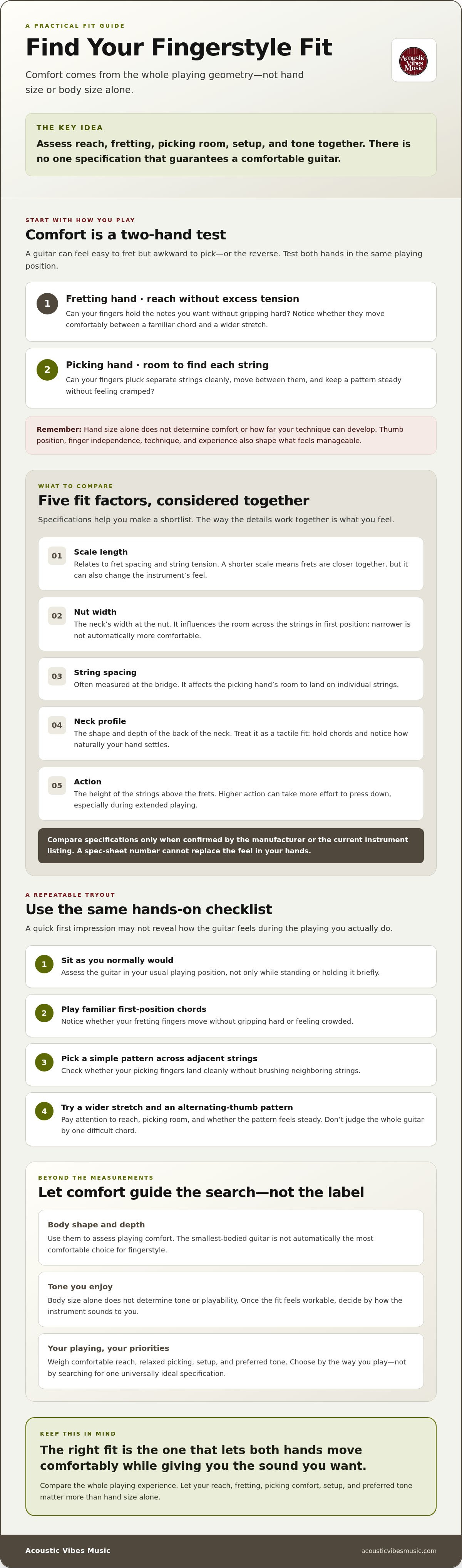
A quick first impression can miss the small details that matter over a full playing session. Use the same short test on each instrument, in the same seated position, and jot down what you notice. That makes it easier to compare a possible fingerstyle guitar for small hands by how it plays, not just by its dimensions or appearance.
Start gently. Keep your shoulders and hands relaxed, and move through this sequence:
Test both hands on every guitar. A neck may feel comfortable for chords while the string layout makes picking less precise, or the reverse. Playing the same passage helps reveal that difference.
As you play, note any buzzing, unusually high strings above the frets, or places where fretting effort changes noticeably along the neck. These can affect your impression of comfort, but they don’t automatically mean the guitar’s basic dimensions are wrong. Setup and instrument condition matter too.
If something feels off, ask a qualified repair professional whether the instrument’s setup can be assessed or adjusted. Keep a quick record after each trial: comfort, reach, picking freedom, sound, and fatigue. A few honest notes are more useful than trying to remember which guitar felt best later.
Acoustic Vibes Music has a showroom where shoppers can compare guitars in person, and its selection includes new and used acoustic instruments. Check current options and specifications before visiting or making a decision. Explore the guitar selection and use your checklist to guide the comparison.
The best choice isn’t determined by hand size, body shape, or one attractive specification. Compare how easily you reach the notes you play, whether your picking hand moves freely, how manageable the setup feels, and whether you enjoy the guitar’s sound. A comfortable instrument should support your technique without asking you to ignore a problem in another part of the fit.
Use your main frustration to set priorities. If first-position chords or familiar stretches feel difficult, focus on fretting comfort and reach. If your picking patterns feel cramped or notes are often muted, give string access and picking-hand freedom more weight. Then consider setup and tone. Trade-offs are personal: a guitar that feels easy to hold may not be your favorite voice, while an instrument with a sound you love may need a setup assessment before you can judge its playability fairly.
Write down what matters most before browsing. If chord reach is the challenge, compare neck feel and the distance between frets. If picking feels restricted, test how cleanly your fingers move across the strings. Taylor and Yamaha acoustic-guitar collections can be starting points, but don’t assume a brand or model name guarantees the right fit. Check each instrument’s current specifications, then use the same playing test to compare options.
Comparing several instruments can reveal what a spec sheet can’t: how the guitar rests against you, how its neck feels in your hand, and how its voice responds to your touch. Acoustic Vibes Music specializes in acoustic instruments and offers a showroom for hands-on comparison. Its selection includes new and used acoustic guitars, and professional repair and maintenance services are available by appointment. Use your own playing test to guide the final decision; no single specification guarantees a universal fit.
If craftsmanship and long-term investment are key priorities, include them in your comparison alongside comfort and sound. For a fingerstyle guitar for small hands, the right shortlist reflects your playing, not a label assigned to your hands. Explore the current acoustic guitar selection, verify individual specifications and availability, and compare the instruments against the priorities you’ve identified.
The right fingerstyle guitar for small hands isn’t defined by a label or a single measurement. Let your own playing guide the choice: look for comfortable fretting reach, relaxed access to the strings, a setup that doesn’t make notes unnecessarily difficult to fret, and a sound you enjoy. Comparing guitars with the same familiar passage can reveal a better fit than specifications alone.
Acoustic Vibes Music offers a curated selection of new and used acoustic guitars, including instruments from Martin, Taylor, and Yamaha. If a guitar feels promising but its playability raises questions, the shop also provides professional stringed-instrument repair and maintenance by appointment. Check current availability and specifications as you compare.
Ready to put your shortlist into practice? Explore acoustic guitars and find your fit. Trust what feels comfortable in your hands, and enjoy discovering the instrument that brings you back to the music.
There’s no single best guitar size for every player. A smaller body may feel easier to hold, but neck shape, scale length, string spacing, and setup also influence comfort. For a fingerstyle guitar for small hands, compare how the instrument feels seated and whether you can fret familiar chords and pick individual strings without strain. Choose the guitar that balances comfort with a sound you enjoy.
It can be easier for some players because a shorter scale brings frets closer together and typically reduces string tension. That may help with chord stretches or fretting effort, but it doesn’t guarantee a better fit. Neck profile, string spacing, and setup still matter. Try a familiar passage on both short- and longer-scale guitars, and compare reach, picking comfort, and tone before deciding.
Yes, nut width affects how much space there is across the strings near the first fret, so it can influence fretting comfort. But it’s only part of the fit. The spacing between strings at the bridge can also affect picking-hand access, and neck shape changes how the guitar feels in your palm. Check the exact specifications, then test chords and a fingerpicking pattern on the instrument itself.
Yes. Hand size doesn’t rule out a dreadnought or any other body shape. Its body dimensions may affect how comfortably it rests against you, especially when seated, but body size doesn’t determine whether your fingers can reach the notes or pick cleanly. Try the guitar in your usual playing position, use a familiar fingerstyle passage, and assess body comfort and neck feel separately.
Action may feel too high if fretting notes takes unusual effort, especially during familiar chord changes or as you move up the neck. You might also notice that one guitar feels harder to play than another, even when their necks seem similar. Don’t rely on feel alone to diagnose the cause. Ask a qualified repair professional to assess the setup before ruling out the instrument.
No. A smaller body may feel more manageable against your torso or lap, but it doesn’t guarantee comfortable reach, relaxed picking, or a preferred sound. Larger-bodied acoustics can suit fingerstyle too if their shape and setup work for you. Play the same passage on different body sizes and listen for note separation, balance, and response at your natural playing volume.
Use measurements to build a shortlist, not to make the final decision. Scale length, nut width, string spacing, neck profile, and action each describe one part of the playing experience, and they interact. Hand size alone can’t predict how those details will feel to you. Test each candidate with familiar chords and picking patterns, then choose based on comfortable reach, relaxed movement, setup, and sound.