My shopping cart
Your cart is currently empty.
Continue ShoppingCould a luthier with a polished online profile still be the wrong choice for your instrument? Finding the right luthier for repairs depends on more than confident claims. A routine setup and a structural repair call for different experience, and your instrument deserves a clear plan before work begins. Look for someone who understands your instrument, explains the proposed work, and handles it with care.
This 2026 guide explains how to assess a repairer’s experience with your instrument and concern, what to ask before approving work, and how to compare proposals without making price the only deciding factor. You’ll also learn what to clarify about the repair scope, possible changes, drop-off, collection, and transport.
We’ll cover signs that a repair may need specialist attention, how to look beyond online claims, and practical details to discuss before an appointment. Whether you own an acoustic or classical guitar, banjo, mandolin, or ukulele, a focused conversation can help you choose a repairer and protect an instrument you value.
You don’t need to know exactly what’s wrong before speaking with a repair professional. Describe what you’ve noticed, when it happens, and whether it’s changing. These details are enough to start a useful conversation. Symptoms are clues, not a diagnosis: buzzing can have several causes, and a change in sound or feel may not reveal what’s happening inside the instrument.
A luthier is an instrument craftsperson whose work can include building and repairing string instruments. The Luthier reference offers an overview of the craft, but experience varies. Familiarity with one instrument or type of repair doesn’t automatically make someone the right fit for another.
Changes in action, buzzing, tuning stability, or intonation can help frame a repair conversation. They may point to a setup or maintenance need, but they don’t confirm the cause. A visible crack, loose component, damaged finish, or suspected structural problem may call for a different approach. Describe what you see and hear rather than naming a fix you’re unsure about.
If damage appears to be worsening, pause playing and ask a professional what to do next. Don’t press, glue, adjust, or otherwise try to correct uncertain damage before an assessment. A well-meant attempt can make the condition harder to evaluate or affect the repair options.
Acoustic instruments have construction and components that differ from electric instruments, and repair techniques aren’t interchangeable by default. Before arranging work, ask whether the luthier has experience with your instrument category and the specific concern you’ve noticed. Name the instrument you own, such as a guitar, banjo, mandolin, or ukulele, but don’t assume that means a shop accepts every instrument or repair type.
For finding the right luthier for repairs, focus on fit before committing. Can the repairer assess your instrument, explain what they’re looking for, and outline the next step? If you’re unsure whether the issue is a setup concern or a more involved repair, ask instead of guessing. Repair services are often offered by appointment, so confirm the shop’s accepted instrument types and repair categories before arranging a handoff.
A repair portfolio can be useful, but the details matter more than the polish. Look for examples involving an instrument and concern similar to yours. A before-and-after photo may show the result, but it can’t tell you the instrument’s original condition, what work was required, or whether the same approach suits your instrument. Treat examples as conversation starters, not proof of a guaranteed outcome.
Years in business, familiarity with a well-known brand, or professional affiliations can offer context, but none alone confirms that a luthier is suited to a particular repair. For instance, the Guild of American Luthiers describes its role as educational for instrument makers and repairers. Membership may reflect engagement with the craft, but it doesn’t replace questions about relevant hands-on experience.
Ask whether the repairer has worked on comparable instruments and concerns, and what inspection is needed before they can confirm a diagnosis. Clarify who will perform the work and how you can ask questions if the plan changes. These questions help distinguish broad claims from experience that applies to your instrument and the proposed work.
A useful assessment connects what the luthier observes with what they think may be causing the issue, then explains the next step in plain language. You don’t need to know every technical term, but you should understand what work is being considered and why.
Ask about alternatives, limitations, and risks before authorizing work. Find out whether a recommendation addresses the immediate concern or involves a broader scope, and what remains uncertain until the instrument is inspected more closely. Repairers may suggest different approaches because they interpret the condition differently or weigh trade-offs differently. That doesn’t automatically make one proposal right and another wrong. Compare the reasoning and ask questions until the plan makes sense.
Finding the right luthier for repairs means choosing someone who can discuss your instrument, explain the assessment, and communicate clearly. Acoustic Vibes Music offers luthier repair services by appointment. You can review the shop’s repair information and confirm whether your instrument and repair concern are accepted.
A lower quote can look appealing, but it doesn’t show whether the proposed work addresses the same problem or includes the same tasks as another estimate. Compare proposals by asking what each repairer observed, what they recommend, and what falls within the proposed scope. If those details aren’t clear, ask before approving anything.
Different recommendations don’t automatically mean one repairer is more capable than another. They may reflect different assessments of the instrument’s condition or different ways to address it. Ask each luthier to explain their reasoning in terms you understand. The goal isn’t to choose the most elaborate plan, but to understand the options and decide what you’re authorizing.
Request a written description of the agreed work, even if the initial assessment was discussed in person. Review the details side by side, paying attention to:
Ask how the shop will communicate if a closer inspection changes the initial assessment. A clear process helps you stay involved if new findings affect the recommended work.
Be cautious if you’re pressured to approve work immediately or promised a definite outcome before the instrument has been properly inspected. Either situation is a reason to pause and ask for more information, not an automatic verdict about the repairer. An explanation that feels vague, dismissive, or inconsistent with what you’ve observed also deserves a follow-up.
Try asking: “What did you observe that led to this recommendation?” “Are there other options, and what are their limitations?” “What isn’t included in this proposed work?” These questions keep the conversation focused on the instrument rather than unsupported comparisons between repairers.
As you continue finding the right luthier for repairs, compare how clearly each proposal explains the diagnosis, scope, assumptions, and next steps. Don’t authorize work until you understand what’s approved and how additional findings will be handled. Clear communication is part of a sound repair decision.
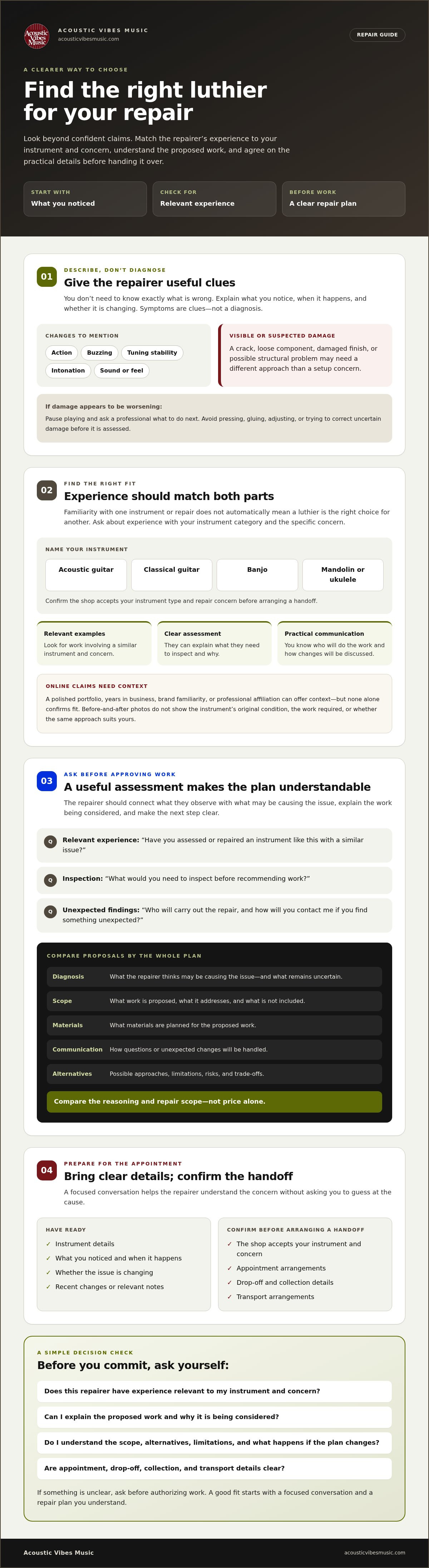
A little preparation can make an appointment more productive and help you describe what your instrument needs without guessing at the cause. Document the symptoms, gather instrument details, contact the repair provider, then confirm appointment and handoff arrangements.
Write down when you first noticed the issue and what seems to trigger it. Does it happen during a particular kind of playing, after a recent adjustment, or under certain conditions? Note what has changed, and take clear photos of visible damage from more than one angle. These details can help the repairer understand your concern, but leave the diagnosis to them.
Prepare the instrument type and any identifying details you have, along with a concise description of the symptoms and when they began. Bring relevant service history or previous repair information if available. Separate what you’ve observed from what you suspect: “the buzzing started after the strings were changed” is more useful than stating that the string change caused it.
Before travelling with the instrument, confirm the appointment, accepted repair concern, and preferred drop-off process. Use a suitable case for transport, and ask whether the repairer wants the case left with the instrument. Don’t assume collection or storage arrangements. Clarify how the instrument will be handled and how to arrange pickup.
Photograph the instrument’s existing condition before handing it over, including marks or damage unrelated to the repair concern. Ask how the shop records the instrument’s condition and what information it needs from you at drop-off. If you’re considering mail-in or shipping options, confirm directly that the provider offers them and ask how to proceed. Don’t send an instrument based on an assumption.
For owners finding the right luthier for repairs, a clear handoff is part of a well-prepared appointment. Acoustic Vibes Music offers professional luthier repair and maintenance by appointment. Check whether your instrument and repair concern can be assessed, and confirm appointment and handoff arrangements before making plans.
The right repair partner is a good fit for your instrument and concern, explains the assessment in language you understand, and communicates clearly about the proposed work. Before arranging a handoff, confirm that the provider accepts your instrument and repair category, and check appointment availability. You don’t need to know every technical detail, but you should understand what you’re agreeing to.
Before approving a repair, make sure you understand the diagnosis and the work included in the agreed scope. Confirm how the repairer will contact you if inspection reveals something different or additional work may be needed. Ask any remaining questions about materials, instrument handling, and collection arrangements.
These records give you and the repairer a clear reference point. If anything in the plan is still unclear, ask for an explanation before authorizing the work.
Acoustic Vibes Music offers professional luthier repair and maintenance for stringed instruments by appointment. When contacting the shop, share the instrument type, symptoms you’ve noticed, when they began, and any visible damage. Include relevant previous repair information if you have it. This information helps explain your concern, but confirm whether your instrument and specific repair category are accepted.
Finding the right luthier for repairs comes down to a clear fit, a diagnosis you can follow, an agreed scope, and open communication. Once you’ve gathered the details, review information about instrument repair appointments. Confirm availability and handoff arrangements directly before making plans.
Finding the right luthier for repairs starts with describing the concern clearly, then checking that the repairer has relevant experience with your instrument and the work being considered. Compare proposals by how well they explain the diagnosis, approved scope, and communication plan, not by price alone. Before arranging a handoff, confirm appointment availability, accepted repair categories, and handling arrangements.
Acoustic Vibes Music offers professional repair and maintenance for stringed instruments by appointment. Its instrument categories include acoustic guitars, classical guitars, banjos, mandolins, and ukuleles. If you’re unsure whether your instrument or repair concern is a fit, share what you’ve observed and ask whether it can be assessed.
Ask Acoustic Vibes Music about a repair appointment, and confirm the next steps before making arrangements. Clear questions and a thoughtful plan can help you move forward with confidence as you care for an instrument you value.
Look for demonstrated experience with both your instrument type and the repair you’re considering. Ask about comparable work, what an inspection involves, and how the luthier will explain the diagnosis and options. Photos or examples can help you assess their approach, but they don’t prove every repair is comparable. Finding the right luthier for repairs means checking relevant experience and communication, not relying on credentials, years in business, or brand familiarity alone.
Ask what they observed, what they think may be causing the problem, and what work they recommend. Request a clear description of the approved scope, including what’s excluded and which materials are planned, if relevant. Find out how they’ll contact you if inspection reveals additional issues, and whether they’ll seek your approval before changing the plan. Make sure you understand the likely limitations and risks before authorizing work.
You may notice playability changes such as buzzing, uncomfortable action, tuning trouble, or intonation concerns, but symptoms alone can’t confirm the cause. A luthier can assess whether an adjustment or maintenance may help, or whether a component, finish, or structural issue needs attention. Visible cracks or loose parts warrant professional assessment. If damage seems to be worsening, pause playing and ask a repairer for guidance rather than attempting a fix.
Another estimate can help if the proposed work is substantial, the diagnosis is unclear, or you want to understand different repair approaches. Compare more than the final figure: check whether each proposal addresses the same condition, includes similar work, and explains assumptions, materials, exclusions, and approval for additional tasks. Different recommendations may reflect different assessments, so ask each repairer to explain their reasoning before deciding.
No. Luthiers’ experience can vary by instrument and repair type, so ask whether the repairer has worked on instruments and concerns comparable to yours. Acoustic guitars, banjos, mandolins, and ukuleles have distinct construction and repair considerations. Acoustic Vibes Music offers professional repair and maintenance for stringed instruments by appointment, but contact the shop to confirm whether it can assess your instrument and specific repair concern.
Note the instrument type, when the issue began, what symptoms you’ve noticed, and any recent changes or adjustments. Photograph visible damage and bring relevant repair history if available. Describe observations rather than presenting guesses as confirmed causes. Before the appointment, confirm the drop-off process and ask about the case, handling, and collection arrangements. Use a suitable case for transport, and don’t attempt corrective work on damage you’re unsure about.
Possibly, but shipping and mail-in arrangements vary by repair provider. Contact the luthier before sending anything and confirm whether they accept mailed instruments, how they want it packed, and how assessment and return arrangements work. Don’t assume a shop offers shipping support or send an instrument without clear instructions. If the provider doesn’t accept mail-in repairs, ask what other appointment and handoff options are available.