My shopping cart
Your cart is currently empty.
Continue ShoppingThe ukulele with the richest acoustic voice may still be the wrong choice for your next gig. The best ukulele for professional musician use depends on more than tonewood or prestige: body size, tuning, playability, and how the instrument behaves through a pickup all matter when your work moves between stage and studio.
It’s natural to wonder whether a tenor is the right fit, whether an acoustic model will amplify cleanly, or how to judge setup and craftsmanship before buying. A professional instrument should serve your repertoire and playing style, not just impress on paper.
This guide compares the features that make a practical difference, from soprano, concert, tenor, and baritone sizes to construction, intonation, comfort, and amplified sound. You’ll learn what to audition, what to check closely, and what to ask a specialist before committing. That way, you can choose with confidence instead of paying for a name alone.
Professional suitability comes down to dependable performance for your actual work. The best ukulele for professional musician use isn’t defined by one feature, price tier, or body size. It’s the instrument that feels secure in your hands, responds predictably, and has a voice that fits your music.
A professional ukulele combines reliability, playability, tonal fit, and construction suited to its intended use. A solo performer may need a clear, carrying voice, while an ensemble player may prioritize a tone that blends without disappearing. In the studio, subtle tonal color and an even response across the strings may matter more than raw volume. A musician who travels often may put durability and practical transport higher on the list, while a home-based writer may value comfort and an inspiring sound. The instrument’s history and construction of the ukulele offer useful context, but your musical demands should guide the final choice.
Start with the music, not the feature list. A solo performer carrying both melody and accompaniment may want strong projection and a balanced voice. In a group, the right tonal character depends on the arrangement: a bright, present sound can cut through, while a rounder one may sit comfortably beneath vocals or other instruments. Fingerstyle, strumming, and rapid chord changes also affect what feels and sounds effective.
Recording brings different priorities. An instrument that sounds rich in the room may need careful microphone placement or amplification to translate as intended. If you travel frequently, case fit, resilience, and ease of handling become more relevant. A built-in pickup can be useful for some stage setups, but it’s optional if you perform acoustically or already prefer a microphone. Separate essential needs from appealing extras before comparing instruments.
Listen and play with intention. Check whether the ukulele holds tuning during a session, whether the action feels comfortable, and whether notes fret cleanly without unwanted buzzing. Play familiar passages across the strings and neck. Notice whether the instrument responds evenly to a light touch and a firmer attack, and whether its tonal balance supports your repertoire.
Specifications can narrow the shortlist, but they can’t tell you how an individual instrument feels in your hands. Setup and condition influence action, intonation, and response, so inspect the specific ukulele instead of relying on its description alone. A well-made instrument in the wrong configuration may not suit your work. No single size, tonewood, or construction method is best for every professional. When comparing options for the best ukulele for professional musician needs, a specialist can help you assess feel, tone, and construction without letting prestige overshadow performance.
Size influences how a ukulele feels under the hands and how its voice sits in an arrangement, but it doesn’t determine quality on its own. Soprano and concert instruments are compact and can feel nimble, while a tenor offers a roomier playing surface and often a fuller voice. Baritone has a distinct register and tuning context. For a broader foundation on the instrument’s origins and design, see this authoritative overview of the ukulele.
Size changes an instrument’s feel and voice, not its overall worth. The right choice depends on your comfort, repertoire, and musical role.
A soprano’s compact dimensions can suit players who value portability or a familiar, bright ukulele character, though its smaller fingerboard may feel cramped for some hands. A concert offers a little more room while keeping a compact feel. A tenor’s broader spacing can make certain chord shapes, melodic runs, or fingerstyle passages more comfortable, and its voice may carry differently in a group. These are tendencies, not guarantees, so compare instruments in person if you can.
Consider baritone when its lower register fits your arrangements. Its common tuning differs from the G-C-E-A tuning often used on soprano, concert, and tenor instruments. Confirm the tuning of the individual instrument rather than assuming it from size alone, especially if you need to match a particular chart, ensemble, or alternate tuning.
Don’t judge tone by a wood label alone. Body dimensions, bracing, strings, setup, and overall construction all contribute to response, projection, and tonal balance. Two ukuleles described as using the same material may still sound and feel different.
Solid-wood construction can offer a distinctive response, while laminate instruments may have qualities that suit a musician’s needs. Neither description, by itself, proves an instrument is right for professional work. Consider how clearly it produces notes across the strings, how it responds to your touch, and whether its voice complements your repertoire. Material descriptions are a useful starting point, not a substitute for listening.
To find the best ukulele for professional musician use, compare size, tuning, and construction against the music you actually play. Bring a familiar passage, try more than one configuration, and notice what feels natural as well as what sounds compelling. A specialist can help interpret construction details and compare the feel and tone of new or pre-owned instruments. Check the current selection before making a choice.
A ukulele’s acoustic voice is only part of its working sound. Consider how its projection and tonal balance fit your technique and the volume of the ensemble. A forceful strum in a small acoustic group calls for different qualities than delicate fingerpicking beside a vocalist. Listen for note definition, evenness across the strings, and whether the instrument blends or stands forward as your arrangement requires.
Amplified performance adds another layer. Some instruments have a built-in pickup; others need an external microphone or pickup solution. The result depends on the whole signal chain, including the pickup or microphone, preamp, cables, and PA or amplifier. An onboard system can simplify a regular live setup, but it isn’t essential if you mainly record acoustically or already prefer a microphone. Ukulele Magazine is one resource for further ukulele-focused reading, but audition the specific instrument in a setup close to your own.
If you perform amplified, test the instrument through a representative amp or PA when possible. Check whether the amplified tone retains the character you like acoustically, and listen for unwanted noise or feedback at the volume you expect to use. Monitoring position, room acoustics, and soundcheck adjustments can affect the result, so don’t treat a pickup as a guarantee of trouble-free stage sound.
An acoustic-only ukulele may be the simpler match for quiet settings, home writing, or microphone-based recording. A pickup-equipped configuration can be practical for frequent amplified gigs. Choose based on how you actually perform, not on electronics as a badge of professional quality.
Use the same musical passage on each instrument so differences are easier to feel and hear. Try open chords, barre chords, melodic runs, and the techniques central to your playing. Compare neck comfort, fret access, string spacing, action, and weight. Then tune carefully and check whether notes stay in tune and sound accurate across the fretboard. If the action feels uncomfortable or notes buzz, ask for an assessment of the instrument’s setup and condition.
The best ukulele for professional musician needs is the one that performs reliably in your working setup and feels natural through your repertoire. Acoustic Vibes Music carries new and pre-owned ukuleles. Explore the current ukulele selection, and confirm which instruments are available before deciding.
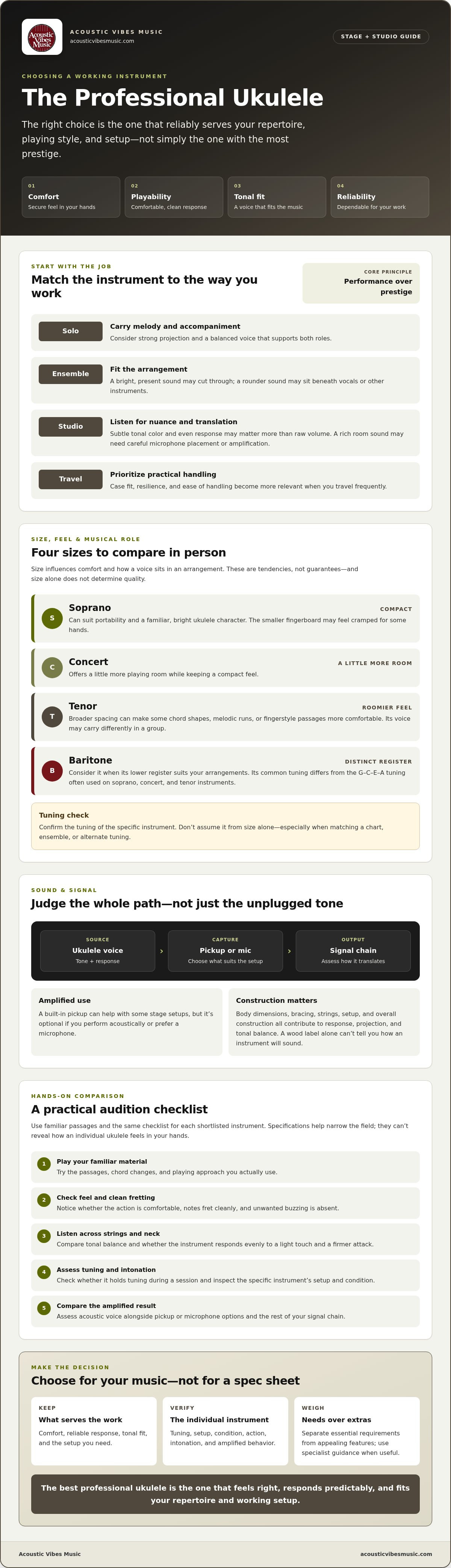
A repeatable audition helps keep an appealing finish or impressive specification from overshadowing how an instrument actually performs. Before comparing, write down your working needs: repertoire, playing techniques, acoustic or amplified use, and how often you’ll travel with the instrument. Shortlist suitable sizes, then test each ukulele in the same order. Bring familiar music and use the same passages on every instrument for a fair comparison.
Before you commit, compare tuning, playability, tone, condition, and performance through your intended setup. Use the checklist below to keep your audition focused:
Start with open chords, barre shapes, melodic runs, and the techniques you rely on for work. Compare neck comfort, fret access, string spacing, and action as you play. Repeat the passage with a soft touch and a stronger attack. Listen from the player’s position, and ask someone nearby to listen from several feet away when possible. A ukulele can sound different across the room than it does in your hands.
If you perform amplified, test through a representative amp or PA and your usual signal chain. Listen for tonal changes, noise, or feedback at a practical volume. Results depend on the instrument and setup, so treat the test as a way to identify questions for soundcheck, not a promise of identical stage performance.
For an in-person audition, inspect the actual instrument and ask about any concerns you notice. For an online purchase, confirm the exact size, tuning, condition, included case or accessories, and the seller’s inspection and return terms before ordering. With a used ukulele, request clear photographs and ask directly about repairs, wear, or structural concerns. If playability or condition is uncertain, ask whether a specialist can assess the setup.
Use these checks to judge the best ukulele for professional musician needs by evidence, not first impressions alone. Acoustic Vibes Music carries new and pre-owned ukuleles. Compare the current ukulele selection and confirm which instruments are available before deciding.
Bring your decision back to the work the instrument needs to do. Prioritize a comfortable playing feel, a voice that suits your repertoire, reliable performance in your stage or studio setup, and verified condition. Specifications can help narrow the field, but they can’t replace playing the actual instrument. If possible, compare several ukuleles using familiar passages and the same playing approach before settling on one.
The best ukulele for professional musician use isn’t necessarily the most elaborate or prestigious option. It’s the one that meets your practical needs and keeps you focused on the music. Note what you liked and what gave you pause during auditions, then use those observations to guide any final questions.
The label alone doesn’t determine suitability. With a new instrument, assess its feel, sound, and setup just as carefully as its description. With a pre-owned ukulele, add a close review of condition, any disclosed repairs, and signs of wear or structural concern. Ask what’s included, too. A well-cared-for used instrument may suit your preferences, while another player may prefer a new instrument. Judge each ukulele on its own merits.
Share the details that shape your choice: repertoire, playing techniques, amplification needs, preferred feel, and what you noticed during auditions. A specialist can help you compare construction and tonal character, clarify instrument details, and identify questions to resolve before buying. For any pre-owned instrument, ask for condition information and confirmation of its tuning and setup.
Acoustic Vibes Music carries a curated selection of new and pre-owned ukuleles, though current inventory should be confirmed before you choose. Explore the current selection or contact the shop with questions about the available options. A considered comparison can help you choose an instrument that feels right for the work ahead.
The right professional ukulele fits your playing, not simply the instrument with the most impressive specifications. Match size and tuning to your repertoire, then weigh acoustic tone against your stage or studio setup. Most importantly, compare actual instruments where possible: comfort, response, and condition can reveal details a product description can’t.
Use familiar passages to test playability and sound, and verify the instrument’s condition before you commit. These practical checks can help you identify the best ukulele for professional musician needs with confidence, whether you’re considering a new or pre-owned instrument.
Acoustic Vibes Music carries new and pre-owned ukuleles. The shop also offers professional repair and maintenance for stringed instruments by appointment; confirm whether ukulele service is available. Explore the ukulele selection and find an instrument that fits your playing.
Not necessarily. A tenor may suit players who want more fingerboard space or prefer its register, but no size is right for every professional. Compare soprano, concert, tenor, and baritone instruments against your repertoire, hand comfort, ensemble role, and preferred tuning. A compact instrument may feel natural for one player, while another may prefer roomier spacing for melodic passages. Whenever possible, audition the actual ukulele rather than relying on its size label.
Yes. A ukulele can perform onstage when its acoustic voice and amplification setup suit the venue and musical role. Test it through the pickup, microphone, or signal chain you expect to use, listening for unwanted noise or feedback. Results also depend on ensemble volume, monitoring, room acoustics, and soundcheck adjustments. Evaluate the full setup at a realistic volume rather than assuming the instrument alone will determine how it performs live.
Look for comfortable playability, stable tuning, clean intonation, and a voice that fits your repertoire. Then assess the instrument’s size, construction, condition, and amplification needs. Play familiar passages at different dynamics, including chords and single-note lines, and check the response across the fretboard. The best ukulele for professional musician use is the one that reliably serves your actual work, not simply the instrument with the most impressive description or materials.
No. Neither solid wood nor laminate is automatically the better choice for every musician. Construction can influence response and tonal character, but the complete build, setup, condition, and intended use matter too. Compare individual instruments by playing them and listening for the voice you want. If you’re buying remotely, review the construction details and condition information carefully. Treat material descriptions as useful context, not a complete measure of professional suitability.
Play familiar music that includes chords, single-note lines, and your regular techniques. Check tuning stability, intonation across the fretboard, action, fret condition, and any rattles. Listen from your playing position and, if possible, farther away. For amplified work, test through the signal chain you plan to use. For an online purchase, request clear condition details and confirm what the seller’s inspection and return terms allow before committing.
Built-in electronics can be useful if regular amplified performance is part of your work, but they’re not essential for every professional. Consider your venues, existing microphone or pickup options, preferred sound, and stage workflow. If amplification matters, test the instrument through a suitable system and listen for feedback, noise, and tonal balance. For acoustic-only playing or microphone-based recording, comfort, acoustic response, and other qualities may deserve more attention than onboard controls.